
Every accurate cut on a mill starts before the cutter spins, when the spindle centerline is registered against a workpiece edge. An edge finder makes that registration repeatable. Mechanical finders ride in the collet, run true, then kick sideways at contact. Electronic finders keep the spindle still and light up on contact. Wiggler sets swap pointed, ball, and disc contacts for punch marks, bores, and edges. CNC touch probes report the touch to the control.
This guide compares five edge finders covering those approaches: a double-ended mechanical finder, a wiggler set, an LED electronic finder, a wired CNC touch probe, and a ball-contact wiggler attachment. Each pick was checked against its Amazon listing or a source reproducing that listing, and the specs below come from the listing itself. Shank size, tip size, and spindle behavior decide most purchases.
As an Amazon Associate, we earn from qualifying purchases.
Quick Answer
For most manual mills, the Brown & Sharpe 599-792-5 double-ended finder is the safest first buy, with a half-inch shank and a 0.200 inch tip. The Starrett S828HZ wiggler set adds punch-mark and bore work. Choose the Fowler electronic finder for still-spindle LED contact, and the PGFUN probe for CNC controls that accept wired probing.
How to Choose
Start with the shank, because it decides whether the finder fits your machine at all. Half-inch shanks suit full-size knee mills and larger collet sets. Three-eighths inch bodies suit benchtop mills and smaller collets. A 20 millimeter electronic finder needs a metric collet many inch-based shops do not keep, and a 6 millimeter probe shank needs an ER collet. Check your collet set before ordering.
Next, choose the sensing method. A mechanical finder needs a rotating spindle, typically a few hundred to about one thousand revolutions per minute, and signals by running true then kicking sideways. That kick needs no battery and works on any material. An electronic LED finder works with the spindle stopped, which many users find calmer, but it only signals on conductive metal, so plastic, wood, and composite stock will not close the circuit. A wired touch probe also works stopped and reports to the control, but needs a compatible input and probing support in the software.
Tip geometry matters after that. The common 0.200 inch cylindrical tip offsets the spindle by half its diameter, 0.100 inch, an easy number to enter on a readout. A pointed contact finds punch marks and hole centers rather than straight edges. A ball contact rolls against curved work where a flat cylinder cannot sit cleanly.
Finally, weigh repeatability claims against your setup. Good mechanical listings cite location within about five ten-thousandths of an inch, and electronic models cite similar figures. Collet runout and approach speed usually matter more than the last printed digit, so a clean collet and a slow, consistent approach beat chasing the finest figure.
Brown & Sharpe 599-792-5 Double End Edge Finder

This is the classic mechanical pattern done by a metrology brand. The listing describes a double-ended finder, so both ends are usable, with a half-inch shank and a 0.200 inch head diameter. The body is fully hardened, precision ground steel rated at Rockwell C 58 hardness. The listing states it can locate round or flat work to within 0.0005 inch and is rated up to 1,000 revolutions per minute.
In use, the finder sits in a standard half-inch collet or chuck. As the rotating head approaches the edge it settles, then moves sideways by roughly one thirty-second of an inch at contact. At that moment the spindle centerline is exactly half the head diameter, 0.100 inch, from the edge. With no battery and no material restriction, it works on steel, aluminum, brass, and plastics alike.
One honesty note: the listing itself is untidy. Its item details show two different model fields, 599-792-5 as the model and part number and a separate 599-313-2420 model number, plus unrelated filler fields from another product type. Title, part number, and description agree on 599-792-5, so order against that part number and confirm it on the package. The listing showed no featured offers when checked, so availability runs through other sellers.
Specs
| Spec | Value |
|---|---|
| Type | Mechanical, double end |
| Shank diameter | 0.500 inch |
| Tip diameter | 0.200 inch |
| Material | Hardened steel, Rockwell C 58 |
| Stated accuracy | 0.0005 inch |
| Model | 599-792-5 |
Starrett S828HZ Wiggler and Center Finder Set

A wiggler covers jobs a plain edge finder cannot. Instead of one fixed tip, the Starrett S828HZ set pairs a wiggler body with interchangeable contacts that snap into its ball-and-socket holder: a ball contact, a disc contact, an offset indicator holder, and a pointed shank attachment. The pointed contact picks up scribed lines and punch marks, the ball contact works against round stock and in bores, and the disc contact reaches edges in slots and shallow recesses. The indicator holder lets a dial test indicator ride in the spindle for sweeping bores and faces.
The main body uses a three-eighths inch shank, fitting the smaller collets common on benchtop mills and drill presses. The set arrives with its case, which matters, because loose wiggler contacts are small and easy to lose in a chip tray.
Choose this set when setup work mixes straight edges with hole centers, punch marks, and layout lines. If you only touch off flat vise-held stock, a single mechanical finder is simpler. Keep the contacts clean and check the ball socket for chips first.
Specs
| Spec | Value |
|---|---|
| Type | Wiggler and center finder set |
| Shank diameter | 0.375 inch |
| Contacts included | Ball, disc, pointed, indicator holder |
| Model | S828HZ |
| Case | Included |
Fowler 54-575-600-0 Electronic Edge Finder
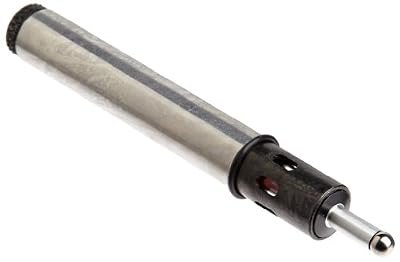
The Fowler takes the opposite approach: the spindle stays off. This electronic finder carries a 0.200 inch cylindrical stylus on a half-inch shank. When the stylus touches a conductive workpiece, the circuit closes and the end of the finder lights instantly. Six equally spaced light ports ring the body, so the signal is visible from any working angle.
Fowler rates the electronic line for repeatability of 0.0002 inch on any electrically conductive metal. Power comes from a single 12 volt battery. Because nothing rotates, there is no kick to interpret and no risk of a finder walking across a finished face. The trade-offs: it cannot signal on plastic, wood, or other non-conductive stock, coolant films can interfere with contact, and a dead battery means no reading. Keep a spare battery with the tool.
Treat this as a still-spindle tool only; turning the spindle on with an electronic finder in the collet can damage it. Approach slowly, watch for the light at first contact, then offset by half the stylus diameter, 0.100 inch.
Specs
| Spec | Value |
|---|---|
| Type | Electronic, LED light |
| Stylus diameter | 0.200 inch |
| Shank diameter | 0.500 inch |
| Light ports | Six, equally spaced |
| Battery | One 12 volt battery |
| Stated repeatability | 0.0002 inch |
| Model | 54-575-600-0 |
PGFUN DIY CNC Touch Probe Edge Finder

The PGFUN is a different class of tool: a wired 3D touch probe that the listing itself sells as a digitizing edge finder for CNC work. A 6 millimeter shank carries a 2.0 millimeter tungsten steel ball tip. Contact in plus and minus X, plus and minus Y, and plus Z triggers an NPN normally open signal to the control, so the machine, not your eye, records the edge position. The listing states repeatability accuracy of 0.01 millimeter and a probing feedrate window of 50 to 200 millimeters per minute.
Power is DC 5 to 24 volts, wired red for supply, yellow for signal, and black for ground. Overtravel protection allows about 4 millimeters sideways and 2 millimeters in Z, and the mechanism is rated at more than three million triggers. The listing names compatibility with Mach3, Mach4, LinuxCNC, UCCNC, Centroid, and similar controls. Because sensing is mechanical contact rather than conductivity, it also works on non-conductive material.
The conditions matter. The spindle must stay off during probing, and a high-accuracy collet is recommended because runout shifts the recorded point. The listing showed no featured offers when checked, so availability runs through other sellers. This is a CNC-only pick; on a manual mill it has nothing to talk to.
Specs
| Spec | Value |
|---|---|
| Type | Wired CNC touch probe |
| Shank diameter | 6 millimeter |
| Ball tip diameter | 2.0 millimeter, tungsten steel |
| Signal | NPN normally open |
| Supply voltage | DC 5 to 24 volts |
| Stated repeatability | 0.01 millimeter |
| Approach directions | X, Y, and Z axes |
| Model | TR-0041_NO |
Starrett 828B Wiggler Ball Contact

The 828B is the ball-contact member of the Starrett wiggler system, listed on its own for users who need the round-work contact. Its spherical tip is 0.250 inch in diameter, and that shape is the point: a ball rolls into contact with curved surfaces, round bar, and bore walls where a flat cylindrical tip cannot register cleanly. The tool is alloy steel, and its documentation describes the standard wiggler routine of running the contact at low speed and reading the position when it snaps true.
Compensation is half the ball diameter. With a 0.250 inch ball, the spindle centerline sits 0.125 inch from the tangent point at contact, so that is the offset to apply. The documentation suggests roughly 500 to 1,000 revolutions per minute and light pressure; forcing the ball dulls the reading and the contact.
Be clear about what this pick is. It is one contact from a wiggler system rather than a complete set, so it suits a shop that already runs a Starrett wiggler body, or a user whose edge work is mostly round stock and bores. If you need pointed and disc contacts too, the S828HZ set above is the better single purchase.
Specs
| Spec | Value |
|---|---|
| Type | Wiggler ball contact |
| Ball diameter | 0.250 inch |
| Radius offset | 0.125 inch |
| Material | Alloy steel |
| Weight | 0.8 ounces |
| Model | 828B |
Who Should Skip It
Skip edge finders entirely if your setup already runs a dialed-in CNC probing cycle with a mounted spindle probe; a hand finder adds a manual step you have automated. Skip the electronic Fowler if your stock is mostly plastic, wood, or composite, because it only signals on conductive metal. Skip the PGFUN probe on a manual mill, or on a CNC control with no probe input and no probing support in the software.
Skip the wiggler set if every job starts from a flat, vise-held edge; a single mechanical finder is faster to chuck and simpler to read. Skip the 828B ball contact if you do not work with the Starrett wiggler system or round stock. And skip any finder whose shank does not match a collet you own; adapters and drill chucks add runout that eats the accuracy you bought the tool for.
FAQ
Do mechanical edge finders work on plastic and wood?
Yes. A mechanical finder signals by movement, not electrical contact, so it registers on any solid material the tip can touch, including plastic and wood. Electronic LED finders are the ones limited to conductive metal, and a mechanical touch probe also senses physical contact, so it works there too.
How fast should the spindle turn for a mechanical edge finder?
Listings and maker guidance cluster between a few hundred and about one thousand revolutions per minute. The Brown & Sharpe listing rates its finder up to 1,000, and Starrett wiggler guidance suggests roughly 500 to 1,000. Faster is not better; excessive speed can throw the tip and ruin the reading and the finder.
What offset do I enter after an edge finder touches?
Half the tip diameter. A 0.200 inch tip means the spindle centerline is 0.100 inch from the edge at contact, and a 0.250 inch ball means 0.125 inch. Move the axis by that amount, or enter it in the readout, before setting zero, or every dimension from that edge shifts by the offset.
Can an electronic edge finder replace a CNC touch probe?
No. An electronic finder only lights a lamp for a human watching it, and the operator still reads the machine position by hand. A touch probe sends a trigger signal to the control, so probing routines record points automatically and repeat them across many features. The two tools serve different machines and workflows.
Final Verdict
For a manual mill, start with the Brown & Sharpe 599-792-5: the standard mechanical pattern with a half-inch shank, a 0.200 inch tip, and no battery or material limits. Its listing quirks are worth a click-check against the part number before ordering. Add the Starrett S828HZ set when punch marks, scribed lines, and bore centers join your setup work, and pick the 828B contact only if round work dominates.
For still-spindle work on metal, the Fowler 54-575-600-0 gives a clear light signal from any angle, provided you respect its conductive-only limit and keep a spare battery nearby. For a CNC with a probe input, the PGFUN probe is the only pick here that closes the loop with the control. Match the shank to your collets first.
Product and ASIN Reference
| Product | ASIN |
|---|---|
| Brown & Sharpe 599-792-5 Double End Edge Finder | B0006J3D7M |
| Starrett S828HZ Wiggler and Center Finder Set | B0006J4PIS |
| Fowler 54-575-600-0 Electronic Edge Finder | B00B5KS1QE |
| PGFUN DIY CNC Touch Probe Edge Finder | B0B3XMFDX5 |
| Starrett 828B Wiggler Ball Contact | B0006J4Q1Y |


Write Your Review
No reviews yet. Be the first to share your experience!