
- Top Pick: GIGABYTE GeForce RTX 5090 WINDFORCE OC 32G Graphics Card, WINDFORCE Cooling System, 32GB 512-bit GDDR7, GV-N5090WF3OC-32GD Video Card
- Best Value: ASUS ROG Astral GeForce RTX 5090 32GB GDDR7 OC Edition Gaming Graphics Card
- Premium Choice: ASUS ROG Astral LC GeForce RTX 5090 32GB GDDR7 OC Edition Gaming Graphics Card
Top Nvidia Geforce Rtx 5090 China Picks for 2026
Here are our current top nvidia geforce rtx 5090 china picks, compared on real Amazon owner reviews, price, and features. Live prices update below.

Dropped $349.01


Nvidia geforce rtx 5090 d is one of the most misunderstood cards on the market, because it looks like a full RTX 5090 on paper yet exists only because of US export rules. This review explains exactly what the D variant cuts, where it performs identically to the standard 5090, and where the limits actually bite. The goal is to give buyers in China and importers elsewhere the data and practical context to judge whether this flagship is worth its premium price.
As an Amazon Associate we earn from qualifying purchases at no extra cost to you. Product prices and availability are accurate as of the date shown and are subject to change.


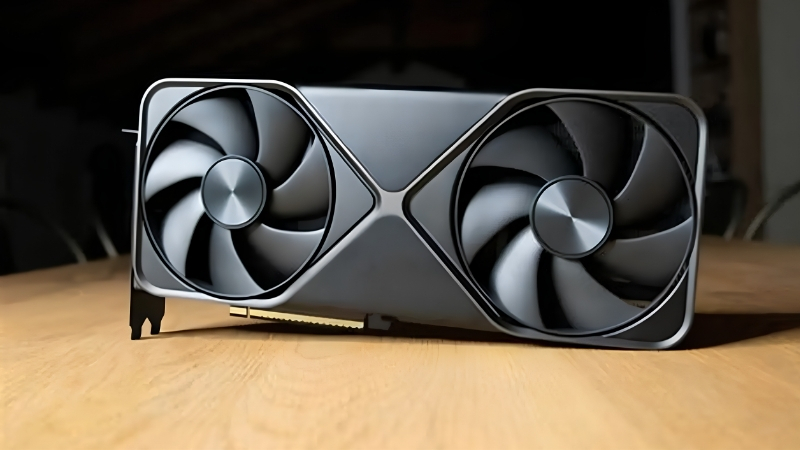
What the RTX 5090 D Actually Is
The RTX 5090 D is a China-exclusive version of the RTX 5090, engineered so Nvidia can keep selling Blackwell flagships in a market constrained by U.S. export restrictions. Understanding why it exists is the key to reading its specifications correctly, because the differences are deliberate policy choices rather than cost-cutting.
A China-Exclusive Take on the RTX 5090
Nvidia created the D variant for the same reason it built the earlier RTX 4090 D: without a compliant model, the Chinese market would not legally receive the top GB202 silicon at all. The card is therefore a workaround, not a budget tier.
That origin matters for buyers because it explains the unusual profile – a card that matches the 5090 in many areas while being intentionally throttled in the one area regulators care about, raw AI throughput.
It is best understood as a political product. The hardware is capable of full flagship performance, but a regulatory ceiling sits on top of the AI portion, which is why the card behaves so differently depending on whether you are gaming or running heavy compute.
Core Specifications and the V2 Revision
The original RTX 5090 D shipped with the same 21,760 CUDA cores, 32GB of GDDR7, and identical clock speeds as the standard 5090, limiting only Tensor AI performance to roughly 2,375 TOPS versus 3,352 on the unrestricted card.
A later RTX 5090 D V2 went further to satisfy tightened rules, dropping memory from 32GB to 24GB GDDR7 and narrowing the bus from 512-bit to 384-bit, which cuts memory bandwidth by about 25%. CUDA core count and the 575W power target stayed the same.
For most readers the practical summary is simple: the silicon is flagship-class, but memory capacity and bandwidth on the newest V2 are where the real specification gap now sits.
Because two distinct versions exist, buyers must confirm exactly which one they are purchasing. A 32GB original D and a 24GB V2 carry the same name in conversation but offer different memory headroom, and that distinction directly affects high-resolution and professional workloads.
Where the Limits Bite: AI vs Gaming
In raw rasterized gaming, the restrictions are almost invisible. Benchmarks place the V2 within roughly 1-2% of the original D variant, since 24GB still comfortably feeds modern titles even at 4K.
The deliberate AI throttling and reduced bandwidth show up far more in productivity and AI workloads, where memory-bound tasks and Tensor-heavy pipelines lose meaningful performance. This is the experimental angle worth testing against your own toolchain before buying.
In short, the closer your workload sits to pure gaming, the less the restrictions matter; the closer it sits to large-model AI, the more they do. Mapping your real usage against that spectrum is the single most useful exercise before committing to the card.
Real-World Performance and Owner Impressions
Specifications set expectations, but how the card behaves across gaming and creative work is what ultimately determines satisfaction. Aggregating owner impressions and published benchmarks reveals a consistent split: gaming results that track the standard 5090 closely, and professional workloads where the deliberate limits become visible. Reading those two stories separately is the only way to judge whether the card fits your specific use case rather than a generic flagship label.
4K Gaming Performance
At 4K the RTX 5090 D delivers flagship frame rates that track the standard 5090 closely, putting it comfortably ahead of every previous-generation consumer card in raw output. For pure gaming, owners rarely notice they are using a restricted variant.
With DLSS 4 multi-frame generation enabled in supported titles, the card pushes very high smoothed frame rates, making it a strong match for 4K high-refresh displays. The proprietary feature stack is fully intact, which protects the gaming experience.
Frame consistency is also strong thanks to the wide memory configuration, so the smooth feel that defines a flagship is preserved. Owners pairing the card with 4K 144Hz or higher panels report exactly the experience they expected from a 5090-class GPU.
Across a broad range of demanding titles, the gameplay feel is effectively indistinguishable from a standard 5090, which is the conclusion most gaming buyers ultimately care about. The export-driven limits simply do not surface in normal play.
Productivity, AI and Content Creation
Creators using GPU rendering and video editing still get excellent throughput thanks to the unchanged core count, and many report no practical difference from a standard 5090 in these tasks.
Local AI workloads are the exception. The reduced AI TOPS on the original D and the narrower memory bandwidth on the V2 measurably slow large-model inference and training, so AI-focused buyers should weigh this limitation seriously rather than assuming full 5090 parity.
For mixed creators who render and edit far more than they train models, the gap is academic. For dedicated AI practitioners, it is the central decision factor, and one that justifies looking closely at exactly which D revision a listing offers before paying flagship money.
Pros and Cons of the RTX 5090 D
Balancing the benchmarks against owner feedback gives a clear pros and cons picture for the Nvidia geforce rtx 5090 d and its V2 revision.
Pros: flagship 21,760 CUDA cores, near-5090 gaming performance, full DLSS 4 support, strong creative rendering, and the only way to get top Blackwell silicon in China.
Cons: intentionally limited AI throughput, reduced memory capacity and bandwidth on the V2, 575W power draw, and pricing that often runs well above official MSRP due to scarcity.
The pros cluster around gaming and rendering, while the cons cluster around AI and supply. That pattern makes the card easy to recommend for one type of buyer and easy to caution against for another, which is unusual for a single product.
Buying the RTX 5090 D in 2026
Whether the D variant makes sense depends heavily on your workload and the wider supply situation, which is unusually political for this particular card. Unlike a normal GPU purchase, the price and availability here are shaped as much by export policy as by demand. This section covers pricing, power requirements, and exactly who the card actually suits, so you can weigh the premium against your real needs.
Pricing, Availability and Export-Rule Context
Two news threads shape this card directly. First, U.S. policy moves around what Nvidia can sell to China – including clearance to sell certain H200 AI chips – keep the entire China GPU supply picture in flux, which feeds scarcity and price volatility for the 5090 D.
Second, laptop and PC component prices have been trending upward on tight memory supply and heavy AI demand. For a 575W flagship that already sells above its 16,499 RMB official price, that trend pushes street prices higher still, with custom models frequently commanding large premiums.
This is the rare consumer GPU where policy, not engineering, sets the price floor. Watching regulatory news as closely as stock levels pays off here, since a single export-rule update can shift both availability and street pricing within weeks.
The practical takeaway is timing-driven: if you need flagship Blackwell silicon in this market and find a unit near official pricing, the supply backdrop argues for acting rather than waiting for a discount that policy and demand make unlikely.
Power, Cooling and Platform Requirements
Plan around the 575W power target with a high-quality 1000W power supply as a sensible floor, plus the required 12V-2×6 connector and a case with strong airflow. This is not a card for compact or airflow-starved builds.
Pair it with a fast modern CPU and PCIe 5.0 platform to avoid bottlenecks at 4K, and budget for a roomy chassis since flagship partner cards are physically large and run hot under sustained load.
Cooling headroom is not optional at 575W. A case with strong intake and exhaust keeps clocks stable through long sessions, and undervolting is a popular owner tweak that trims heat and noise with little measurable performance loss.
Who Should Buy It and Final Verdict
The RTX 5090 D is the right choice for gamers and creators in China who want the fastest available Blackwell card and care primarily about rasterized and DLSS gaming performance, where it is effectively a 5090.
If your core workload is large-scale local AI, the deliberate limits make the value harder to justify, and you should weigh alternatives carefully. For everyone else chasing top-tier gaming, it remains the flagship to beat – check current listings and secure a fairly priced unit while supply allows.
It is worth repeating that the version matters as much as the model name. Confirm whether a listing is the 32GB original or the 24GB V2, match that to your workload, and you will avoid the most common source of buyer disappointment with this card.
See More:
- Rtx 4070 ti super vs rtx 4070 super
- 5080 vs 4080 super benchmark
- 4070 ti super vs 4080 super benchmark
- Rtx 4070 ti super vs rtx 4090
- Rtx 4070 ti vs rtx 4070 ti super
Conclusion
Nvidia geforce rtx 5090 d is a fascinating case of a flagship shaped by policy rather than engineering limits: it games like a 5090 while giving up AI throughput and, on the V2, memory bandwidth. With export rules and component prices both pushing supply tighter, a fairly priced 5090 D is worth securing for gaming-first buyers – review the available options and choose the model that matches your workload, power setup, and budget.
Frequently Asked Questions
What is the best nvidia geforce rtx 5090 d in 2026?
The best nvidia geforce rtx 5090 d depends on your budget and how you plan to use it. The options compared above are our top-rated picks based on real customer ratings, build quality, and overall value — start with the highest-rated model that fits your budget.
How much should I expect to spend on a nvidia geforce rtx 5090 d?
Prices vary by brand and features. Budget options cover the essentials, while mid-range and premium models add durability, performance, and extra features. Compare the prices in the list above to find the best value for your needs.
What should I look for when buying a nvidia geforce rtx 5090 d?
Focus on what matters most for your use case — build quality, compatibility, performance, warranty, and verified customer reviews. Every pick above is selected to balance these factors.
Are budget nvidia geforce rtx 5090 d options worth it?
Yes. For most people a well-reviewed budget or mid-range nvidia geforce rtx 5090 d delivers excellent value. You only need to spend more if you specifically require premium materials or top-tier performance.
How did we choose these nvidia geforce rtx 5090 d picks?
We compare current Amazon ratings, review counts, key features, and price to surface the options with the best real-world value. The list is refreshed as ratings and availability change.










Write Your Review
No reviews yet. Be the first to share your experience!