
- Top Pick: EVGA GeForce RTX 2080 Ti Black Edition Gaming, 11GB GDDR6, Dual HDB Fans & RGB LED Graphics Card 11G-P4-2281-KR (Renewed)
- Best Value: GIGABYTE GeForce RTX 2080 Ti Gaming OC 11GB Graphic Cards GV-N208TGAMING OC-11GC (Renewed)
- Premium Choice: GIGABYTE AORUS Radeon RX 6800 Master 16G Graphics Card, MAX-Covered Cooling, 16GB 256-bit GDDR6, GV-R68AORUS M-16GD Video Card
The RX 6800 is the better pick for most buyers: it is roughly 8-15% faster in traditional rendering, has 16 GB of VRAM versus 11 GB, is two years newer, and uses a more efficient architecture at the same 250 W rating. The RTX 2080 Ti is worth choosing only if you prioritize ray tracing and DLSS 4 image quality, or if you find one meaningfully cheaper than an RX 6800 on the used market.
- A Former Flagship Against Its Successor-Era Rival
- Rasterization: The RX 6800 Leads
- Ray Tracing: The 2080 Ti Holds Its Ground
- Upscaling and Frame Generation
- VRAM: 16 GB Versus 11 GB
- Power, PSU and Physical Fit
- Value, Age and Used-Market Notes
- Decision Guide by Resolution and Priority
- Frequently Asked Questions
As an Amazon Associate we earn from qualifying purchases at no extra cost to you.

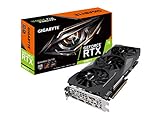

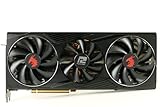
A Former Flagship Against Its Successor-Era Rival
The RTX 2080 Ti launched in September 2018 at $999 as NVIDIA’s top Turing gaming card, built on a 12 nm process with 4352 CUDA cores and 11 GB of GDDR6 on a 352-bit bus. The RX 6800 arrived in October 2020 at $579 on AMD’s RDNA 2 architecture at 7 nm, with 3840 stream processors, 16 GB of GDDR6 on a 256-bit bus, and a 128 MB Infinity Cache that offsets its lower raw bandwidth.
When AMD launched the RX 6800, reviewers compared it directly against the RTX 2080 Ti and the then-new RTX 3070, which performs at roughly 2080 Ti level. On the used market today, the two cards often sell in similar price ranges, which makes this a very practical comparison for budget high-end builds.
| Specification | RTX 2080 Ti | RX 6800 |
|---|---|---|
| Architecture | Turing | RDNA 2.0 |
| Release date | 20 September 2018 | 28 October 2020 |
| Launch MSRP | $999 | $579 |
| Shaders | 4352 CUDA cores | 3840 stream processors |
| Boost clock | 1545 MHz | 2105 MHz |
| Process | 12 nm | 7 nm |
| TDP | 250 W | 250 W |
| VRAM | 11 GB GDDR6 | 16 GB GDDR6 |
| Memory bus | 352-bit | 256-bit |
| Bandwidth | 616.0 GB/s | 512.0 GB/s |
| Cache | 5.5 MB L2 | 4 MB L2 + 128 MB L3 (Infinity Cache) |
| Interface | PCIe 3.0 x16 | PCIe 4.0 x16 |
| Power connectors | 2x 8-pin | 2x 8-pin |
| Length (reference) | 267 mm | 267 mm |
| Width | 2-slot | 2-slot |
| Outputs | 1x HDMI 2.0, 3x DisplayPort 1.4a, 1x USB Type-C | 1x HDMI, 2x DisplayPort, 1x USB Type-C |
Rasterization: The RX 6800 Leads
According to TechPowerUp’s RX 6800 launch review, the RX 6800 beat both the RTX 2080 Ti and the RTX 3070 by around 8-9% on average. Hardware Unboxed/TechSpot measured a slightly larger margin over the RTX 3070, about 10% at 1080p and 14-15% at 1440p and 4K in its launch testing, settling to around 10-11% in a later follow-up with more games. Since the RTX 3070 and RTX 2080 Ti trade blows closely, a fair range for the RX 6800’s lead over the 2080 Ti is about 8-15% in traditional rendering.
The margin varies by title. Some games favor NVIDIA hardware and can flip the result, while many modern console-derived titles favor RDNA 2. As an illustration, a game at about 90 fps on an RTX 2080 Ti at 1440p would typically land somewhere around 97-103 fps on an RX 6800. Exact results depend on settings, CPU, patches and drivers.
Ray Tracing: The 2080 Ti Holds Its Ground
Ray tracing tells a different story. TechPowerUp’s launch analysis placed the RX 6800’s ray tracing performance roughly in RTX 2080 territory, with big variation by title. That means the RTX 2080 Ti, despite being an older first-generation RT design, is generally equal to or ahead of the RX 6800 once ray tracing is enabled, especially in games with heavy reflections or global illumination. In path-traced modes, neither card is realistic at native resolution.
Both cards support hardware ray tracing, so both can run games that require it, such as Indiana Jones and the Great Circle. The 2080 Ti simply retains more of its frame rate in those workloads.
Upscaling and Frame Generation
This is the 2080 Ti’s strongest advantage in 2026. As an RTX card, it supports DLSS 4 Super Resolution with the transformer model and Ray Reconstruction, which provide better image stability than AMD’s current options on RDNA 2. In practice, running DLSS Quality or Balanced on the 2080 Ti can produce frame rates comparable to or higher than the RX 6800 at native resolution while maintaining good image quality. Neither card supports DLSS Frame Generation, which requires an RTX 40 or RTX 50 GPU.
The RX 6800 currently uses FSR 2 and FSR 3 upscaling, along with FSR 3 frame generation and AMD Fluid Motion Frames at the driver level. AMD brought FSR 4.1 machine-learning upscaling to the RX 7000 series in June 2026 and has announced it for the RX 6000 series in early 2027. Once available, that should narrow the upscaling image-quality gap considerably. The 2080 Ti can also use FSR 3 frame generation in games that support it.
VRAM: 16 GB Versus 11 GB
Memory capacity favors the RX 6800. Hardware Unboxed’s 8 GB versus 16 GB testing showed the RX 6800 handling VRAM-hungry games without the stutter seen on smaller buffers. The 2080 Ti’s 11 GB is much more comfortable than 8 GB, but some recent releases at 1440p with maximum textures and ray tracing approach or exceed 11 GB. Rough guidance:
- 1080p and 1440p high: both cards have enough memory in most games.
- 1440p ultra textures with ray tracing: 11 GB can become tight in the heaviest titles; 16 GB remains comfortable.
- 4K: neither card is fast enough for native 4K ultra in new games, but the RX 6800 holds high textures with less risk.
Power, PSU and Physical Fit
Both cards have a 250 W rating, two 8-pin power connectors, a 267 mm reference length and a two-slot design, so platform requirements are nearly identical. Using GPU TDP + CPU power + about 150 W headroom with a 125 W gaming CPU gives 250 + 125 + 150 = 525 W, so a quality 650 W power supply is a comfortable target for either.
In practice, TechPowerUp described the RX 6800 as one of the most efficient cards it had tested at launch, and it generally delivers more performance per watt than the older 12 nm Turing chip. Partner cards of both models can be longer than reference, so check case clearance. The 2080 Ti runs on PCIe 3.0, which is not a limitation for any current motherboard.
Value, Age and Used-Market Notes
At launch MSRPs, indexing the RTX 2080 Ti at 100 and the RX 6800 at about 110:
- RTX 2080 Ti: $999 / 100 = about $9.99 per performance point.
- RX 6800: $579 / 110 = about $5.26 per performance point.
The used market levels the field. In 2026, both cards commonly sell in a range of roughly $230-$330 depending on model and condition. When prices overlap, the RX 6800’s extra speed, extra memory and younger age make it the default choice. The 2080 Ti is older, and some early units experienced memory-related failures shortly after launch, so a used example should be inspected and stress-tested where possible. Many RX 6800 units saw mining use, so fan condition and temperatures matter there too.
Decision Guide by Resolution and Priority
| Priority | Better pick |
|---|---|
| 1440p raster performance | RX 6800 |
| 1440p with ray tracing on | RTX 2080 Ti |
| Best upscaling image quality right now | RTX 2080 Ti (DLSS 4) |
| Longest VRAM headroom | RX 6800 |
| Power efficiency and lower heat | RX 6800 |
| Linux gaming | RX 6800 |
| NVENC streaming or CUDA applications | RTX 2080 Ti |
| Both at the same used price | RX 6800 for most gamers |
Before buying either, it is worth comparing against current cards. An RTX 5060 Ti 16 GB or Radeon RX 9060 XT 16 GB offers a warranty, newer upscaling and frame generation, and much lower power draw, while landing in a broadly similar performance class.
Frequently Asked Questions
Is the RX 6800 faster than the RTX 2080 Ti?
Yes, in traditional rendering. TechPowerUp measured the RX 6800 about 8-9% ahead, and TechSpot data suggests a margin up to about 15% at 1440p in its launch suite. With ray tracing enabled, the RTX 2080 Ti is generally equal or faster.
Does the RTX 2080 Ti support DLSS 4?
Yes. The RTX 2080 Ti supports DLSS 4 Super Resolution and Ray Reconstruction with the transformer model. It does not support DLSS Frame Generation, which requires an RTX 40 or RTX 50 card.
Is 11 GB of VRAM enough in 2026?
For 1080p and most 1440p gaming, 11 GB is adequate. Some demanding recent games at 1440p with maximum textures and ray tracing can push past it. The RX 6800’s 16 GB provides more margin for those cases.
What PSU do I need for the RTX 2080 Ti or RX 6800?
Both are rated at 250 W and use two 8-pin connectors. A quality 650 W power supply is a comfortable choice for either card in a typical gaming system with a modern CPU.
Does the RTX 2080 Ti still get driver updates?
Yes. NVIDIA continues to provide Game Ready drivers for the RTX 20 series. Only the GTX 10 series and older lost Game Ready support, which ended in October 2025.
Ready to decide? Our #1 pick for 2026 is the Architecture.
Live price & availability on Amazon.










Write Your Review
No reviews yet. Be the first to share your experience!