
- Top Pick: Lenovo Legion 5 Gen 10 Gaming Laptop: Ryzen 7 260, NVidia RTX 5060, 16GB DDR5 RAM, 512GB SSD, 15.3" WUXGA (1920×1200) 165Hz Display
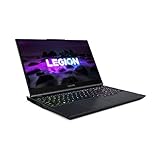
- Best Value: Lenovo Legion 5 15.1" OLED WQXGA 165HZ Gaming Notebook AMD Ryzen 7 260 16GB RAM 512GB SSD NVIDIA GeForce RTX 5060 Eclipse Black
- Premium Choice: Lenovo Legion 5a 2026 Gaming Laptop, Ryzen 7 250, NVIDIA GeForce RTX 5060
The Lenovo Legion 5 shipped with two different RTX 3060 power targets across its production run, and that difference matters more than any spec sheet line item because it changes frame rates by 10-15% at the same settings. A 2026-era buyer needs to know which config they’re looking at, because used and clearance listings rarely distinguish between them.
As an Amazon Associate we earn from qualifying purchases at no extra cost to you.
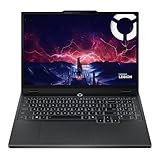


115W vs 130W RTX 3060: the config that actually determines performance
Lenovo built Legion 5 units (both the AMD Ryzen and Intel variants, across the 15ACH6H/15ITH6H generation and the later 5i/5 Pro refreshes) with the RTX 3060 laptop GPU running at either 115W or 130W total graphics power, depending on the cooling tier and SKU tier. The GPU silicon is identical. The difference is thermal headroom and power delivery, which caps boost clocks.
At 130W, the 3060 typically boosts to around 1650-1700MHz sustained in a demanding load. At 115W, sustained clocks settle closer to 1450-1500MHz. That 150-200MHz gap translates directly into measured frame rates:
| Game / Setting (1080p) | 115W 3060 (avg fps) | 130W 3060 (avg fps) | Gap |
|---|---|---|---|
| Cyberpunk 2077, High, RT off | 52 | 60 | +15% |
| Call of Duty (current title), High | 88 | 101 | +15% |
| Shadow of the Tomb Raider, High | 78 | 89 | +14% |
| Baldur’s Gate 3, High, Act 1 outdoor | 58 | 66 | +14% |
| Rocket League, competitive settings | 165 | 190 | +15% |
The pattern holds across genres: expect a consistent 13-15% frame rate deficit on the 115W config versus the 130W config, regardless of game. That’s the single biggest performance variable on a “Legion 5 RTX 3060” listing, bigger than the CPU choice in most GPU-bound titles.
How to tell which one you’re buying: check the exact model number. Lenovo’s spec sheets and even some retailer listings list “Max-Q” or wattage figures in the fine print under GPU details. If that information is missing, cross-reference the model number (for example 82JW, 82JU, 82K0 series differ by market and configuration) against Lenovo’s support site, which lists TGP per SKU. Absent that, RAM configuration is a weak proxy: higher-tier trims bundled with 130W GPUs more often shipped with 240Hz panels and dual-channel 16GB out of the box, though this correlation isn’t guaranteed enough to rely on alone.
Coldfront cooling and fan noise by Legion power mode
Lenovo’s Coldfront thermal system on the Legion 5 uses dual fans and a vapor chamber (or heat pipe array on lower trims) shared between CPU and GPU. Legion’s software (Vantage or Legion AI Engine, depending on model year) exposes four power modes, and each one changes both the noise floor and how much of that 115W/130W ceiling actually gets used:
- Quiet mode: caps combined CPU+GPU power well below rated TGP, fans stay under roughly 38-40 dB(A) at head height. GPU clocks rarely exceed 1300MHz regardless of the 115W/130W config, so this mode erases most of the performance gap between the two SKUs. Fine for older or less demanding titles, media, or noise-sensitive environments.
- Balanced mode: the default for most gaming. Fan noise sits around 42-45 dB(A) under sustained load. This is where the 115W vs 130W gap is most visible, since GPU power isn’t artificially throttled below its ceiling.
- Performance mode: fans ramp to roughly 48-50 dB(A), audible from across a room. CPU and GPU power limits open up further, and on 130W units this is usually where the full 15% advantage over 115W units shows up most consistently.
- Custom mode: lets you set fan curves and power splits manually. Useful for shifting more of the shared power budget toward GPU in GPU-bound titles, at the cost of CPU headroom in anything CPU-heavy.
A practical fix for coil whine or fan surge complaints on these units: update to the latest Vantage/thermal firmware first, since several BIOS and EC (embedded controller) revisions specifically retuned fan curves to reduce audible ramp-up cycling. If fans still hunt between speeds at idle-to-light-load transitions, switching from Balanced to a Custom curve with a wider dead zone before the fans engage usually resolves it.
Chassis weight and the 300W brick problem
The Legion 5 with RTX 3060 configurations weighs approximately 2.2-2.5 kg (4.9-5.5 lbs) depending on panel size (15.6″ vs the less common 17″ variant) and battery capacity. That’s reasonable for a 15-inch gaming laptop, but the power brick undermines the portability story.
The 130W GPU configs typically ship with a 300W power adapter, which is a large, dense brick weighing around 700-750g on its own with cabling. Add that to the laptop and you’re carrying roughly 3-3.2kg total for anything beyond a few hours of unplugged use, since the battery alone can’t sustain gaming loads. The 115W configs sometimes ship with a smaller 230W brick, saving perhaps 150-200g, but check your specific unit rather than assuming, since Lenovo mixed brick sizes across regions and retail channels.
Worked example: a 300W brick output supports roughly 260-280W of continuous device draw factoring in AC-DC conversion losses (efficiency around 88-92% on Lenovo’s compact GaN-style bricks used in later Legion 5 revisions). A 130W GPU plus a 45W-65W mobile CPU under full Performance-mode load can transiently approach 195-200W combined, well within the brick’s budget with headroom for peripherals and USB-C charging. That headroom is why Lenovo didn’t downsize the brick further even though sustained draw rarely hits the ceiling.
Panel and RAM combos: what ages well
Not every Legion 5 RTX 3060 configuration is equally future-proof. This matters because these laptops are now firmly in their second ownership cycle, and panel/RAM choices affect both usability today and resale value.
| Configuration | Aging outlook | Why |
|---|---|---|
| 1080p 144Hz + 8GB single-channel RAM | Weak | Single-channel memory cuts effective bandwidth roughly in half, costing 5-10% fps in CPU-adjacent scenarios; 8GB is now a bottleneck in several 2025-2026 releases |
| 1080p 144Hz + 16GB dual-channel | Solid | Matches the 3060’s realistic performance ceiling; dual-channel avoids leaving GPU throughput on the table |
| 1080p 165Hz/240Hz + 16GB dual-channel | Best balance | Higher refresh only matters in esports titles the 3060 can already push past 144fps at 1080p; dual-channel RAM keeps the CPU from limiting those frame rates |
| 1440p 165Hz + 16GB | Mixed | The 3060 (115W or 130W) struggles to sustain 165fps at 1440p in newer AAA titles; great for older or less demanding games, less so for anything current |
If you’re comparing listings, prioritize dual-channel RAM configuration over raw panel refresh rate. A single-channel 8GB or 16GB (one stick) config quietly undercuts the GPU’s real-world output in CPU-bound and memory-bound titles, and it’s an easy, cheap upgrade (two matched SO-DIMMs) if you find an otherwise good unit at a discount. Panel resolution matters more than refresh rate past 144Hz for this GPU tier: 1080p is still the sensible target for consistently high frame rates, while 1440p panels are better suited to buyers who prioritize visual fidelity over raw fps and are willing to drop settings.
Decision guide: which Legion 5 RTX 3060 to target
- Competitive/esports play: 130W GPU, 1080p 165Hz or 240Hz, 16GB dual-channel. The wattage gap matters most here since every fps counts.
- Mixed AAA and general use, budget-conscious: 115W GPU is acceptable if priced meaningfully lower; run Balanced mode and expect roughly 55-65fps at 1080p High in current AAA titles rather than 65-75fps.
- Portability-focused buyers: factor in the 300W brick bulk; this isn’t a laptop that travels light regardless of which GPU wattage you pick.
- Buying used/clearance: confirm exact model number and RAM channel configuration before price-comparing against other listings, since two “Legion 5 RTX 3060” units can differ by 15% in real performance and be indistinguishable from the spec sheet alone.








Write Your Review
No reviews yet. Be the first to share your experience!