
- Top Pick: ASUS Dual GeForce RTX 4060 Ti EVO OC Edition 8GB GDDR6 (PCIe 4.0, 8GB GDDR6, DLSS 3, HDMI 2.1a, DisplayPort 1.4a, Axial-tech Fan Design, Auto-Extreme Technology), 3 Year Warranty
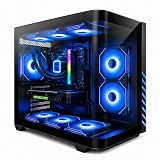
- Best Value: Gaming PC Desktop Liquid Cooled Ryzen 7 8700F RTX 4060 Ti 16GB DDR5 RAM
- Premium Choice: ASUS Dual GeForce RTX 4060 V2 OC Edition (PCIe 4.0, 8GB GDDR6, DLSS 3, HDMI 2.1a, DisplayPort 1.4a, 2-Slot Design, Axial-tech Fan Design, 0dB Technology), 3 Year Warranty
Top Rtx 4060 Price Still Smart Picks for 2026
Here are our current top rtx 4060 price still smart picks, compared on real Amazon owner reviews, price, and features. Live prices update below.

Save $240.00

Editor's Pick
ASUS Dual GeForce RTX 4060 Ti V2 OC Edition 8GB GDDR6 SFF Compatible with Axial-tech Fan/DUAL-RTX4060TI-O8G-V2 (Renewed)
Dropped $5.01

Dropped $13.00

Dropped $95.00

Dropped $226.77

Dropped $41.29
The rtx 4060 price question has changed completely since this card launched at $299 in 2023. In 2026, the RTX 4060 lives in a strange place: officially superseded by the RTX 5060, no longer in volume production, yet still one of the most-purchased budget GPUs on Amazon because of its 115W power draw, DLSS 3 support, and plug-and-play simplicity for older PCs. This review tracks where its pricing actually sits today, analyzes whether it still earns the money against newer alternatives, synthesizes what verified buyers love and complain about, and explains why broader market forces are quietly pushing budget GPU prices up instead of down.
As an Amazon Associate we earn from qualifying purchases at no extra cost to you. Product prices and availability are accurate as of the date shown and are subject to change.




RTX 4060 Price Today: What You Should Actually Pay
Launch MSRP was $299, and for most of 2024–2025 the card hovered between $280 and $310. In 2026, with production wound down and component costs rising, typical Amazon listings for new units range from roughly $270 on a good day to $330+ during stock dips, while used units trade around $200–$240. Knowing which of those numbers represents a fair deal is the entire game with this card.
The Fair-Price Benchmarks
The analytical anchor is simple: at $250–$280 new, the RTX 4060 remains a defensible budget buy; at $300+, the newer RTX 5060 at its $299 MSRP is the strictly better purchase when in stock. Price-per-frame math flips between the two cards at almost exactly the $290 line.
Used pricing around $200–$220 is where the 4060 becomes genuinely compelling — its low 115W power draw means even heavily used units have lived an easy thermal life compared to power-hungry cards, reducing typical second-hand risk.
Why the Price Refuses to Fall
Discontinued GPUs normally bleed value, but three quantitative factors prop the 4060 up: remaining inventory is finite, demand from prebuilt upgraders and internet-café-style bulk buyers stays steady, and its replacement frequently sells above its own MSRP, dragging the whole tier upward.
Add rising memory and component costs across the industry and you get the current pattern: brief dips toward $260–$270 that sell through quickly, then listings resetting higher. Patience is rewarded in days, not months, with this card.
Regional and seasonal swings add another $15–$25 of variance. Historical tracking shows the best 4060 prices cluster around major sales events — Prime Day, back-to-school, and Black Friday — while January and post-launch-drought months run hottest. If one of those windows is within a few weeks, waiting for it is rational; waiting for an undefined “better deal someday” is not, given where the supply chain is pointed in 2026.
New vs Used vs Open-Box
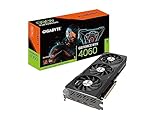
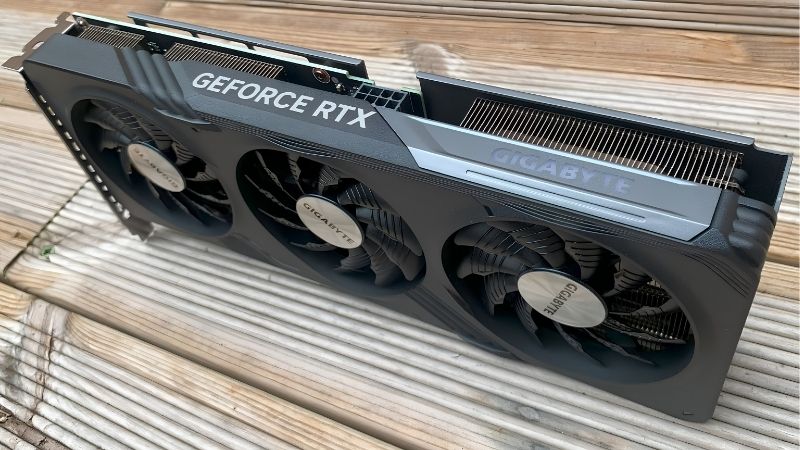
New units carry a full manufacturer warranty (typically 3 years from brands like ASUS, MSI, and Gigabyte) and are the right call at $280 or less. Open-box listings on Amazon often land $30–$50 cheaper with return rights intact, a practical middle path many buyers overlook.
Used is for the risk-tolerant: verify the seller’s rating, ask for GPU-Z screenshots if buying peer-to-peer, and price in the absent warranty. At $200, the math works; at $250, just buy new or open-box instead.
Is the RTX 4060 Still Worth It? Performance and Owner Verdicts
Price only matters relative to what you get. The RTX 4060 delivers 3,072 CUDA cores, 8GB of GDDR6 on a 128-bit bus, DLSS 3 Frame Generation, and that signature 115W TGP. Here is what those numbers mean in 2026 games, what thousands of verified Amazon reviewers report after living with the card, and the honest pros-and-cons ledger that should drive your decision.
Real-World 1080p (and Light 1440p) Performance
At 1080p, the 4060 averages 70–100+ fps on high settings in most modern AAA titles and 150 fps+ in esports staples like Valorant, CS2, and Fortnite. DLSS 3 Frame Generation roughly doubles perceived smoothness in supported single-player games, which is the card’s signature trick.
At 1440p it remains usable at medium-high settings with DLSS Quality, typically 50–70 fps in demanding titles. The honest limit is the 8GB VRAM buffer: a handful of 2025–2026 releases with maxed textures exceed it even at 1080p, forcing one settings notch down to restore smooth frame times.
Power efficiency translates into concrete dollars too. At 115W versus the 170–200W of older cards it typically replaces, the 4060 saves a daily gamer roughly $15–$30 per year in electricity at average rates — over a three-year ownership window, that quietly refunds 15–25% of the purchase price. Few budget GPU comparisons run that math, and it is one of the strongest analytical arguments the card has left.
What Verified Buyers Say: The 5-Star and the 2-Star Truth
Across Amazon’s review base, 4–5 star owners converge on three themes: it runs on almost any PSU without new cables (many models need just one 8-pin), it is near-silent under load, and it transformed aging prebuilts from Dell, HP, and Lenovo into capable 1080p machines without a power supply swap. Upgraders from GTX 1060/1650-class cards report a 2–3x performance jump.
The 2–3 star complaints cluster just as clearly: buyers who paid $330+ during a price spike and felt the value did not match, 1440p purchasers who hit the 8GB ceiling sooner than expected, and a minority reporting coil whine on the cheapest single-fan models. Almost none of the criticism concerns reliability — failure-related reviews are rare for this card.
The synthesis: satisfaction tracks purchase price almost perfectly. Owners who paid under $280 are overwhelmingly happy; those who paid panic-pricing premiums are the unhappy minority.
Compatibility is the other half of the practical story. The 4060’s short dual-fan models fit virtually every case built since 2015, draw little enough power that stock prebuilt PSUs of 300–450W handle it, and need no motherboard BIOS gymnastics. For the enormous population of users upgrading a family desktop rather than building new, that frictionless install — confirmed repeatedly in buyer reviews — is worth more than a few extra benchmark points from hungrier rivals.
Pros and Cons at Today’s Price
Pros: exceptional 115W efficiency — the easiest GPU upgrade in existence for old or prebuilt PCs; DLSS 3 Frame Generation at a budget price; cool, quiet partner designs; proven reliability record; strong 1080p performance for the money at $280 or less.
Cons: 8GB VRAM is the hard ceiling for maxed textures and long-term 1440p use; 128-bit bus limits raw bandwidth; the RTX 5060 at $299 MSRP beats it outright whenever the price gap closes under $20–$30; no DLSS 4 Multi Frame Generation support.
Why Budget GPU Prices Are Rising — and What It Means for You
Two current news items explain why the rtx 4060 price is drifting up rather than down in 2026: the United States approving Nvidia’s H200 AI chip sales to China, and the broader, well-documented rise in laptop and PC component prices. For a budget buyer, these macro forces matter more than any spec-sheet debate, because they determine whether waiting saves you money or costs you money.
The H200-to-China Ripple Effect
The H200 is among Nvidia’s most powerful AI chips, and the export approval opens a massive additional demand channel for advanced silicon and memory. Wafer starts and memory fab output are finite resources; when high-margin AI accelerators absorb more of them, consumer GPU supply tightens from the top down — and budget cards built on older nodes stay in production longer at firmer prices because they fill the gap.
That is precisely the dynamic keeping discontinued 4060 inventory priced near MSRP instead of clearing out at fire-sale discounts.
Component Inflation Hits Budget Cards Hardest
GDDR6 memory, substrates, and shipping have all risen in cost for consecutive quarters, and laptop prices — built from the same supply chain — have already moved up at retail. On a $280 graphics card, a $20–$30 cost increase is a 7–10% price hike; the same dollar increase on a $1,000 card is rounding error. Budget tiers feel inflation first and hardest.
Concretely: the sub-$250 deals that were common in early 2025 have become rare events in 2026, and tracking data shows the average sale price creeping upward quarter over quarter.
The RTX 5060’s own supply situation feeds back into this loop as well: whenever the newer card slips above its $299 MSRP or goes out of stock — an increasingly common event under current memory constraints — a measurable wave of buyers falls back to the 4060, firming its price within days. The two cards now move as a coupled system, and tracking both is the only way to read either one correctly.
The Takeaway: Buy on the Dip, Not the Spike
For buyers, the strategy writes itself. There is no visible force pushing budget GPU prices down this year and at least two pushing them up — so when a new RTX 4060 appears at $270 or less, or the RTX 5060 hits its $299 MSRP, that is the moment to act rather than wait for a deeper discount that the supply chain no longer supports.
Check the current RTX 4060 listings on Amazon, compare against the $280 fair-value line from this review, and if today’s price clears it, lock in your upgrade before the next inventory cycle resets higher.
See More:
Conclusion
The rtx 4060 price story in 2026 comes down to one number: at $280 or less, this remains the easiest, most efficient budget upgrade in PC gaming — 115W, DLSS 3, quiet, reliable, and transformative for older systems; above $300, step up to the RTX 5060 instead. With H200 exports redirecting silicon toward AI and component costs still climbing, budget GPU prices are trending up, not down, which makes a fair deal today worth more than a hoped-for discount tomorrow. Tap through to check the live RTX 4060 price on Amazon right now — if it is under the fair-value line, you have your answer.
Frequently Asked Questions
What is the best rtx 4060 price in 2026?
The best rtx 4060 price depends on your budget and how you plan to use it. The options compared above are our top-rated picks based on real customer ratings, build quality, and overall value — start with the highest-rated model that fits your budget.
How much should I expect to spend on a rtx 4060 price?
Prices vary by brand and features. Budget options cover the essentials, while mid-range and premium models add durability, performance, and extra features. Compare the prices in the list above to find the best value for your needs.
What should I look for when buying a rtx 4060 price?
Focus on what matters most for your use case — build quality, compatibility, performance, warranty, and verified customer reviews. Every pick above is selected to balance these factors.
Are budget rtx 4060 price options worth it?
Yes. For most people a well-reviewed budget or mid-range rtx 4060 price delivers excellent value. You only need to spend more if you specifically require premium materials or top-tier performance.
How did we choose these rtx 4060 price picks?
We compare current Amazon ratings, review counts, key features, and price to surface the options with the best real-world value. The list is refreshed as ratings and availability change.



Write Your Review
No reviews yet. Be the first to share your experience!