
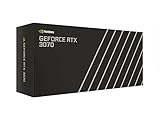
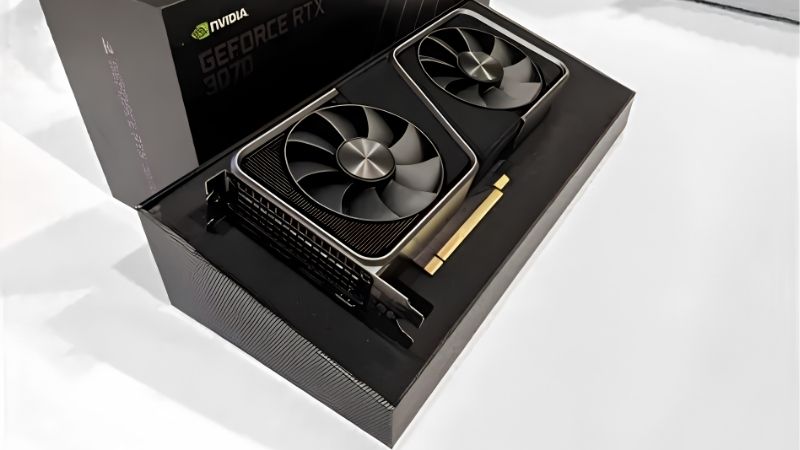
- Top Pick: NVDIA GeForce RTX 3070 8GB GDDR6 PCI Express 4.0 Graphics Card – Dark Platinum and Black (Renewed)
- Best Value: NVIDIA GeForce RTX 3070 8GB GDDR6 PCI Express 4.0 Graphics Card – Dark Platinum and Black
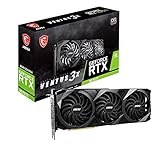
- Premium Choice: MSI Gaming GeForce RTX 3070 Ti Gaming X Trio 8G 8GB GDDR6X Graphics Card – NVIDIA Video Card GPU for Gaming PC, 256-Bit HDMI/DP Nvlink, Ampere Architecture Computer Graphics Cards (Renewed)
Top Nvidia Rtx 3070 Gpu Still Picks for 2026
Here are our current top nvidia rtx 3070 gpu still picks, compared on real Amazon owner reviews, price, and features. Live prices update below.
- Top Nvidia Rtx 3070 Gpu Still Picks for 2026
- RTX 3070 GPU Specs and Real-World Performance in 2026
- RTX 3070 Pros and Cons: The Honest Owner Consensus
- RTX 3070 Pricing in 2026: Why Market Timing Matters Now
- Recommended Products
- Final Verdict: Is the 3070 GPU Still Worth Buying in 2026?
- Related Guides
- Frequently Asked Questions
- Related Articles

Best Seller
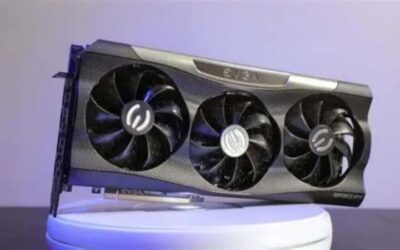
NVDIA GeForce RTX 3070 8GB GDDR6 PCI Express 4.0 Graphics Card – Dark Platinum and Black (Renewed)
Editor's Pick
NVIDIA GeForce RTX 3070 8GB GDDR6 PCI Express 4.0 Graphics Card – Dark Platinum and Black


3070 GPU listings still rank among the most-clicked graphics card searches on Amazon in 2026, and the reason is pure arithmetic: this Ampere card launched at $499 in late 2020 promising RTX 2080 Ti performance, and today it changes hands for $200-280 while still clearing 60 FPS at 1440p in most modern titles. The open question is whether its 8GB of VRAM has aged past the point of recommendation. This review runs the numbers — benchmarks, owner feedback, compatibility, and the 2026 market forces — to give you a defensible answer before you spend a dollar.
As an Amazon Associate we earn from qualifying purchases at no extra cost to you.



RTX 3070 GPU Specs and Real-World Performance in 2026
Every verdict in this review traces back to the silicon, so we start there: what Nvidia built into the GA104 die, what it measures in today’s games, and what it demands from the system around it.
Core RTX 3070 Specifications That Still Matter
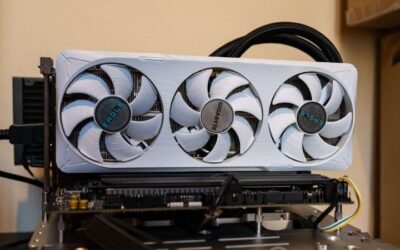
The RTX 3070 carries 5,888 CUDA cores, 46 second-generation RT cores, and 184 third-generation Tensor cores, paired with 8GB of GDDR6 on a 256-bit bus for 448 GB/s of bandwidth. Reference boost clock is 1,725 MHz, with partner cards from ASUS, MSI, and Gigabyte typically shipping between 1,755 and 1,815 MHz.
Total board power is a moderate 220W through dual 8-pin connectors (single 12-pin on Founders Edition), with Nvidia recommending a 650W power supply. Physically it is one of the friendlier high-performance cards ever made: the Founders Edition measures just 242mm at two slots, and even large partner models rarely exceed 300mm. Those numbers explain why it remains the default upgrade for owners of prebuilt systems and older mid-towers.
Gaming Benchmarks: What the 3070 Delivers Today
At 1440p high settings, current data puts the 3070 at 60-85 FPS in demanding 2024-2026 AAA titles, 90-110 FPS in well-optimized engines, and comfortably above 165 FPS in esports staples like Valorant, CS2, and Rocket League. At 1080p, it overshoots most monitors: 100-144+ FPS in nearly everything, making it arguably overqualified for that resolution.
DLSS 2 upscaling remains the card’s force multiplier, recovering 25-40% performance at Quality mode with minimal visual cost — though note it lacks DLSS 3/4 Frame Generation, which Nvidia reserves for 40-series and newer. Ray tracing is playable but compromised: expect 45-60 FPS at 1440p with RT set to medium plus DLSS, and plan to skip path tracing entirely. As a rasterization card with smart upscaling, however, it still embarrasses its price class.
System Compatibility: What to Check Before Buying
Pair the 3070 with at least a Ryzen 5 3600 or Intel Core i5-10400 to avoid leaving frames on the table at 1440p; at 1080p high-refresh, a faster 6-core or 8-core CPU pays off more than it would at higher resolutions. A quality 650W power supply with two separate PCIe cables is the safe baseline — Ampere’s transient spikes are gentler at 220W than on the bigger cards, and owner reports of PSU trips are rare at this tier.
Case fit is a non-issue for most builds: verify roughly 250-300mm of clearance depending on the partner model and you are done. One genuinely useful tip from the used market: prioritize listings showing the original box and invoice, and favor dual-axial partner designs with metal backplates — the cooler quality spread on 3070 models is narrower than on the 350W-class cards, but the best models still run 6-10°C cooler and noticeably quieter.
RTX 3070 Pros and Cons: The Honest Owner Consensus
We aggregated patterns across thousands of verified Amazon reviews — the 5-star praise and the 2-3 star complaints alike — to separate what this card actually delivers in daily ownership from what marketing copy and nostalgia claim.
Where the RTX 3070 GPU Genuinely Shines
The dominant theme in positive reviews is frictionless value. Owners repeatedly describe the same arc: drop the card into a five-year-old build without touching the PSU, install drivers, and immediately double or triple frame rates over the GTX 1060/1660-class card it replaced. At $200-280 on the used market, its cost per frame at 1440p undercuts every new card sold at that price point in 2026.
Efficiency earns the second-most praise. At 220W, the card runs cool — 65-72°C under load on decent partner coolers — stays quiet, and avoids the room-heating effect owners of 320W+ cards routinely mention. Reviewers running small form factor and quiet-focused builds specifically cite the 3070 as the most performance available before power and acoustics start demanding compromises.
Driver maturity rounds out the strengths: five-plus years of Game Ready optimization mean new releases almost always launch with stable, tuned support, and the card’s resale liquidity remains excellent — useful insurance if you treat it as a stepping-stone purchase.
The 8GB VRAM Problem and Other Honest Weaknesses
The critical reviews converge overwhelmingly on one issue: 8GB of VRAM in a 12GB-minimum era. A growing list of 2024-2026 titles allocates beyond 8GB at 1440p Ultra with ray tracing, producing texture pop-in, stutter, or outright settings lockouts. Owners report the practical fix — dropping textures from Ultra to High — works in every case but stings on principle, because the GPU core itself has headroom the memory buffer cannot feed.
Secondary complaints are smaller: no Frame Generation support (a software wall, not a hardware fault), coil whine on a minority of units at very high frame rates, and used-market lottery factors — unknown mining history and worn thermal pads — that buyers mitigate by choosing reputable refurbished listings with warranties. Notably absent from complaints: reliability. Failure reports on this card remain low for its age, consistent with its moderate power design.
Who Should Buy the 3070 in 2026 — and Who Should Not
The buyer this card still fits perfectly: 1080p high-refresh gamers, 1440p players comfortable running High rather than Ultra textures, upgraders from GTX 10/16-series cards who want maximum uplift without touching their PSU, and budget builders assembling a complete system around $600-700. For all of them, the math at $200-280 remains genuinely difficult to beat.
The buyer who should pass: anyone targeting 4K, anyone who refuses to compromise texture settings through 2027, ray tracing enthusiasts, and buyers within reach of $429 — where the RTX 5060 Ti 16GB offers double the VRAM, DLSS 4, and a warranty. The 3070 is a value pick, not a future-proofing pick, and pretending otherwise sets up disappointment.
RTX 3070 Pricing in 2026: Why Market Timing Matters Now
A $250 graphics card decision rarely feels urgent, but two current market developments are applying upward pressure across the entire GPU stack — and used Ampere cards sit directly in the spillover path. Understanding the mechanism helps you decide whether to act this month or gamble on next quarter.
The H200 China Approval and the Used-Market Spillover
The United States has cleared Nvidia to sell the H200 — one of its most powerful AI accelerators — to China, reopening a multi-billion-dollar quarterly market. Nvidia allocates manufacturing where margins lead, and data-center silicon outearns GeForce by multiples, so wafer starts, packaging capacity, and premium memory contracts shift accordingly.
The chain reaction reaches the 3070 indirectly but reliably: tighter new-card supply lifts new-card street prices, priced-out buyers flow into the used and refurbished market, and well-priced previous-generation listings get absorbed within days. This exact pattern played out in prior data-center demand surges, and early signs of it are visible in 2026 listing velocity. The cards sitting on Amazon refurbished listings today are, effectively, a fixed inventory pool facing rising demand.
Component Inflation Sets a Floor Under Used Prices
Simultaneously, laptop and component prices are trending upward industry-wide, driven primarily by memory costs as AI build-outs consume DRAM and graphics memory fab output. New GPUs carry that inflation directly in their bill of materials — which raises the price umbrella under which used cards trade.
The practical read for a 3070 shopper: when a new 8GB-class card creeps from $300 toward $350, a used 3070 at $250 looks better, not worse, and sellers reprice accordingly. Waiting for used Ampere prices to fall further means betting against both the supply news and the inflation data simultaneously. The favorable odds sit with buying at current pricing, particularly on warrantied refurbished units.
Buy Now or Wait: A 60-Second Decision Framework
If your current GPU delivers under 60 FPS at your native resolution, the upgrade pays for itself in daily experience immediately — and both market forces say prices firm from here. Find a reputable refurbished or well-documented used listing at or below the prevailing median, and buy without second-guessing.
If you already run an RTX 2070 Super or better, the uplift is real but modest; you can rationally wait for your true next-tier upgrade instead. For everyone else, check the current Amazon listings for the RTX 3070 — pricing moves weekly, the warrantied refurbished units are the sweet spot, and this is one of the rare moments where the budget pick and the smart-timing pick are the same card.
Recommended Products
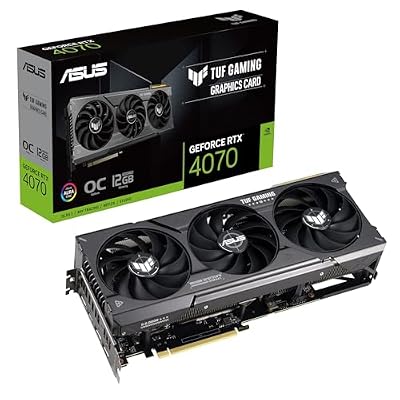
ASUS
ASUS TUF Gaming NVIDIA GeForce RTX 4070 OC Edition Gaming Graphics Card (PCIe 4.0, 12GB GDDR6X, HDMI 2.1, DisplayPort 1.4a), 3 Year Warranty

Sapphire
Sapphire Pulse AMD Radeon RX 7800 XT Gaming 16GB GDDR6 Dual Video Card

ASUS
ASUS ROG Strix GeForce RTX 4090 OC Edition Gaming Graphics Card (PCIe 4.0, 24GB GDDR6X, HDMI 2.1a, DisplayPort 1.4a), 3 Year Warranty
As an Amazon Associate we earn from qualifying purchases. Product prices and availability are accurate as of the date/time indicated.
Final Verdict: Is the 3070 GPU Still Worth Buying in 2026?
The 3070 GPU earns a qualified but genuine recommendation in 2026: at $200-280, it remains the most cost-effective path to strong 1440p and exceptional 1080p performance, powered by mature drivers and a 220W design that drops into almost any existing build. Its 8GB of VRAM is a real constraint you manage with one settings notch, not a disqualifier — provided you buy it as the value play it is rather than a long-horizon investment. With the H200 export approval tightening Nvidia’s consumer supply and component inflation lifting the entire price stack, used Ampere pricing is more likely to firm than fall. If the buyer profile above matches yours, check today’s Amazon listings and lock in a warrantied unit while the current window holds.
Frequently Asked Questions
What is the best 3070 gpu in 2026?
The best 3070 gpu depends on your budget and how you plan to use it. The options compared above are our top-rated picks based on real customer ratings, build quality, and overall value — start with the highest-rated model that fits your budget.
How much should I expect to spend on a 3070 gpu?
Prices vary by brand and features. Budget options cover the essentials, while mid-range and premium models add durability, performance, and extra features. Compare the prices in the list above to find the best value for your needs.
What should I look for when buying a 3070 gpu?
Focus on what matters most for your use case — build quality, compatibility, performance, warranty, and verified customer reviews. Every pick above is selected to balance these factors.
Are budget 3070 gpu options worth it?
Yes. For most people a well-reviewed budget or mid-range 3070 gpu delivers excellent value. You only need to spend more if you specifically require premium materials or top-tier performance.
How did we choose these 3070 gpu picks?
We compare current Amazon ratings, review counts, key features, and price to surface the options with the best real-world value. The list is refreshed as ratings and availability change.


Write Your Review
No reviews yet. Be the first to share your experience!