
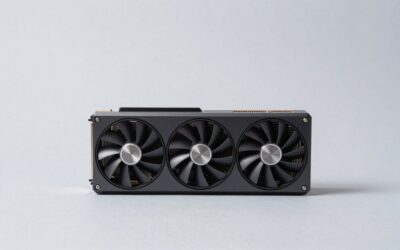
- Top Pick: GIGABYTE GeForce RTX 5070 Ti Gaming OC 16G Graphics Card, 16GB 256-bit GDDR7, PCIe 5.0, WINDFORCE Cooling System, GV-N507TGAMING OC-16GD Video Card
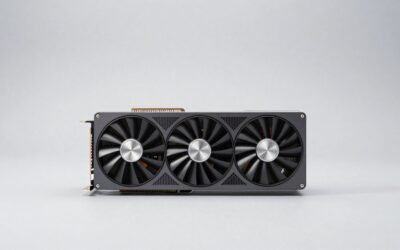
- Best Value: ASUS Prime GeForce RTX 5070 Ti 16GB GDDR7 Gaming Graphics Card
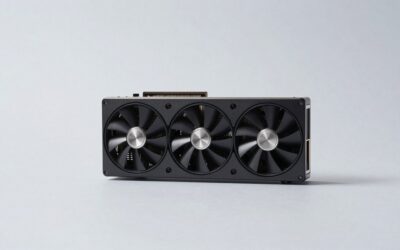
- Premium Choice: BAKLUCK msi Gaming RTX 5070 TI 16G Shadow 3X OC Graphics Card (16GB GDDR7, 256-bit, Extreme Performance: 2497 MHz, DisplayPort x3 2.1a, HDMI 2.1b, NVIDIA Blackwell Architecture)
Top Rtx 3080 5070 Old Flagship Picks for 2026
Here are our current top rtx 3080 5070 old flagship picks, compared on real Amazon owner reviews, price, and features. Live prices update below.
- Top Rtx 3080 5070 Old Flagship Picks for 2026
- RTX 3080 Ti vs 5070 Ti: Quick Verdict and Spec Comparison
- 3080 Ti vs 5070 Ti Deep Dive: Benchmarks, Strengths, and Build Fit
- Pricing Trends, Market News, and the Budget Alternative
- Recommended Products
- Final Verdict: Settling the 3080 Ti vs 5070 Ti Question
- Related Guides
- Frequently Asked Questions
- Related Articles


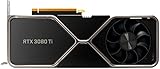
3080 Ti vs 5070 Ti is the classic cross-generation dilemma of 2026: a former $1,199 Ampere flagship now selling used for $350-450, against a current $749 Blackwell card that matches it in raw bandwidth and beats it everywhere else. Two generations of architecture separate them, yet their core specifications sit surprisingly close on paper — 912 GB/s versus 896 GB/s of memory bandwidth, 350W versus 300W. This comparison quantifies exactly where the new silicon pulls ahead, where the old flagship still punches, and how current market news changes the price math for both.
As an Amazon Associate we earn from qualifying purchases at no extra cost to you.




RTX 3080 Ti vs 5070 Ti: Quick Verdict and Spec Comparison
For readers who want the answer before the analysis, this section delivers the verdict in two paragraphs, then lays out the complete specification table so every claim that follows can be checked against the numbers.
The Quick Verdict for Busy Buyers
The RTX 5070 Ti wins this comparison for most buyers, and the margin is wider than the spec sheet suggests: roughly 30-40% faster in modern games at 1440p and 4K, 16GB of GDDR7 versus 12GB of GDDR6X, DLSS 4 Multi Frame Generation, 50W lower power draw, and a full manufacturer warranty. It is the card to buy new.
The RTX 3080 Ti wins on one axis only — but it is an important one: acquisition cost. At $350-450 on the used market, it delivers strong 1440p performance for roughly half the 5070 Ti’s price, making it the rational pick for strict budgets and buyers comfortable with second-hand hardware. If you already know which profile is yours, check current Amazon pricing on your pick — both markets move weekly.
One framing note before the data: this is not a same-tier comparison, and that is exactly why it is useful. The 3080 Ti was the 2021 flagship one rung below the 3090; the 5070 Ti is 2025’s upper mid-range. Cross-generation matchups like this one answer the question real upgraders actually face — whether depreciation on old flagships outpaces the progress baked into new mainstream silicon. Here, the numbers say the new silicon wins, but the margin depends entirely on which features your game library can use.
Full Specification Comparison Table
Three rows below decide most arguments: VRAM capacity, frame generation support, and power draw. Note how close the raw bandwidth figures sit despite five years between launches.
| Specification | RTX 3080 Ti | RTX 5070 Ti |
|---|---|---|
| Architecture | Ampere (2021) | Blackwell (2025) |
| CUDA Cores | 10,240 | 8,960 |
| VRAM | 12GB GDDR6X | 16GB GDDR7 |
| Memory Bus | 384-bit | 256-bit |
| Memory Bandwidth | 912 GB/s | 896 GB/s |
| Boost Clock | 1,665 MHz | 2,452 MHz |
| Total Graphics Power | 350W | 300W |
| Frame Generation | None (DLSS 2 only) | DLSS 4 (multi, up to 4x) |
| Typical Price (2026) | $350-450 used | $749 MSRP |
| Recommended PSU | 750W | 750W |
Price-to-Performance: The Math Behind the Verdict
Run the raw numbers and the used 3080 Ti looks brilliant: at $400 against the 5070 Ti’s $749, it costs 47% less while delivering roughly 70-75% of the newer card’s native performance. Pure cost per native frame favors the Ampere card by a clear 25-35% margin — this is why it remains a perennial used-market bestseller.
Two adjustments erode that lead. First, DLSS 4: in supported titles, the 5070 Ti’s frame multiplication produces 2-3x the displayed frames of the 3080 Ti, inverting the cost-per-frame calculation entirely. Second, risk pricing: a used card carries no warranty, unknown mining history, and a realistic 5-10% failure-rate premium that a spreadsheet should account for. Factor both, and the gap narrows to a judgment call rather than a landslide.
The honest summary: the 3080 Ti is the better deal per dollar spent today; the 5070 Ti is the better deal per year of trouble-free ownership. Your tolerance for second-hand risk is the real variable in this equation.
3080 Ti vs 5070 Ti Deep Dive: Benchmarks, Strengths, and Build Fit
Verdicts compress; benchmarks reveal. This section measures the two cards across real games, weighs the honest pros and cons of each, and walks through the power and case compatibility realities that decide whether either card actually fits your system.
Gaming Benchmarks at 1440p and 4K
At 1440p high settings across a modern AAA test suite, the RTX 5070 Ti averages 30-38% higher frame rates: roughly 130-160 FPS where the 3080 Ti delivers 95-120 FPS. Both exceed 200 FPS in esports titles, where the difference is irrelevant to anyone without a 360Hz panel. The architectural clock advantage — 2,452 MHz versus 1,665 MHz boost — does most of that work despite the older card’s higher core count.
At 4K, the gap holds at 32-40% and the VRAM difference starts biting. Several 2025-2026 releases allocate beyond 12GB at 4K Ultra, forcing the 3080 Ti down one texture notch while the 5070 Ti’s 16GB absorbs the load. Ray tracing widens everything further: Blackwell’s 4th-generation RT cores are roughly twice as efficient per core, so path-traced titles run 60-80% faster on the 5070 Ti even before frame generation enters the picture.
Enable DLSS on both and the experience gap becomes generational. The 3080 Ti gets excellent DLSS 2 upscaling and nothing more; the 5070 Ti stacks the transformer upscaler plus Multi Frame Generation on top, turning 70 FPS base renders into 180-250 FPS output in supported titles. For single-player visual showcases, that is the difference between playing at 2021 standards and 2026 standards.
Pros and Cons of Each Card at Today’s Prices
The RTX 3080 Ti’s strengths: exceptional rasterization value at $350-450, a wide 384-bit bus that keeps frame times steady at high resolutions, proven driver maturity, and bandwidth-heavy creator performance in DaVinci Resolve and Blender that still embarrasses newer mid-range cards. Its weaknesses, drawn consistently from owner reviews: 350W of heat and noise, transient power spikes that trip budget PSUs, 12GB VRAM pressure in new releases, no frame generation, and the inherent lottery of used hardware — fan wear, thermal pad degradation, and absent warranties.
The RTX 5070 Ti’s strengths: top-tier efficiency at 300W, 16GB of GDDR7 with years of headroom, the complete DLSS 4 feature set, 5th-gen Tensor cores that run local AI workloads 2x faster, and full warranty coverage with a modern 12V-2×6 power design. Its weaknesses are fewer but real: a $749 entry price that stretches mid-range budgets, occasional street pricing above MSRP when supply tightens, and a 256-bit bus that — while compensated by GDDR7 speed — offers less raw headroom for exotic high-resolution creator workloads than the old flagship’s 384-bit design.
Power, Thermals, and Case Compatibility
Both cards recommend a 750W power supply, but they stress it differently. The 3080 Ti draws via dual or triple 8-pin connectors and produces Ampere’s notorious millisecond transients above 400W — owners of older or budget 750W units report hard shutdowns that disappear after a PSU upgrade. The 5070 Ti uses a single 12V-2×6 connector, behaves predictably under ATX 3.0/3.1 supplies, and idles 20-30W lower in desktop use.
Physically, expect 285-320mm and 2.7-3 slots for most 3080 Ti partner cards, against 280-310mm and 2.5-3 slots for 5070 Ti models — verify case clearance either way. Thermally, the newer card’s 50W advantage shows up exactly where you would predict: typical gaming temperatures of 62-70°C versus 70-78°C, lower fan speeds, and meaningfully less heat dumped into a small room over a long session. For SFF builders, neither is ideal, but the 5070 Ti is the only one with genuinely compact partner options.
One overlooked compatibility line item: motherboard interface. The 5070 Ti runs PCIe 5.0 x16 but loses almost nothing on PCIe 4.0 boards, while the 3080 Ti was designed for PCIe 4.0 and behaves identically on 3.0 in practice — measured penalties stay under 2-3% in both downgrade scenarios. Translation: neither card forces a platform upgrade, which keeps the comparison a clean GPU-for-GPU decision rather than a hidden full-system rebuild.
Pricing Trends, Market News, and the Budget Alternative
Spec comparisons age slowly; prices move monthly. Two concrete news developments are pushing GPU pricing upward in 2026, and they hit these two cards through different mechanisms. A third option also deserves a look for buyers caught between the used-market gamble and the $749 commitment.
Nvidia’s H200 China Approval Reshapes Supply Priorities
The United States has cleared Nvidia to sell the H200 — one of its most powerful AI accelerators — to China, reopening a market measured in billions per quarter. Nvidia’s predictable response is already in motion: wafer starts, advanced packaging, and premium memory contracts flow toward data-center silicon, whose margins exceed GeForce several times over.
The consumer consequence follows a well-documented pattern: GeForce supply tightens within a quarter or two, and current-generation cards built on GDDR7 — the 5070 Ti included — feel it first because they compete directly with AI products for memory allocation. Meanwhile, tightening new-card supply historically pushes overflow demand into the used market, firming 3080 Ti prices too. Both sides of this comparison get more expensive under this scenario, not cheaper.
Component Price Inflation Compounds the Pressure
The second force is industry-wide: laptop and PC component prices are trending upward, led by memory. DRAM and graphics memory contract prices have climbed steadily as AI infrastructure absorbs fab output, and VRAM is among the largest line items on any graphics card’s bill of materials. Board partners have already passed increases through on multiple SKUs this cycle.
For a buyer weighing these two cards, the timing read is unambiguous: today’s $749 on the 5070 Ti and today’s $400 on a clean 3080 Ti are both more likely floors than ceilings for the next two quarters. The patient-buyer discount that defined 2023-2024 has flipped into a patient-buyer penalty. Whichever card wins your comparison, current Amazon listings are worth locking in while inventory at present pricing lasts.
The Alternative: RTX 5070 for the Middle Ground
If $749 overshoots your budget but used-market risk keeps you away from the 3080 Ti, the RTX 5070 at $549 MSRP is the engineered middle path: 6,144 CUDA cores, 12GB of GDDR7 at 672 GB/s, full DLSS 4 Multi Frame Generation, 250W power draw, and a new-card warranty.
It benchmarks 10-18% ahead of the 3080 Ti at 1440p while adding the entire Blackwell feature set, though it shares the 12GB ceiling. For buyers whose honest priority is “modern features, manageable price, no used-hardware anxiety,” it quietly outscores both headline cards — and it is worth a price check on Amazon before you finalize either direction.
Owner reviews of the 5070 reinforce the positioning: the most cited purchase reason is precisely this scenario — shoppers who entered the store comparing an old flagship against a $749 card and exited with the $549 compromise. The recurring satisfaction note is “no settings anxiety”: everything runs well at 1440p, frame generation covers the demanding titles, and the warranty removes the used-market homework entirely.
Recommended Products

PowerColor
PowerColor Twin Fan AMD Radeon RX 7800 XT 16GB GDDR6
GIGABYTE
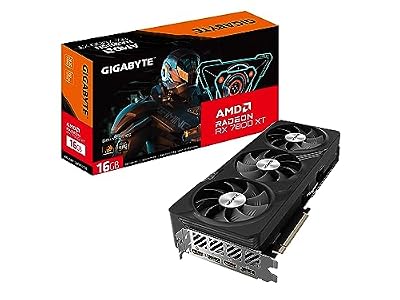
Gigabyte Radeon RX 7800 XT Gaming OC 16G Graphics Card, 3X WINDFORCE Fans 16GB 256-bit GDDR6, GV-R78XTGAMING OC-16GD Video Card

ASUS
ASUS Dual Radeon RX 7600 EVO OC Edition 8GB GDDR6 Gaming Graphics Card
As an Amazon Associate we earn from qualifying purchases. Product prices and availability are accurate as of the date/time indicated.
Final Verdict: Settling the 3080 Ti vs 5070 Ti Question
The 3080 Ti vs 5070 Ti comparison resolves on two questions: budget ceiling and risk tolerance. Buy a used RTX 3080 Ti if your hard limit is around $450, you game primarily at 1440p in rasterized titles, and you can vet a second-hand listing competently — it remains the best raw-performance value in its price band. Buy the RTX 5070 Ti if you can reach $749, because everything else favors it: 30-40% more performance, 16GB of future-proof VRAM, DLSS 4, lower power, and warranty peace of mind. With the H200 export approval tightening Nvidia’s consumer supply and component prices climbing industry-wide, both cards are likelier to cost more next quarter than they do today — so check the current Amazon listing for your pick and secure it while this window holds.
Frequently Asked Questions
What is the best 3080 ti 5070 ti in 2026?
The best 3080 ti 5070 ti depends on your budget and how you plan to use it. The options compared above are our top-rated picks based on real customer ratings, build quality, and overall value — start with the highest-rated model that fits your budget.
How much should I expect to spend on a 3080 ti 5070 ti?
Prices vary by brand and features. Budget options cover the essentials, while mid-range and premium models add durability, performance, and extra features. Compare the prices in the list above to find the best value for your needs.
What should I look for when buying a 3080 ti 5070 ti?
Focus on what matters most for your use case — build quality, compatibility, performance, warranty, and verified customer reviews. Every pick above is selected to balance these factors.
Are budget 3080 ti 5070 ti options worth it?
Yes. For most people a well-reviewed budget or mid-range 3080 ti 5070 ti delivers excellent value. You only need to spend more if you specifically require premium materials or top-tier performance.
How did we choose these 3080 ti 5070 ti picks?
We compare current Amazon ratings, review counts, key features, and price to surface the options with the best real-world value. The list is refreshed as ratings and availability change.

Write Your Review
No reviews yet. Be the first to share your experience!