
- Top Pick: ASUS Dual NVIDIA GeForce RTX 3050 6GB OC Edition Gaming Graphics Card – PCIe 4.0, 6GB GDDR6 Memory, HDMI 2.1, DisplayPort 1.4a, 2-Slot Design, Axial-tech Fan Design, 0dB Technology, Steel Bracket
- Best Value: ASUS NVIDIA GeForce RTX™ 5080 Noctua 16GB GDDR7 OC Edition Graphics Card, NVIDIA (Three NF-A12x25 G2 PWM 120mm Fans, Optimized Vapor Chamber, Phase-Change GPU Thermal Pad, HDMI/DP 2.1) 3 Year Warranty
- Premium Choice: Cooler Master NR200P MAX V2 Mini-ITX PC Case Bundle, 280mm AIO, 850W Gold | 357.6mm Graphics Card, Included 280mm AIO, Included 850W SFX Gold PSU, PCIe 5.1 Ready, Vertical GPU Mount, PCIe 4.0 Riser
A powerful gaming rig does not have to sound like a jet on takeoff. In 2026, Nvidia board partners offer cards engineered for near-silent operation, from Noctua-cooled flagships to low-profile models with zero-RPM fan modes. For anyone who games late at night or records audio, acoustics can matter as much as frame rate.
- Watch: Quiet Gaming Rigs: Nvidia GPUs with Low Noise Levels — Video Review
- How to Choose
- The Best Picks Reviewed
- How Noise Is Measured and Why It Matters
- Step-by-Step: Building a Quieter Rig
- Illustrative Fan Curve
- Common Mistakes
- Troubleshooting Noise Problems
- Frequently Asked Questions
- Final Thoughts
- Related Articles
- Related Guides
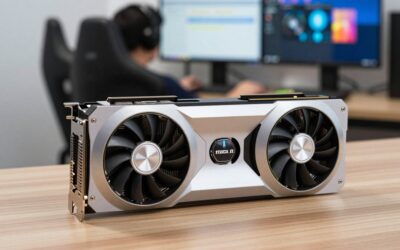
We rounded up the quietest Nvidia GPUs across price tiers, spanning whisper-silent RTX 3050 cards for compact builds up to the acoustically famous ASUS Noctua RTX 5080, so you can build a rig that stays fast and stays hushed.
As an Amazon Associate we earn from qualifying purchases at no extra cost to you.


⚡ Save on Your Next PC — Amazon Prime
Prime members get fast free shipping on the systems above, plus early access to Prime Day & Black Friday PC deals. New members get a 30-day free trial.
Watch: Quiet Gaming Rigs: Nvidia GPUs with Low Noise Levels — Video Review
How to Choose
- Look for zero-RPM fan modes: The best quiet cards stop their fans entirely below roughly 55C, so they are silent during desktop use and light gaming.
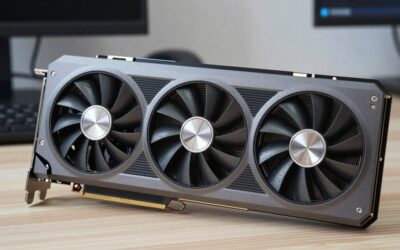
- Bigger coolers run quieter: Larger heatsinks let fans spin slower for the same temperature, so triple-fan cards are often quieter than tiny ones under load.
- Consider Noctua editions: ASUS partners with Noctua on select cards for class-leading acoustics if silence is your top priority.
- Match GPU to resolution: An overpowered card at low load stays quieter; do not force a small cooler to work hard at high resolutions.
- Mind case airflow: A quiet GPU still needs good case ventilation; pair it with slow, large case fans for the best overall acoustics.
The Best Picks Reviewed
ASUS NVIDIA GeForce RTX 5080 Noctua 16GB GDDR7 OC Edition
The undisputed champion of silent performance, the Noctua edition pairs two of Noctua’s famous fans with a massive heatsink to deliver flagship 4K gaming at noise levels most cards cannot approach even at idle.
ASUS GeForce RTX 5080 16GB GDDR7 Noctua OC Edition
A second Noctua-cooled RTX 5080 variant, this model brings the same beige-and-brown acoustic pedigree and enormous cooler, making it the go-to for a high-end build where silence is non-negotiable.
ASUS Dual NVIDIA GeForce RTX 3050 6GB GDDR6 OC Edition
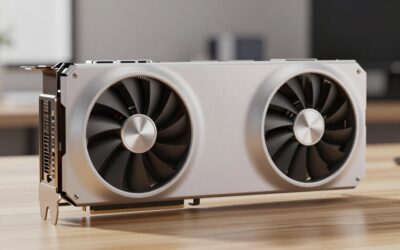
On the budget end, this fanless-at-idle RTX 3050 draws so little power that its fans rarely spin up hard, making it one of the quietest ways to build a capable 1080p machine.
MSI Gaming RTX 3050 Ventus 2X 6G OC
The Ventus 2X keeps its dual fans slow and steady thanks to the 3050’s low heat output, delivering a calm, near-silent experience for esports and 1080p gaming.
ASUS TUF Gaming NVIDIA GeForce RTX 5070 Ti 16GB GDDR7 OC Edition
For a quiet mid-high build, the TUF 5070 Ti’s oversized cooler keeps fan speeds low during demanding 1440p and 4K sessions, balancing strong performance with restrained acoustics.
How Noise Is Measured and Why It Matters
Graphics card noise is usually expressed in decibels, often as dBA, which weights the scale toward frequencies the human ear hears best. The scale is logarithmic. A common rule of thumb is that a 10 dBA increase sounds about twice as loud, and a 3 dBA increase doubles the sound power. That means a card that is 6 dBA louder than another is a very noticeable step, not a rounding error.
| Everyday sound | Approximate level |
|---|---|
| Whisper | About 30 dBA |
| Quiet library | About 40 dBA |
| Normal conversation | About 60 dBA |
A bedroom or recording space often sits near the bottom of that table, so even a modest fan can stand out.
Step-by-Step: Building a Quieter Rig
- Choose the cooler first. Larger heatsinks and bigger fans move the same heat at lower speeds. Noctua-branded designs such as the ASUS RTX 5080 Noctua OC Edition are physically large, so confirm the card length and slot width against the case.
- Match card power to your goal. A lower-power model such as the ASUS Dual RTX 3050 or MSI Gaming RTX 3050 Ventus 2X needs less cooling than a high-end board like the ASUS TUF Gaming RTX 5070 Ti, so its fans can often stay slow or stop.
- Select a case with a mesh front and room for large fans. Slow, large case fans are quieter than small fast ones.
- Set a custom fan curve. Tools from the card maker or a utility such as MSI Afterburner let you keep fans low until the GPU truly needs them.
- Cap the frame rate. Limiting frames to the monitor’s refresh rate stops the card from working harder than the screen can display.
- Consider a modest power limit or undervolt. Many cards lose only a small share of performance when voltage is trimmed, while temperatures and noise both fall.
Illustrative Fan Curve
The numbers below are a hypothetical example, not a specification for any listed card.
| GPU temperature | Fan speed target | Result |
|---|---|---|
| Below 50 C | 0 percent (zero-RPM mode) | Silent at the desktop and in light games |
| 50 to 65 C | 30 to 40 percent | Faint airflow, barely audible |
| 65 to 75 C | 40 to 55 percent | Audible but steady |
| Above 75 C | Ramp up gradually | Prioritizes safety over silence |
Avoid curves that jump suddenly between steps, since quick fan changes are more distracting than a steady, slightly higher speed.
Common Mistakes
Quiet builds usually fail for small, avoidable reasons rather than a single bad part, so work through them one at a time and listen after each change.
- Assuming any premium card is quiet; some high-end boards are loud under sustained load.
- Blaming the GPU for noise that actually comes from case fans, a hard drive, or the power supply.
- Ignoring dust, which forces fans to spin faster to cool the same heat.
- Tuning only the GPU and forgetting that the case, the processor cooler, and the power supply all contribute to the overall sound.
- Pushing the power limit up for a few extra frames while chasing silence.
- Mounting a heavy card without support, which can add vibration and rattle over time.
Troubleshooting Noise Problems
- High-pitched buzzing under load: This is usually coil whine, an electrical sound rather than fan noise. A frame cap or slightly lower power limit often reduces it.
- Fans ramping up and down every few seconds: Smooth the fan curve or add a small temperature hysteresis so the fans do not chase every spike.
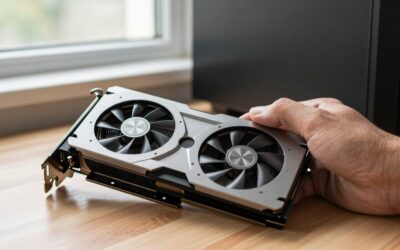
- Rattling or ticking: Check that the card is fully seated and the bracket is screwed down, and look for loose cables touching a fan blade.
- Loud fans at idle: Confirm zero-RPM mode is enabled and that background apps are not keeping the GPU busy.
- Warm air trapped near the card: Improve airflow with an additional intake or exhaust fan, and keep cables out of the airflow path.
Frequently Asked Questions
What makes a graphics card quiet?
A large heatsink, a zero-RPM idle mode, and running the card below its thermal limit all reduce fan speed and noise. Cooler design matters more than the GPU tier itself.
Are Noctua edition cards worth the premium?
If silence is a priority, yes. The Noctua RTX 5080 is measurably quieter than standard designs at the same performance, which is valuable for streaming and late-night gaming.
Do low-power cards run quieter?
Generally yes. Cards like the RTX 3050 6GB produce little heat, so their fans rarely need to spin fast, keeping the whole system calm.
Does case airflow affect GPU noise?
Absolutely. A well-ventilated case lets a quiet GPU stay cool with slower fans; poor airflow forces the card to work and grow louder.
Final Thoughts
A quiet gaming rig comes down to cooler size and smart thermals. The ASUS Noctua RTX 5080 is the silent flagship, while the RTX 3050 6GB proves you can build a hushed, capable machine on a budget.

Write Your Review
No reviews yet. Be the first to share your experience!