
- Top Pick: NVIDIA GeForce RTX 3060 Ti Founders Edition 8GB GDDR6 PCI Express 4.0 Graphics Card (Renewed)
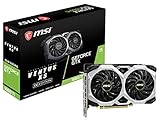
- Best Value: ZER-LON GeForce GTX 1660 Super 6GB Graphics Cards, GDRR6 192Bit PCIE 3.0X16 Computer Gaming Gpu, Dual Freeze Fans Video Card with HDMI/DP/DVI Ports Support 4K and 8K HD
- Premium Choice: SRhonyra GTX 1660 Ti 6GB Graphics Card GDDR5
Best Seller
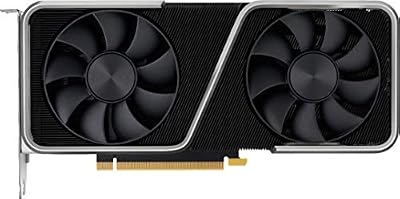
NVIDIA GeForce RTX 3060 Ti Founders Edition 8GB GDDR6 PCI Express 4.0 Graphics Card (Renewed)


Choosing between the 1660 Super vs 3060 Ti is one of the most critical decisions budget and mid-range PC builders face when navigating today’s challenging hardware market. With modern games pushing graphical boundaries and hardware pricing experiencing unpredictable shifts, finding the sweet spot between price and raw performance is more vital than ever. In this comprehensive guide, we will dissect these two popular NVIDIA graphics cards to help you determine which one deserves a spot in your gaming rig.
The Quick Verdict and Core Specification Showdown
Before we plunge into detailed benchmark numbers and deep-dive technical architectures, it is essential to establish a baseline of what these two graphics cards offer on paper and which one generally serves the average consumer best.
As an Amazon Associate we earn from qualifying purchases at no extra cost to you.




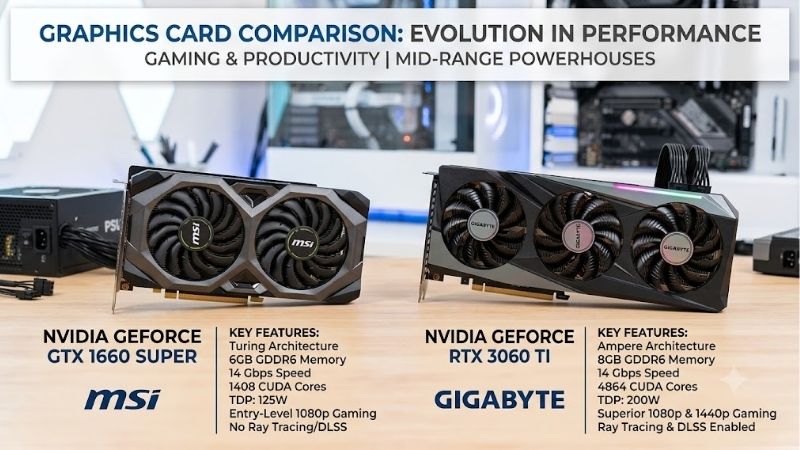
The Quick Verdict: Which Graphic Card Wins?
If you are looking for a quick, definitive answer: the RTX 3060 Ti is the undisputed champion in terms of raw performance, longevity, and feature set. Offering roughly 60% to 80% faster frame rates than the older card, along with crucial access to NVIDIA DLSS (Deep Learning Super Sampling) and hardware-accelerated Ray Tracing, it is the superior choice for anyone wanting to play modern AAA titles at 1080p or 1440p.
However, the GTX 1660 Super remains a highly respectable, power-efficient option for budget-restricted gamers, esports enthusiasts, or those building ultra-compact, low-power secondary PCs. If your gaming library consists primarily of lighter competitive multiplayer titles, the older Turing card still holds its ground.
- [Check the latest price on Amazon for the RTX 3060 Ti]
- [Check the latest price on Amazon for the GTX 1660 Super]
Comprehensive Comparison Table of Specs
To truly understand why these two cards perform so differently, we must look under the hood. While specifications do not always tell the whole story due to architectural advancements, they provide a vital roadmap of what each GPU is capable of handling.
| Technical Specification | NVIDIA GeForce GTX 1660 Super | NVIDIA GeForce RTX 3060 Ti |
|---|---|---|
| Architecture | Turing (TU116) | Ampere (GA104 / GA103) |
| Process Node | 12nm (TSMC) | 8nm (Samsung) |
| CUDA Cores | 1,408 | 4,864 |
| Tensor Cores | None | 152 (3rd Gen) |
| RT Cores | None | 38 (2nd Gen) |
| Base Clock | 1530 MHz | 1410 MHz |
| Boost Clock | 1785 MHz | 1665 MHz |
| VRAM Capacity | 6GB GDDR6 | 8GB GDDR6 (or GDDR6X) |
| Memory Bus Width | 192-bit | 256-bit |
| Memory Bandwidth | 336 GB/s | 448 GB/s (608 GB/s for GDDR6X) |
| TDP (Power Draw) | 125 Watts | 200 Watts |
| Recommended PSU | 450 Watts | 600 Watts |
As shown in the table, the architectural shift from Turing to Ampere brings massive upgrades in core counts and memory bandwidth, which directly translates to superior real-world performance.
The 2026 GPU Market Landscape and Global Price Surges
The GPU market in 2026 is experiencing unique pressures that significantly affect your purchasing decisions. First, a macro-level shift has occurred in the semiconductor manufacturing space. Following the United States government’s decision to permit NVIDIA to ship its highly lucrative H200 AI chips to the Chinese market, wafer production capacity at major foundries has been heavily prioritized toward high-margin enterprise AI silicon. This enterprise focus has constrained the supply of consumer-grade GeForce gaming chips, causing modern desktop graphics cards to stay at elevated price points.
Compounding this supply constraint, general pricing across laptops and desktop PC components has continued its upward trend due to rising raw material and logistics costs. This inflationary environment makes the used, refurbished, and older-stock GPU markets highly attractive. Since newer mid-range cards are launching at premium prices, securing a reliable mid-tier card has become a top priority for builders trying to escape the price hikes. Buying a proven GPU today acts as an effective shield against further component price inflation later in the year.
Check the latest price on Amazon:
Deep Dive Face-Off: Performance and Technical Battle
To understand how these architectural differences impact your daily computing experience, we must look beyond numbers on a sheet and evaluate actual gaming performance, feature integration, and physical demands on your PC setup.
Gaming Performance in 1080p and 1440p
When evaluating real-world gaming, the performance gap between these two GPUs is staggering. In standard 1080p gaming with high-to-ultra presets, the GTX 1660 Super manages to deliver stable, playable frame rates ranging from 60 to 90 FPS in older or moderately demanding titles like Shadow of the Tomb Raider and Grand Theft Auto V. In competitive esports games such as Valorant, Counter-Strike 2, and League of Legends, it easily clears the 144-FPS hurdle, making it excellent for high-refresh-rate monitors.
However, once you fire up demanding modern titles, the GTX 1660 Super begins to show its age, primarily due to its 6GB VRAM limitation. The RTX 3060 Ti, by contrast, dominates 1080p gaming, easily pushing over 120 FPS on ultra settings in most modern titles. When stepping up to 1440p resolution, the RTX 3060 Ti remains highly capable, maintaining a smooth 60+ FPS experience in heavy games like Cyberpunk 2077 and Red Dead Redemption 2. The GTX 1660 Super struggles heavily at 1440p, often dropping below 40 FPS, which requires you to lower graphical settings significantly to achieve playable frame rates.
Architecture and Ray Tracing Capabilities
The architectural contrast between these two cards is where we see a true generational leap. Built on the older 12nm Turing architecture, the GTX 1660 Super lacks physical RT (Ray Tracing) cores and Tensor cores. While it can technically run basic ray tracing via software emulation on specific engines, doing so reduces performance to an unplayable slideshow. It also completely lacks native hardware support for DLSS, meaning you cannot take advantage of NVIDIA’s proprietary AI upscaling to boost frame rates in demanding titles.
The RTX 3060 Ti, built on the 8nm Ampere architecture, is fully equipped with dedicated 2nd Generation RT cores and 3rd Generation Tensor cores. This hardware enable you to play games with gorgeous real-time reflections, global illumination, and realistic shadows. More importantly, access to DLSS 2 Super Resolution allows the card to render games at a lower internal resolution and upscale them using AI, providing a massive boost to frame rates with almost zero loss in visual quality. In an era where modern game engines rely heavily on upscaling technologies to achieve smooth performance, the RTX 3060 Ti has a massive advantage in future-proofing your system.
Thermal Efficiency, Power Consumption, and Design
From a hardware design and system integration standpoint, the GTX 1660 Super is an incredibly forgiving GPU. Sporting a modest thermal design power (TDP) of just 125 Watts, it generates very little heat and can easily run on a modest 450-Watt power supply. This low thermal footprint allows manufacturers to build highly compact, single-fan versions of the card, making it an absolute favorite for Mini-ITX small-form-factor builds and simple pre-built PC upgrades where space and ventilation are limited.
The RTX 3060 Ti is a much meatier card, carrying a TDP of 200 Watts and requiring a minimum of a 600-Watt power supply. It draws more power from the wall and outputs significantly more heat under load, requiring a more robust cooling solution. Most models feature dual- or triple-fan setups and thicker heatsinks, which means you must ensure your PC case has adequate airflow and physical clearance to accommodate the larger card. While it requires more power, the performance-per-watt efficiency of the Ampere architecture remains highly impressive compared to older generations.
Market Value, Alternatives, and Final Buying Advice
Evaluating these graphics cards requires balancing their technical prowess against your wallet and considering how they fit into the broader tech ecosystem of 2026.
Pros & Cons of the 1660 Super vs 3060 Ti
To help organize your thoughts and make a quick, rational assessment, let us weigh the absolute best and worst aspects of each card.
GTX 1660 Super Pros:
- Highly affordable entry point into desktop PC gaming.
- Exceptionally low power draw (125W), requiring cheaper power supplies.
- Compact physical designs ideal for small-form-factor cases.
- Excellent performance in popular competitive esports titles.
GTX 1660 Super Cons:
- Lacks hardware RT and Tensor cores (no native DLSS support).
- Limited to 6GB VRAM, which struggles with modern AAA game textures.
- Ineffective for smooth 1440p gaming.
RTX 3060 Ti Pros:
- Superb 1080p ultra and highly capable 1440p gaming performance.
- Equipped with dedicated hardware for Ray Tracing and DLSS.
- 8GB VRAM provides better headroom for modern visual assets.
- Excellent encoding capabilities for streaming and content creation.
RTX 3060 Ti Cons:
- Higher initial cost compared to budget Turing options.
- Increased power consumption (200W) requires a larger PSU and better case airflow.
- Physically larger cards can limit compatibility in small cases.
The Alternative Choice: Looking Beyond the Duo
If you find yourself torn between these two options, or if local stock levels and pricing are unfavorable due to the current market pressures, it is highly recommended to look at a third alternative. In the current landscape, the NVIDIA GeForce RTX 4060 has emerged as an excellent alternative. Built on the newer Ada Lovelace architecture, it offers performance that sits comfortably near the RTX 3060 Ti but operates with a remarkably low TDP of just 115 Watts.
Furthermore, the RTX 4060 grants you access to DLSS 3 Frame Generation, a feature that inserts AI-generated frames to drastically multiply your fluid performance in supported games. If you are worried about rising energy bills or have a power supply that cannot quite handle the 200-Watt draw of the RTX 3060 Ti, looking at the RTX 4060 on Amazon is a highly logical next step.
- [Check the latest price on Amazon for the RTX 4060]
Final Verdict: Who Should Choose What?
Ultimately, your choice boils down to your budget, your monitor’s resolution, and the types of games you intend to play.
You should buy the GTX 1660 Super if your budget is strictly limited, you are running a standard 1080p 60Hz monitor, and your primary gaming catalog consists of esports titles like Valorant, Fortnite, or Rocket League. It is also the perfect choice if you are upgrading an older, low-power pre-built office PC and do not want to go through the hassle and expense of replacing your existing power supply.
You should buy the RTX 3060 Ti if you want to play modern, visually intensive AAA titles (like Cyberpunk 2077 or Alan Wake 2) with high graphical fidelity, want to experience Ray Tracing, or plan to transition to a 1440p monitor. The extra investment not only yields massively higher frame rates but also ensures your gaming PC remains capable and compatible with future game releases for several years to come.
- [Check the latest price on Amazon for the RTX 3060 Ti]
- [Check the latest price on Amazon for the GTX 1660 Super]
Conclusion
When we pit the 1660 Super vs 3060 Ti against each other, it is clear that they cater to different stages of a gamer’s journey. While the GTX 1660 Super remains a reliable, cost-effective life raft for ultra-budget setups, the RTX 3060 Ti represents a massive generational leap in raw power, visual fidelity, and modern features. In a market defined by climbing hardware prices and shifting manufacturing priorities, investing in a robust mid-range card like the RTX 3060 Ti or its modern counterparts is a smart, forward-looking decision that will keep you gaming smoothly for years. Which of these powerful options will you be adding to your shopping cart today?
Frequently Asked Questions
How much faster is the RTX 3060 Ti?
Roughly 80 to 100 percent faster than a GTX 1660 Super in rasterised games, which effectively doubles your frame rate. It also adds DLSS support, hardware ray tracing and 8GB of VRAM against 6GB, turning a 1080p high settings card into a genuine 1440p option in most modern titles.
Do I need a new power supply?
Probably. The GTX 1660 Super draws around 125W from one 8-pin, whereas the RTX 3060 Ti is rated at 200W and often uses two 8-pin connectors on partner boards. Budget for a quality 600 to 650W unit and use separate native cables rather than a single daisy-chained lead.
Is 8GB of VRAM still enough?
At 1080p it remains workable, and at 1440p it is the card main limitation in newer titles with ultra textures or ray tracing. Dropping textures one notch and enabling DLSS quality generally keeps frame times smooth. The 6GB on the 1660 Super is considerably more restrictive.
Does DLSS make a big difference here?
Yes, and it is one of the strongest arguments for the upgrade. DLSS quality typically adds 30 to 50 percent more frames in supported games, and the RTX 3060 Ti can use the newer DLSS 4 transformer model for better image stability. The GTX 1660 Super can only use FSR.
Is the RTX 3060 Ti still worth buying used?
It can be, provided the price is well below current entry-level cards like the RTX 5060 or RX 9060 XT. Check for mining wear, ask for benchmark screenshots with temperatures visible, and remember that a new card brings a warranty, more VRAM and current generation features.
Ready to decide? Our #1 pick for 2026 is the Technical Specification.
Live price & availability on Amazon.




Write Your Review
No reviews yet. Be the first to share your experience!