
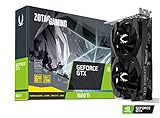
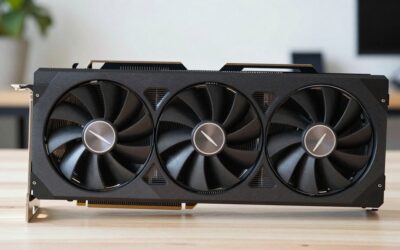
- Top Pick: 51RISC GeForce GTX 1660 Ti Graphics Card, 6GB GDDR6 192bit Video Card for Gaming GPU PCIe 3.0 x16 DP HDMI DVI 1080P 2K Game PC Card 1660ti 4K 8K Display (GTX 1660 Ti – Red)
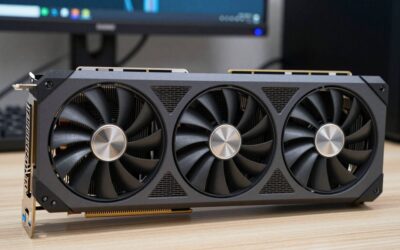
- Best Value: MSI Gaming GeForce GTX 1660 Ti 6GB GDRR6 – 192-bit HDMI/DP, Dual Fan, VR Ready, OC Graphics Card for Gaming PC, NVIDIA Video Card GPU (GTX 1660 TI Ventus XS 6G OC) Computer Graphics Cards (Renewed)
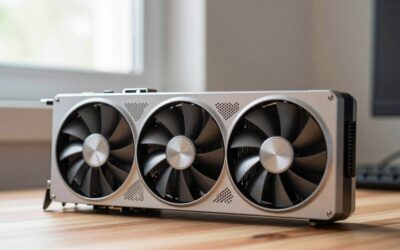
- Premium Choice: EVGA 06G-P4-1667-KR GeForce GTX 1660 Ti SC Ultra Gaming, 6GB GDDR6, Dual Fan (Renewed)


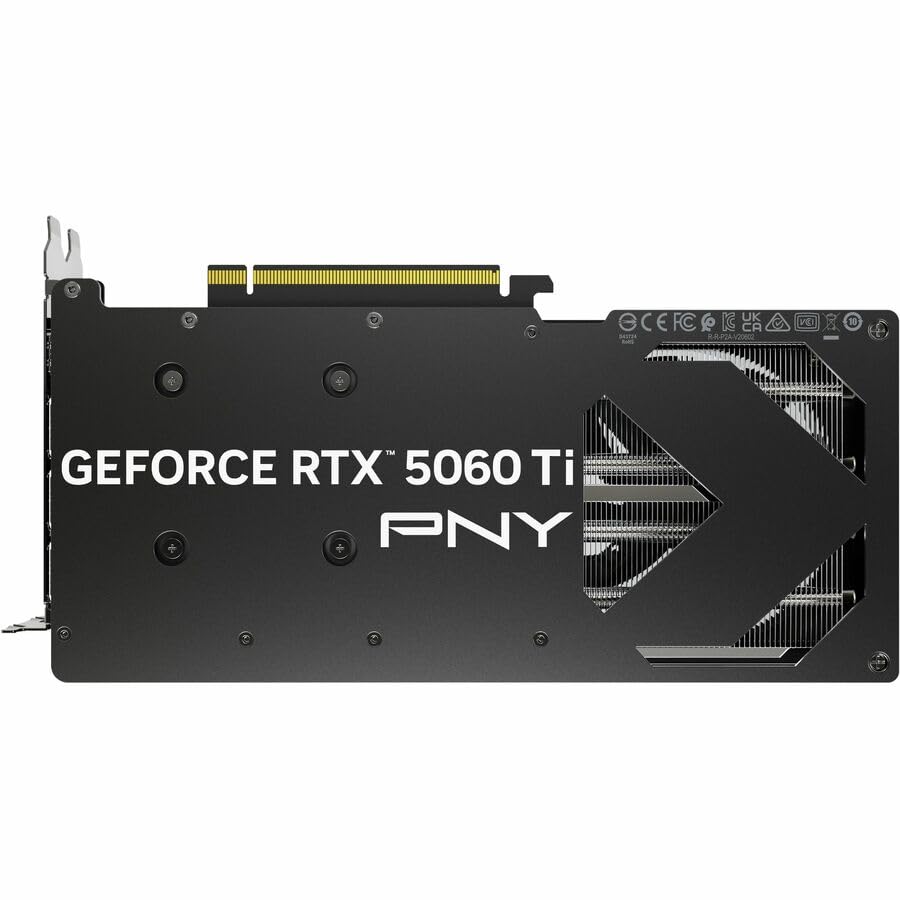

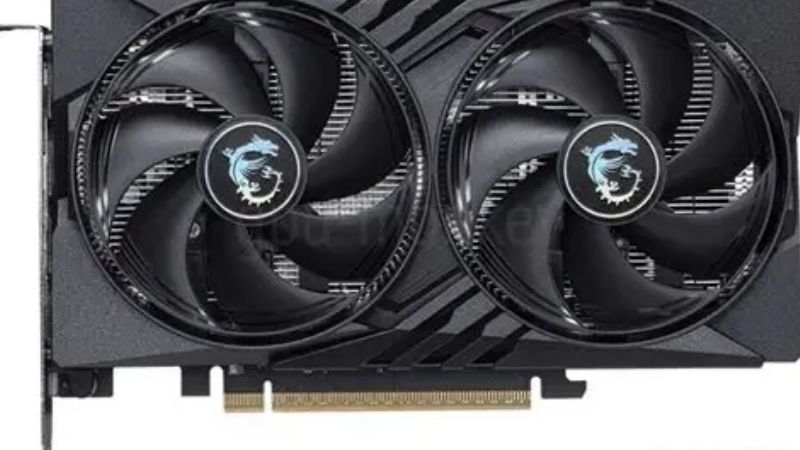
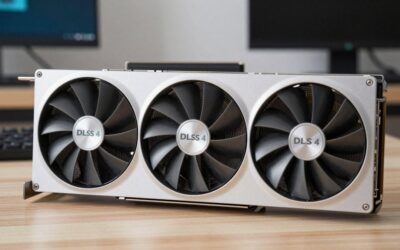
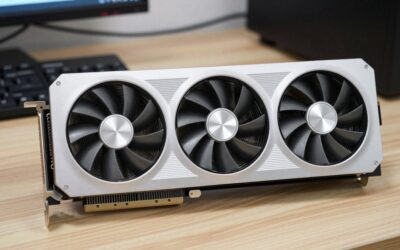
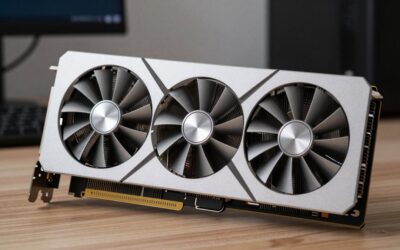
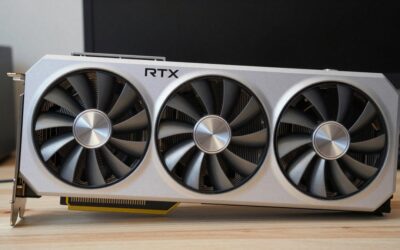
RTX 5050 vs GTX 1660 Ti pits NVIDIA’s newest budget card against a beloved older 1080p workhorse, and the gap is wider than the price alone suggests. One brings a modern architecture with DLSS 4, ray tracing, and more VRAM, while the other is a proven but aging rasterizer with none of those features. For a value-focused 1080p gamer, choosing wrong means either missing the upscaling that keeps modern games smooth or overpaying for a card whose strengths you never use. This comparison gives you the fast verdict, a full specification table, a criteria-by-criteria face-off, a sensible alternative, and a clear recommendation.
RTX 5050 vs GTX 1660 Ti: The Quick Verdict and Specs
These two budget cards come from very different eras. The RTX 5050 is a current-generation entry card built on NVIDIA’s Blackwell architecture with modern features, while the GTX 1660 Ti is an older Turing card focused purely on rasterization. The decision hinges on whether you want the modern feature set and future-proofing or the lowest cost for older, lighter games. Here is the short answer and the numbers that drive it.
As an Amazon Associate we earn from qualifying purchases at no extra cost to you.




The 30-Second Verdict for Busy Buyers
If you want DLSS 4 to boost frame rates in modern games, ray tracing, more VRAM, and a card that stays relevant for years, the RTX 5050 is the clear pick. If your only goal is the lowest possible price for older or lighter titles, and you will never use upscaling, a used GTX 1660 Ti can still get you playing 1080p for less.
The honest framing is that the GTX 1660 Ti is a capable older rasterizer, but the RTX 5050 wins the modern-gaming argument decisively thanks to DLSS 4, which lifts its effective performance in supported titles well beyond raw numbers, plus ray tracing and a newer, more efficient design. For anyone buying to play current and future games, that advantage tips the scales firmly toward the newer card.
Put simply, the GTX 1660 Ti is yesterday’s value pick while the RTX 5050 is today’s, and unless you are strictly minimizing cost for an older library, the modern card is the sensible default for a new build.
It is worth stressing how much DLSS 4 changes the practical experience rather than just the benchmark. In a supported modern game, upscaling can turn a borderline result on the RTX 5050 into a smooth, comfortable one, effectively giving it performance the GTX 1660 Ti cannot reach in that title. Since more games support these technologies each year, the practical gap widens over time in the newer card’s favor, even where raw native numbers are close between the two.
Full Specification Comparison Table
The core numbers below explain most of the behavior discussed later, including why the newer card’s features matter more than a small raw-performance gap.
| Specification | RTX 5050 | GTX 1660 Ti |
|---|---|---|
| Architecture | NVIDIA Blackwell | NVIDIA Turing |
| Ray tracing | Supported | Not supported |
| DLSS | DLSS 4 + Frame Gen | Not supported |
| Memory | 8GB (modern) | 6GB GDDR6 |
| Board power | ~130W | ~120W |
| Availability | New (current gen) | Older / used |
The table makes the trade-off obvious: the RTX 5050 adds DLSS 4, ray tracing, and more modern memory for a similar power draw, while the GTX 1660 Ti offers proven rasterization but none of the newer features. Those additions are the heart of the case for the newer card.
Price, Availability, and What You Actually Get
The GTX 1660 Ti is an older card, so it is typically found used or at clearance prices rather than as fresh retail stock, which can make it cheap but also means no new-card warranty in most cases. The RTX 5050 is a current card available new, offering modern features and full warranty coverage for a modest entry-level price.
What you get for the money differs accordingly. The GTX 1660 Ti gives you raw 1080p rasterization at a low cost with the risks of used hardware, while the RTX 5050 gives you a modern feature set, more VRAM, and new-card peace of mind. That practical difference often matters as much as any benchmark gap when you actually go to buy on a budget.
Warranty and reliability deserve weight on a budget build. A new RTX 5050 typically comes with manufacturer coverage and a known history, while a used GTX 1660 Ti carries the usual unknowns of second-hand hardware, from wear to no support if something fails. For a first graphics card or a system you rely on daily, that peace of mind can be worth the modest extra cost, even before you factor in the modern features and larger memory.
RTX 5050 vs GTX 1660 Ti: Deep-Dive Face-Off
Instead of reviewing each card alone, the most useful approach is to compare them directly across the criteria that decide a purchase: raw rasterization, modern features and future-proofing, and power, value, and real-world buying. Each section names a winner so the trade-offs stay concrete.
Raw Rasterization Performance
In pure rasterized gaming, especially in older titles, the two cards are closer than their generation gap suggests, with the GTX 1660 Ti remaining a competent 1080p performer in games that do not use modern features. For someone playing mostly older or esports titles, its raw output is still enough to deliver a smooth experience at sensible settings.
The RTX 5050 generally matches or exceeds it in native performance while adding everything the older card lacks, so even before features enter the equation it is no slower where it counts. The key point is that raw rasterization alone should not decide this matchup, because the moment DLSS is enabled in a supported game, the newer card pulls decisively ahead. Winner on raw native rasterization: roughly even, with a slight edge to the RTX 5050.
The practical read is that if your library is strictly older and you never plan to use upscaling, the GTX 1660 Ti can still serve for less. That is a valid but increasingly narrow use case as more games adopt modern technologies.
Modern Features, DLSS 4, and Future-Proofing
This is where the RTX 5050 wins decisively. DLSS 4 with Frame Generation lets it boost frame rates in supported modern titles far beyond its raw capability, which is exactly the help a budget card needs as games grow more demanding. The GTX 1660 Ti has no such tool, so in newer, heavier games it must rely entirely on brute force and lower settings, where it runs out of room quickly.
Ray tracing and more modern memory add to the RTX 5050’s future-proofing. Ray tracing is limited on an entry card, but having it at all matters for some titles, and the larger, newer memory handles modern textures better than the 1660 Ti’s 6GB. Winner on modern features and future-proofing: the RTX 5050, and this is the single most important category for anyone buying to play current and upcoming games.
Future-proofing is not an abstract concern on a budget card, where headroom runs out fastest. The RTX 5050’s newer memory and modern feature set give it a better chance of staying usable as games grow heavier, whereas the GTX 1660 Ti’s 6GB and lack of upscaling mean it will hit its limits sooner in newer titles. For a buyer who wants the card to last a few years rather than months, that longevity is a meaningful part of the value.
Power, Value, and Everyday Compatibility
Power draw is close, with both cards sitting near 120 to 130W, so neither has a meaningful efficiency edge and both run comfortably on a modest power supply. Either fits easily into a budget system without demanding new parts, which keeps the total build cost low for value-focused buyers.
Value is where the decision gets personal. The GTX 1660 Ti can be cheaper upfront, particularly used, while the RTX 5050 asks a little more for its modern features, VRAM, and new-card warranty. Winner on lowest upfront cost: often the GTX 1660 Ti; winner on overall value for modern gaming: the RTX 5050, since DLSS 4 and future-proofing usually justify the small premium for anyone playing current titles.
Choosing Between the RTX 5050 and GTX 1660 Ti
With the face-off settled by criteria, the final decision comes down to your priorities, how the current market shifts the value math, and whether a different card would serve you better. This section closes those loops so you can buy with confidence.
Pros and Cons of Each Card at a Glance
The summary below captures the strengths and weaknesses that matter most for this budget matchup.
| RTX 5050 | GTX 1660 Ti | |
|---|---|---|
| Strengths | DLSS 4, ray tracing, more VRAM, new warranty | Proven raster, low used price, efficient |
| Weaknesses | Costs a bit more than a used 1660 Ti | No DLSS or ray tracing, only 6GB, ages fast |
| Best for | Modern 1080p gaming with upscaling | Older titles on the tightest budget |
Neither list is a knockout; the right column depends on whether you prioritize the lowest price and raw frames in older games or the modern feature set that keeps newer titles smooth and the card relevant for longer.
How Rising Prices Reshape the Budget Decision
Budget buyers feel price movement most sharply, and the current market matters here. Component and laptop prices have been trending upward, and graphics-card memory has been under particular pressure, which pushes street prices above their usual figures and can narrow the gap between a used older card and a new entry-level one. When that gap shrinks, the RTX 5050’s modern features and new warranty become even easier to justify over a used GTX 1660 Ti.
There is a cautiously positive note: the steep climbs of late 2025 have eased into a stretch of relative stability, though suppliers still warn the situation can shift again. With meaningful new supply from additional memory vendors and Micron’s upcoming Idaho plants not expected until roughly 2027 to 2028, real relief is years away. The practical conclusion for a budget buyer is that a fairly priced card that fits your games today beats waiting for a crash the timeline does not support.
The Alternative: If You Can Stretch a Little
If your budget can flex slightly beyond either card, the RTX 4060 is the natural step up, offering considerably more 1080p performance along with the same modern feature set and DLSS Frame Generation. It costs more than either budget card but delivers a meaningfully better and longer-lasting 1080p experience for players who can afford the jump.
Whichever direction you lean, compare the live prices of these options before deciding. In this shifting market the gaps move constantly, and a well-timed price on the RTX 4060 can occasionally bring it close enough to the budget cards that stretching becomes the smartest long-term value.
See More:
- NVIDIA
- NVIDIA DeepStream
- NVIDIA GPU driver update
- NVIDIA GeForce NOW download
- NVIDIA RTX A2000 12GB driver
Final Verdict: RTX 5050 vs GTX 1660 Ti
The RTX 5050 vs GTX 1660 Ti decision ultimately rewards clarity about the games you play. Choose the RTX 5050 if you want DLSS 4, ray tracing, more VRAM, and the future-proofing that keeps modern games smooth, which suits most buyers looking ahead rather than back. Choose the GTX 1660 Ti only if you want the lowest possible cost for older or lighter titles and never plan to use upscaling. For today’s gaming landscape, the RTX 5050 is the more sensible pick for the majority, but both can play 1080p games, so match the choice to your library, check current pricing and availability, and buy when the deal is fair. In a market where prices are elevated and real relief is still years away, the small premium for the RTX 5050’s modern features and warranty usually looks like money well spent for anyone gaming today rather than in the past.
Frequently Asked Questions
How large is the performance gap?
The RTX 5050 is roughly 60 to 80 percent faster than a GTX 1660 Ti in rasterized 1080p gaming, and the gap becomes enormous once DLSS is enabled since the older card cannot use it at all. It also carries 8GB against 6GB, which resolves texture stutter in current titles.
Is 8GB on the RTX 5050 enough?
For 1080p high settings, yes in most games today, though it is the card’s clearest limitation and frame generation consumes part of that budget. At 1440p or with ray tracing enabled you will need to moderate texture quality. Consider it adequate rather than generous for a card bought new.
What upgrade requirements should I check first?
Power is easy, as the 5050 is around 130W with a single 8-pin and a 550W system recommendation, similar to the 1660 Ti’s 120W. More important is your CPU, since 1660 Ti era systems often pair with processors that will now limit frame rates, and confirming PCIe 4.0 support on your board.
Does the 5050 support multi frame generation?
Yes, being Blackwell it receives DLSS 4 with 2x, 3x and 4x modes. On an entry card the practical advice is to reach a base frame rate near 50fps before enabling it, otherwise latency is noticeable. Used carefully it makes high refresh 1080p achievable in games that would otherwise sit near 60fps.
Is the 1660 Ti worth keeping if money is tight?
If you play esports titles at 1080p and hit your monitor’s refresh rate, it still does the job. The reasons to move on are the 6GB buffer causing stutter in new releases, the absence of DLSS, and Turing’s ageing encoder. Save toward the 5050 rather than buying an intermediate used card.
Ready to decide? Our #1 pick for 2026 is the Architecture.
Live price & availability on Amazon.

Write Your Review
No reviews yet. Be the first to share your experience!