
- Top Pick: ASUS Dual GeForce RTX 4060 V2 OC Edition (PCIe 4.0, 8GB GDDR6, DLSS 3, HDMI 2.1a, DisplayPort 1.4a, 2-Slot Design, Axial-tech Fan Design, 0dB Technology), 3 Year Warranty
- Best Value: ASUS Dual GeForce RTX 4060 Ti EVO OC Edition 8GB GDDR6 (PCIe 4.0, 8GB GDDR6, DLSS 3, HDMI 2.1a, DisplayPort 1.4a, Axial-tech Fan Design, Auto-Extreme Technology), 3 Year Warranty
- Premium Choice: XFX Speedster SWFT210 Radeon RX 7600 Graphics Card with 8GB GDDR6 HDMI 3xDP, AMD RDNA 3 RX-76PSWFTFY

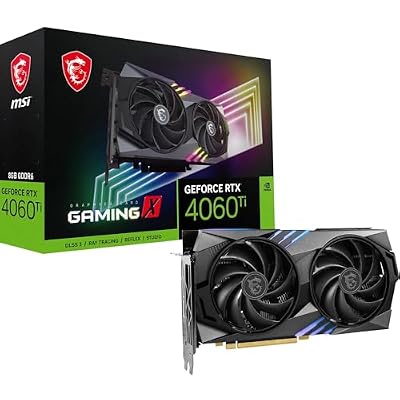


RTX 4060 graphics cards still sit at the top of the search charts for anyone building or upgrading a 1080p gaming PC in 2026, and the questions are always the same: is it fast enough, is 8GB of VRAM a dealbreaker, and does it still make sense now that component prices are creeping up again? This review pulls together the verified specifications, the patterns that show up across hundreds of real owner reviews, and the current market reality, so you can decide with confidence whether this budget favorite belongs in your next build rather than another card.
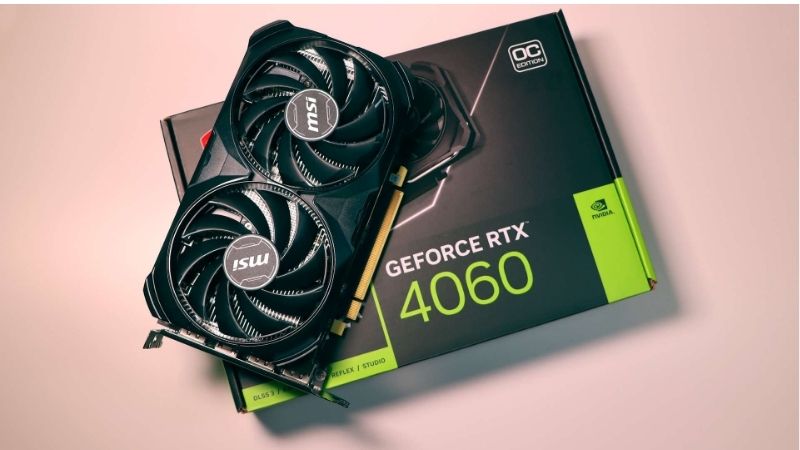
RTX 4060 Performance: What the Numbers Actually Show
Stripped of marketing language, the RTX 4060 is a purpose-built 1080p card. It uses NVIDIA’s AD107 GPU with 3,072 CUDA cores, 8GB of GDDR6 memory on a 128-bit bus, and a rated board power of only 115W. Those four numbers define almost everything the card can and cannot do, so it is worth understanding them before a single frame rate is discussed.
As an Amazon Associate we earn from qualifying purchases at no extra cost to you.




1080p Frame Rates and Real Playability
At 1080p with high settings, the RTX 4060 clears a smooth 60 fps in the large majority of current AAA titles and pushes well past 100 fps in lighter games. Competitive shooters such as CS2, Valorant, and Fortnite run at very high frame rates that comfortably feed a 144Hz monitor, which is exactly the scenario NVIDIA designed this GPU for.
The strain appears when you leave that lane. Native 1440p and heavily ray-traced AAA scenes push the 128-bit bus and the 8GB buffer harder than they like, and average frame rates drop accordingly. For the 1080p buyer this is rarely felt; for anyone eyeing a 1440p panel, it is the single most important caveat in the entire RTX 4060 review.
It also helps to read the frame rate numbers with a little context. A card that averages, say, 80 fps in a demanding title at 1080p high is not just hitting a headline figure; it is holding a stable enough floor that dips during busy scenes still stay above the threshold most players notice. That consistency, rather than peak numbers, is what makes the RTX 4060 feel smooth in practice, and it is a large part of why owners rate the day-to-day experience so highly even when the raw specification looks modest on paper.
DLSS, Frame Generation, and the Experimental Edge
The most forward-looking feature of the RTX 4060 is DLSS with Frame Generation. In supported titles it can roughly double the perceived frame rate by reconstructing and inserting frames, turning a borderline 45-55 fps scene into a fluid experience without a hardware upgrade.
This is where NVIDIA’s software stack earns its premium over raw silicon. As more games adopt DLSS and as the models mature, the effective lifespan of the card stretches beyond what the core count alone would suggest. For buyers who plan to keep one GPU for several years, that ongoing optimization is a genuine, if hard-to-benchmark, part of the value.
It is worth being precise about the trade-off, though. Frame Generation improves smoothness rather than input responsiveness, so it shines in single-player and visually rich games and matters less in fast twitch shooters where you would already run native settings for the lowest latency. Used in the right titles, it is a meaningful uplift; treated as a substitute for raw power in every scenario, it disappoints. Knowing which of your games actually support it is the smartest way to judge how much this feature adds for your library specifically.
Power Efficiency and Thermals in Everyday Use
At 115W, the RTX 4060 is one of the easiest modern GPUs to fit into a real system. A quality 450W to 550W power supply is typically enough, most models draw through a single 8-pin connector, and compact dual-fan versions slot into small-form-factor cases where larger cards simply will not go.
Owners consistently report low temperatures and quiet fans, even in cramped prebuilt chassis with limited airflow. If you are upgrading an off-the-shelf PC and do not want to touch the power supply or worry about clearance, this low-draw profile is a bigger practical advantage than the spec sheet makes it look.
RTX 4060 Pros and Cons Based on Real Owner Reviews
No specification sheet captures how a card behaves after months of daily use. Aggregating the recurring themes from verified 4- and 5-star reviews alongside the honest 2- and 3-star complaints paints a far more useful picture of the RTX 4060 than any single benchmark run ever could.
What 4- and 5-Star Owners Praise Most
The praise clusters tightly around three things: efficiency, quiet operation, and a hassle-free upgrade path. Buyers coming from a GTX 1060, 1650, or 2060 repeatedly describe the jump as dramatic at 1080p, and many highlight that they did not need to replace their power supply to make the swap.
DLSS image quality and the plug-and-play nature of the card come up again and again. A common phrase in top-rated reviews is that it “just works” — dropped in, drivers installed, immediate gains, no drama. For a mainstream buyer, that reliability is the whole point.
The 2- and 3-Star Complaints You Should Know
The most frequent criticism is predictable: 8GB of VRAM feels tight in a handful of the newest titles when textures are cranked to maximum, and the 128-bit bus limits headroom for anyone pushing beyond 1080p. These are real limits, not manufacturing faults.
A smaller group reports coil whine on specific board-partner models, or expresses disappointment after expecting 1440p or 4K performance the card was never built to deliver. Read carefully, most of the lowest ratings come from a mismatch between the buyer’s expectations and the card’s clear 1080p purpose.
RTX 4060 Pros and Cons at a Glance
The table below distills the owner feedback into a quick scan so you can weigh the trade-offs before committing.
| Pros | Cons |
|---|---|
| Excellent 1080p performance at high refresh rates | 8GB VRAM can be tight at max textures in newest games |
| Very low 115W power draw; fits most existing PSUs | 128-bit bus limits 1440p and 4K headroom |
| DLSS + Frame Generation extend real-world lifespan | Modest raw uplift over the previous generation |
| Cool, quiet, and easy to fit in small cases | Occasional coil whine on some partner models |
The pattern is consistent: buy it for what it is, a refined 1080p card, and the pros dominate. Buy it hoping for more, and the cons take over.
Should You Buy the RTX 4060 in Today’s Market?
Performance only tells half the story. Whether the RTX 4060 is a smart purchase right now depends heavily on price, on who you are, and on what you plan to pair it with. The current market makes the timing question unusually important.
How Rising Component Prices Change the Math
Component and laptop prices have been trending upward, and graphics cards are not immune. Memory in particular has been squeezed, which pushes up the street price of nearly every GPU tier. A card that launched around $299 can appear noticeably higher than that at various retailers depending on the week, so the “value” of the RTX 4060 is a moving target that you have to check at the moment of purchase, not assume from its original list price.
There is a mildly positive signal worth weighing. Prices have stopped climbing as steeply as they did in late 2025, and some suppliers have reported a stretch of relative stability, though they are careful to warn that volatility has not disappeared. In other words, the panic-buying pressure has eased, but nobody is promising the trend reverses soon.
New supply is on the way, just not quickly. Manufacturers can source DDR5 from additional vendors, and Micron is building two new fabrication plants in Idaho, but those facilities are not expected to run until roughly 2027 to 2028. The practical takeaway for a 1080p buyer is blunt: waiting many months for a dramatic price crash is a gamble against a supply timeline that is years out, so a fairly priced RTX 4060 available today is a defensible, low-risk choice rather than a mistake you will regret.
Who the RTX 4060 Is Genuinely Right For
The ideal owner is a 1080p high-refresh gamer, someone upgrading an older card, or anyone building in a small case or refreshing a prebuilt with a modest power supply. If that describes you, the card’s efficiency and drop-in simplicity make it one of the least stressful upgrades on the market.
You should look elsewhere if you are aiming for 1440p or 4K, or if you are a creator working with large VRAM-hungry projects. In those cases a card with more memory and a wider bus will serve you better and save you from the very complaints that fill the RTX 4060’s lower-star reviews.
What to Pair With Your RTX 4060
To get the most from the card, match it with a 450W to 550W 80 Plus power supply, a 1080p 144Hz monitor to actually use the frame rates, and a reasonably modern CPU so the GPU is not held back. None of these need to be expensive, which keeps the whole build within budget.
Board-partner choice matters less than people expect, but it is not nothing. A compact dual-fan model is ideal for small cases, while a slightly larger triple-fan version can run marginally quieter under sustained load if you have the clearance. Both perform within a narrow band, so pick the one whose size, warranty, and price suit you rather than chasing tiny factory-overclock differences.
If the RTX 4060 lines up with your resolution, your case, and your budget, it is worth checking the current price and stock before pricing shifts again, then buying the specific model and bundle that fits your system. Locking in a good price on the card and a suitable power supply at the same time is the simplest way to avoid paying more later, and it spares you a second shopping trip if prices tick up in the weeks after you upgrade.
See More:
- NVIDIA
- NVIDIA DeepStream
- NVIDIA GPU driver update
- NVIDIA GeForce NOW download
- NVIDIA RTX A2000 12GB driver
The Bottom Line on the RTX 4060
The RTX 4060 remains a sensible, efficient, and genuinely capable 1080p graphics card for the audience it was built to serve. Its 8GB buffer and 128-bit bus set clear limits, but its low power draw, quiet operation, and DLSS-driven longevity make it an easy recommendation for high-refresh 1080p gaming. In a market where prices are edging upward and meaningful relief is still years away, a fairly priced RTX 4060 today is a low-risk pick you can buy now and enjoy for years — check current availability and pricing before you commit.
Frequently Asked Questions
Is 8GB of VRAM still enough for 1080p gaming in 2026?
For 1080p at high settings, yes in most titles, but it is the card’s clear weak point. Games with heavy texture packs, ray tracing, or frame generation can exceed 8GB even at 1080p, causing sudden stutter. Dropping textures one notch usually resolves it without a visible quality hit.
What power supply does the RTX 4060 require?
The 4060 has a 115W total graphics power, one of the lowest of any modern discrete card, and needs just a single 8-pin PCIe connector. A decent 450W to 500W unit is plenty even with a mid-range CPU, which makes it an easy drop-in upgrade for old prebuilt systems.
Does the PCIe 4.0 x8 interface hurt performance?
On a PCIe 4.0 motherboard the eight-lane link costs nothing measurable. On older PCIe 3.0 boards the effective bandwidth halves and you can lose several percent, with the penalty growing sharply in games that spill past the 8GB buffer and stream assets across the bus.
Is the RTX 4060 better value than a used RTX 3060 Ti?
The 3060 Ti is a little faster in pure raster and has a wider 256-bit bus, but the 4060 wins on efficiency, AV1 encoding, and DLSS frame generation support, which the Ampere card lacks entirely. For a warranty-backed new purchase the 4060 remains the safer buy.
Can the RTX 4060 handle 1440p?
It can, at medium to high settings with DLSS Quality upscaling, typically landing in the 60fps range in modern titles. Native 1440p ultra with ray tracing is beyond it, and the 8GB buffer becomes a real constraint. Treat it as a 1080p card that occasionally stretches upward.
Ready to decide? Our #1 pick for 2026 is the Excellent 1080p performance at high refresh rates.
Live price & availability on Amazon.


Write Your Review
No reviews yet. Be the first to share your experience!