
- Top Pick: NVIDIA DGX Spark™ – Personal AI Desktop Supercomputer – Desktop GB10 Grace Blackwell Chip
- Best Value: NVIDIA DGX Spark™ 2 Pack with Cable Bundle – Personal AI Desktop Supercomputer – Desktop GB10 Grace Blackwell Chip
- Premium Choice: NVIDIA DGX Spark GB10 Grace Blackwell Superchip, 128 GB LPDDR5x, ARM Processor, 4 TB NVME M.2 SSD Storage
![RadarSync PC Updater [Download]](https://m.media-amazon.com/images/I/41c8d3W-eeL._SL400_.jpg)

Prime
Editor's Pick
NVIDIA DGX Spark™ 2 Pack with Cable Bundle – Personal AI Desktop Supercomputer – Desktop GB10 Grace Blackwell Chip

Limited Time
Getting Started with NVIDIA GPUs: A Beginner’s Guide to AI Acceleration with python, C++ and Cuda

Best Seller
NVIDIA DGX Spark GB10 Grace Blackwell Superchip, 128 GB LPDDR5x, ARM Processor, 4 TB NVME M.2 SSD Storage

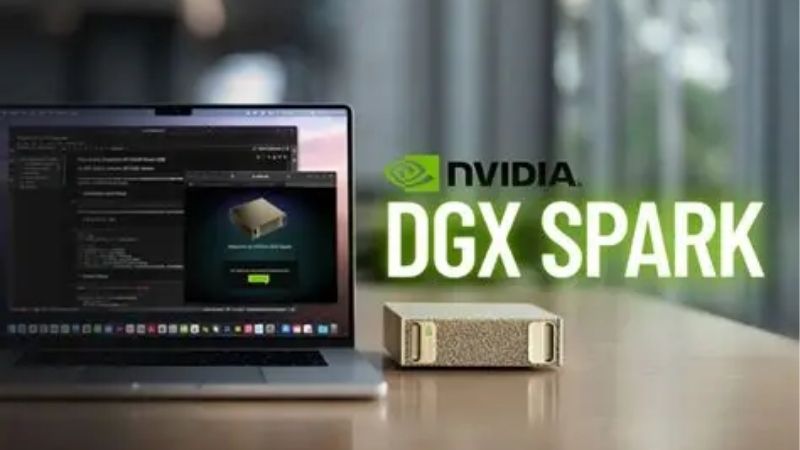
NVIDIA DGX Spark specs have drawn intense interest from AI developers and enthusiasts who want serious model-building power on their desk rather than in a distant data center. This compact machine packs a Grace Blackwell superchip and a huge pool of unified memory into a form factor small enough to sit beside a monitor, promising local AI work that once demanded far larger hardware. This review breaks down the DGX Spark specifications in plain language, weighs its real pros and cons for developers, and looks at whether now is a sensible time to buy given the shifting AI hardware market.
NVIDIA DGX Spark Specifications Explained
Stripped of marketing language, the DGX Spark is a purpose-built AI development machine. Its defining features are a Grace Blackwell superchip pairing an Arm CPU with a Blackwell GPU, a very large pool of unified memory, and fast networking, all in a small desktop form. Understanding these specifications is the key to judging what the machine can actually do for your work.
As an Amazon Associate we earn from qualifying purchases at no extra cost to you.





The Grace Blackwell Superchip and Memory
At the heart of the DGX Spark is NVIDIA’s Grace Blackwell superchip, which combines a multi-core Arm CPU with a Blackwell-architecture GPU on a single package, linked so the two share memory efficiently. This tight integration is what lets a compact machine handle serious AI workloads that would normally require a much larger system.
The standout specification is the large pool of unified memory, which both the CPU and GPU can access. This generous, shared memory is crucial for AI work, since it lets developers load and experiment with large models locally rather than being constrained by the smaller memory typical of a standard graphics card.
That unified memory design is the single most important thing to understand about the DGX Spark. It is what distinguishes the machine from a normal gaming or workstation GPU, enabling model sizes and experimentation that ordinary desktop hardware simply cannot accommodate on its own.
AI Performance and What It Enables
In terms of raw capability, the DGX Spark delivers substantial AI compute performance suited to prototyping, fine-tuning, and running inference on sizable models locally. It is designed for the kind of iterative development where having powerful hardware close at hand accelerates the whole process.
The practical benefit is that developers can build, test, and refine AI models on their own desk without constantly renting cloud compute or waiting on shared cluster time. For research, experimentation, and development workflows, that local immediacy is a genuine advantage, letting ideas move from concept to test far more quickly.
It is worth being realistic about what this performance is for. The DGX Spark is aimed at development and experimentation rather than the largest-scale training runs that still belong in data centers. Its value lies in shortening the loop between having an idea and testing it, giving developers a powerful local sandbox where they can iterate freely before committing to larger, more expensive cloud or cluster resources for final work.
Connectivity, Software, and Form Factor
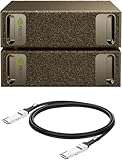
The DGX Spark pairs its compute with fast networking, notably high-speed connectivity that allows two units to be linked together to tackle even larger models than a single machine can handle alone. This scalability is a thoughtful touch for developers whose ambitions may outgrow one unit.
On the software side, it runs NVIDIA’s AI-focused operating system and integrates with the broader NVIDIA software stack, so the tools and frameworks AI developers already use are supported out of the box. All of this arrives in a strikingly small desktop form factor, which is a large part of the machine’s appeal: data-center-class ideas in something that fits on a desk.
The compact size is more than a novelty, since it changes where and how AI development can happen. A machine this small can sit in an office, a lab, or a home workspace without special infrastructure, bringing capable local compute to individuals and small teams who previously had to rely entirely on shared or cloud resources. That accessibility is a meaningful part of why the DGX Spark has generated so much interest among developers.
DGX Spark Pros and Cons for AI Developers
No specification sheet fully captures whether a machine is right for you. Weighing the DGX Spark’s genuine strengths against its limitations gives a clearer picture of who benefits most from it and where its trade-offs lie for real development work.
What Makes the DGX Spark Compelling
The most compelling aspect is the combination of large unified memory and serious AI compute in a compact, desk-friendly machine. For developers who want to work on sizable models locally, that pairing removes the memory ceiling of ordinary GPUs and the friction of relying entirely on cloud resources.
Its integration with NVIDIA’s software ecosystem is another strong point, since it means familiar frameworks and tools work smoothly from the start. The ability to link two units for larger workloads adds headroom, and the small form factor makes it practical to place a genuinely capable AI machine anywhere a normal desktop would go.
The Limitations to Consider
The DGX Spark is a specialized tool, not a general-purpose PC, so it is aimed squarely at AI development rather than gaming or everyday computing. Buyers expecting a do-everything machine should understand it is optimized for a specific, professional-leaning purpose.
Price is the other consideration, as this is a premium device positioned for developers and organizations rather than casual users, and it sits well above the cost of a typical desktop. For those without a genuine AI development need, that investment is hard to justify, which naturally narrows its audience to people who will use its unique strengths.
It is also worth setting expectations about performance relative to full data-center systems. The DGX Spark is designed for local development and prototyping, not to replace large-scale training hardware, so buyers should see it as a powerful on-desk tool rather than a compact supercomputer. Understood in that light, its limitations are less drawbacks and more a reflection of the specific, sensible role it is built to fill.
DGX Spark Pros and Cons at a Glance
The table below distills the trade-offs into a quick scan so you can weigh the machine against your needs.
| Pros | Cons |
|---|---|
| Large unified memory for big local models | Specialized for AI, not general use or gaming |
| Serious AI compute in a compact desktop | Premium price aimed at developers and teams |
| Two units can link for larger workloads | Overkill for anyone without AI development needs |
| Full NVIDIA software ecosystem support | Niche audience compared with mainstream PCs |
The pattern is clear: for AI developers who need local power and large memory, the pros are compelling, while for everyone else the machine is simply not the right tool.
Should You Buy the DGX Spark Now?
Specifications only tell part of the story. Whether now is a sensible time to buy depends on the wider AI hardware landscape, which has been unusually eventful lately, as well as on your own development needs. The current market context is worth understanding before committing to a premium machine.
How AI Policy and Component Prices Affect the Market
The AI hardware world has seen notable shifts recently. The United States has moved to allow NVIDIA to sell the H200, one of its most powerful AI chips, to China, a policy change that signals a somewhat looser export environment and underscores how central NVIDIA’s AI hardware has become. For anyone following AI compute, it is a reminder that the market and its rules are evolving quickly around the very technology the DGX Spark embodies.
At the same time, broader component prices have been trending upward, with memory in particular under pressure, which affects the cost of AI-focused machines that rely on large, fast memory pools. That pricing environment is one reason a device like the DGX Spark carries a premium, and why confirming current pricing matters rather than assuming figures will fall soon.
Relief on the component side is coming but slowly, with additional memory suppliers entering the market and new fabrication plants not expected to be running until roughly 2027 to 2028. For a buyer with a genuine AI development need, the practical conclusion is that waiting for dramatically cheaper hardware is a gamble against a supply timeline that is years out, so acquiring capable local compute now, if it fits your work, is a defensible decision rather than one to postpone indefinitely.
Who the DGX Spark Is Right For
The ideal owner is an AI developer, researcher, or organization that needs to prototype, fine-tune, or run sizable models locally and values having that power on a desk rather than in the cloud. For that buyer, the unified memory and compute justify the investment through faster iteration and reduced reliance on rented resources.
You should look elsewhere if your needs are gaming, general productivity, or lighter workloads, where a standard PC or a mainstream graphics card delivers far better value. The DGX Spark rewards a specific professional purpose, so matching it to a real AI development requirement is what makes it worthwhile.
For teams, the calculation often includes how much cloud compute the machine offsets over time. Developers who currently rent significant cloud resources for constant experimentation may find that local hardware pays for itself through faster iteration and reduced ongoing costs. That ownership math, rather than raw specifications alone, is frequently what tips a genuine AI developer toward investing in a machine like this.
Frequently Asked Questions About the DGX Spark
These quick answers resolve the questions that most often come up about the DGX Spark specifications.
Is the DGX Spark good for gaming? No. It is a specialized AI development machine, not a gaming PC, so a standard graphics card is far better suited to games.
What makes its memory special? Its large unified memory is shared between CPU and GPU, letting developers load and work with much larger AI models locally than a normal GPU allows.
See More:
- NVIDIA
- NVIDIA DeepStream
- NVIDIA GPU driver update
- NVIDIA GeForce NOW download
- NVIDIA RTX A2000 12GB driver
The Bottom Line on the NVIDIA DGX Spark Specs
The NVIDIA DGX Spark specs describe a remarkable machine: a Grace Blackwell superchip and a large pool of unified memory packed into a compact desktop built for serious local AI development. For developers, researchers, and teams who need to work on sizable models without leaning entirely on the cloud, it is a genuinely compelling tool, though its premium price and specialized focus make it a poor fit for general use or gaming. With the AI hardware market evolving quickly and component prices elevated, anyone with a real development need has little reason to wait, so weigh the DGX Spark against your actual workflow, consider how much cloud compute it might replace, and check current availability and pricing before you commit. For the right developer or team, it is a genuinely enabling piece of hardware; for everyone else, it is simply the wrong tool, and recognizing which group you fall into is the whole decision.
Ready to decide? Our #1 pick for 2026 is the Large unified memory for big local models.
Live price & availability on Amazon.





Write Your Review
No reviews yet. Be the first to share your experience!