
NVIDIA founder Jensen Huang has become one of the most recognizable figures in technology, the leather-jacketed engineer who turned a small graphics-chip startup into the company at the center of the artificial intelligence era. His story is remarkable not just for where NVIDIA has ended up, but for how unlikely the journey was, from an immigrant childhood and a job washing dishes to leading one of the world’s most valuable companies. This profile traces who Jensen Huang is, how he built NVIDIA over three decades, the leadership that defines him, and an honest look at both the praise and the criticism that follow a figure of his scale.
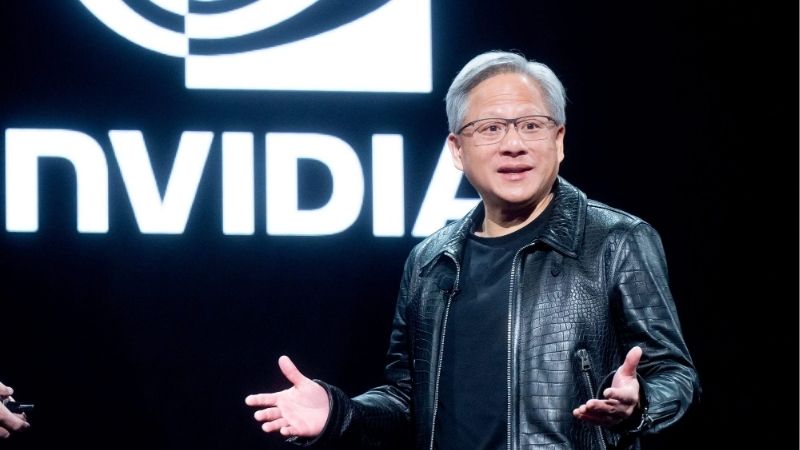
Who Is the NVIDIA Founder, Jensen Huang?
Before understanding NVIDIA, it helps to understand the man who started it, because his background shaped the company’s relentless, engineering-first culture. This section covers Jensen Huang’s early life, his education and first jobs, and the now-famous moment the company was founded.
Early Life and Immigrant Roots
Jensen Huang was born in Taiwan in 1963 and spent part of his childhood in Thailand before his family sent him and his brother to the United States. The move was meant to give the boys a better future, and it placed a young Jensen in an unfamiliar country at a formative age.
One widely told chapter of his early years is his time at a boarding school in rural Kentucky that turned out to be far rougher than his family expected. Rather than breaking him, the experience is often credited with building the resilience and work ethic that would later define his approach to business.
These immigrant roots and early hardships are a recurring theme in how people describe him, framing a leader who learned young that comfort was never guaranteed and effort was the only reliable currency.
That outsider’s drive, the sense of having something to prove in a new country, is something many who know him point to when explaining his intensity. It is a thread that runs from those early years all the way to the boardroom of a global company.
Education and Early Career
Huang went on to study electrical engineering at Oregon State University, where he also met his future wife, before earning a master’s degree in electrical engineering from Stanford University. That technical grounding is central to how he leads, since he remains an engineer at heart rather than a manager who drifted into technology.
Before founding NVIDIA, he gained industry experience at semiconductor companies including LSI Logic and AMD, working close to the silicon that would become his life’s work. Those years gave him a deep understanding of both the technology and the business of chips.
By his late twenties, he had the engineering knowledge, the industry contacts and the ambition to strike out on his own, setting the stage for the company that would define his career.
Founding NVIDIA in 1993
The origin of NVIDIA has become Silicon Valley legend. In 1993, Jensen Huang co-founded the company with fellow engineers Chris Malachowsky and Curtis Priem, reportedly sketching out the idea during meetings at a Denny’s diner, the same restaurant chain where a teenage Huang had once worked washing dishes and busing tables.
The founders bet that specialized chips for accelerating graphics would become essential as computing grew more visual, a wager that was far from certain at the time. The early years were precarious, with the company more than once close to failure before a product caught on.
That willingness to bet the company on a bold technical vision, and to survive the near-death moments that followed, is the pattern that would repeat throughout NVIDIA’s history under his leadership.
How Jensen Huang Built NVIDIA
NVIDIA’s rise from struggling startup to trillion-dollar-scale giant was not luck but a series of deliberate, often risky bets that Huang championed. This section traces the three that mattered most: the GPU itself, the CUDA software platform, and the pivot to artificial intelligence.
The GPU Revolution
NVIDIA’s breakthrough came with graphics processors that made 3D gaming dramatically better, and in 1999 the company popularized the term GPU with the GeForce 256, which it marketed as the world’s first graphics processing unit. That branding helped define an entire category of hardware.
Under Huang, NVIDIA relentlessly iterated on GPU performance, turning the GeForce line into a dominant force in PC gaming. Each generation pushed graphics further, and the company built a reputation for engineering muscle that gamers came to rely on.
This gaming success provided the foundation, and the revenue, for the far larger ambitions Huang would pursue next, using the GPU as a springboard into general computing.
CUDA and the Bet on Parallel Computing
Perhaps Huang’s most consequential decision was investing heavily in CUDA, launched in 2006, which let developers use NVIDIA GPUs for general-purpose parallel computing rather than graphics alone. At the time, it was an expensive bet with no guaranteed market.
The wager was that the massive parallelism of GPUs would prove valuable far beyond games, in science, simulation and eventually machine learning. For years CUDA was a costly investment that skeptics questioned, but Huang kept funding it, convinced the payoff would come.
That conviction built the software moat that underpins NVIDIA’s dominance today, since the entire modern AI ecosystem grew up around CUDA and NVIDIA hardware, an advantage rivals still struggle to match.
Leading NVIDIA Through the AI Revolution
When deep learning began to take off in the early 2010s, researchers discovered that NVIDIA GPUs were ideal for training neural networks, and Huang moved aggressively to make the company the backbone of the AI boom. That foresight positioned NVIDIA at the heart of the most important technology shift in a generation.
Leading a company this central to AI also means navigating global politics, and 2026 offers a clear example. The United States has moved to allow NVIDIA to sell the H200, one of its most powerful AI chips, to China, a decision that reopens a major market for the company’s top data-center hardware. It is the kind of high-stakes, geopolitically charged issue that now lands on the desk of NVIDIA’s founder, far removed from the graphics cards the company started with.
Steering NVIDIA through this era, where a single export decision can reshape the company’s addressable market, has made Huang one of the most closely watched executives in the world, and cemented NVIDIA’s place at the center of the AI economy.
Jensen Huang’s Leadership: Strengths and Criticisms
A figure of Huang’s scale attracts both admiration and scrutiny, and an honest profile weighs each. This section examines his distinctive leadership style, the genuine strengths and fair criticisms of his record, and the legacy he is building.
His Leadership Style and Philosophy
Huang is known for an unusually hands-on, engineering-driven leadership style, famously maintaining a very large number of direct reports and staying deep in the technical details rather than delegating them away. He favors flat, fast communication over rigid hierarchy.
He is also associated with a philosophy of embracing hardship and long-term thinking, often emphasizing resilience and a willingness to endure pain in pursuit of a hard goal. This mindset, rooted in his early experiences, runs through NVIDIA’s culture of betting big and grinding through setbacks.
The result is a company that reflects its founder: technically obsessive, comfortable with risk, and willing to invest for years before a bet pays off.
Colleagues and observers frequently note his direct, demanding communication style, which pushes teams hard but also keeps decisions fast and grounded in engineering reality rather than politics. It is a style that would not suit every company, yet it has proven remarkably effective at NVIDIA’s scale.
Strengths and Criticisms of His Record
The strengths are hard to dispute. Huang has demonstrated extraordinary vision, calling major technology shifts years early, and remarkable staying power, leading the same company he founded for over three decades through multiple near-death moments to enormous success. Few founders have matched that combination of foresight and endurance.
The criticisms are worth stating fairly too. Some observers argue NVIDIA’s dominance has given it outsized pricing power, contributing to expensive graphics cards that frustrate gamers, and critics point to the risks of so much of the AI economy depending on a single company and its proprietary ecosystem. Others question the sustainability of the AI investment boom that has driven NVIDIA’s valuation. These are legitimate debates that come with being this influential.
Weighed together, Huang’s record is one of exceptional achievement paired with the genuine concerns that accompany concentrated market power, and reasonable people can hold both views at once.
Legacy and What It Means for You
Whatever one’s view, Jensen Huang has already secured a place among the most consequential technology leaders of his generation, having helped create the GPU category and positioned his company at the center of the AI era. His story is now a fixture in business and engineering discussions worldwide.
For everyday enthusiasts, his legacy is also tangible, since it lives in the graphics cards that power our games and creative work. The same engineering ambition that built NVIDIA is what sits inside a modern GeForce RTX card, which is the most direct way most people experience his impact firsthand.
His journey also carries a broader lesson that resonates well beyond technology: that unglamorous beginnings and repeated setbacks are not obstacles to success so much as the training for it. The founder who once bused tables at a diner turned patience and persistence into a company that reshaped an industry, a reminder that vision matters most when paired with the endurance to see it through.
See More:
Conclusion: The Legacy of NVIDIA’s Founder
The story of the NVIDIA founder is one of improbable resilience and relentless technical conviction, from an immigrant childhood and a dishwashing job to leading a company at the heart of the AI revolution. Jensen Huang built NVIDIA on bold bets, the GPU, CUDA and artificial intelligence, that repeatedly looked risky before they looked visionary, and he has steered the company through everything from near-bankruptcy to global geopolitics. His record earns both genuine admiration and fair criticism, which is exactly what you would expect of someone so influential.
If reading about the NVIDIA founder makes you want to experience the technology his company is famous for, the most direct way is through a modern GeForce RTX graphics card, where his engineering vision meets your games and creative projects. You can check the latest prices on current RTX cards through the links in this article and see for yourself what three decades of Jensen Huang’s ambition has built.
Frequently Asked Questions
Who founded NVIDIA and when?
NVIDIA was founded in 1993 by Jensen Huang, Chris Malachowsky, and Curtis Priem. Huang has served as chief executive since the beginning, an unusually long tenure for a technology company of this scale, and remains the public face of the company’s strategy.
What is the story about Denny’s?
The three founders famously sketched out the company over coffee at a Denny’s in San Jose. Huang had worked at Denny’s as a dishwasher and busboy as a teenager, a detail he references often when discussing work ethic and early career humility.
How did NVIDIA shift from gaming to AI?
The pivot came from CUDA, released in 2006, which made the parallel architecture of graphics processors programmable for general computation. When deep learning researchers discovered that neural network training mapped extremely well onto that hardware, gaming silicon became the foundation of modern AI infrastructure.
What does this history mean for GPU buyers?
It explains why consumer cards carry Tensor cores and why features like DLSS exist at all. It also explains supply and pricing pressure, since data centre demand for the same fabrication capacity competes directly with consumer graphics card production.
Is NVIDIA still primarily a gaming company?
No. Data centre revenue now dwarfs the gaming segment by a wide margin. Gaming remains strategically important as a proving ground for graphics technology and brand presence, but the financial centre of gravity moved to AI accelerators and networking years ago.
As an Amazon Associate we earn from qualifying purchases at no extra cost to you.








Write Your Review
No reviews yet. Be the first to share your experience!