
- Top Pick: CUDA Deep Learning Made Simple For Beginners and Seniors: Step-by-Step Training Workflows, GPU Usage Guidance, and Common Setup Fixes
- Best Value: Getting Started with NVIDIA GPUs : A Beginner’s Guide to AI Acceleration with python, C++ and Cuda
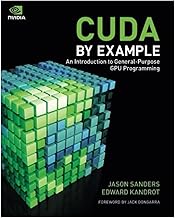
- Premium Choice: CUDA by Example: An Introduction to General-Purpose GPU Programming
What is CUDA NVIDIA, and why does everyone from data scientists to video editors keep talking about it? If you have hit a wall trying to understand the term, or you are staring at an install screen wondering which GPU you even need, this step-by-step guide clears it up fast. We will explain CUDA in plain English, show you exactly what hardware to prepare, walk through setup one step at a time, and flag the mistakes beginners make so you can start running real workloads today.
What CUDA Is and Why It Matters
Think of CUDA as the language that lets your programs speak directly to the thousands of tiny cores inside an NVIDIA GPU. A CPU has a handful of powerful cores built for sequential tasks; a GPU has thousands of smaller cores built to crunch many things at once. CUDA is the bridge that hands the heavy, parallel work to those cores, which is why it can turn hours of computation into minutes.
CUDA in Plain English
CUDA stands for Compute Unified Device Architecture, but you can ignore the acronym. The simple idea: it is a platform that lets software use the GPU for general math, not just graphics.
When a program is “CUDA-accelerated,” it offloads the number-heavy parts to your GeForce card. The result is dramatically faster performance for anything that can be split into many parallel calculations, which describes most modern AI and media work.
A useful mental image: the CPU is a skilled chef cooking dishes one at a time, while the GPU is a huge kitchen line preparing thousands of identical plates at once. CUDA is the set of instructions that routes the right work to that line, which is why parallel jobs finish so much faster.
What CUDA Powers: AI, Video, and Science
You have probably used CUDA without knowing it. It accelerates AI model training and inference, powers effects and encoding in video editors like DaVinci Resolve and Premiere Pro, and speeds up 3D rendering in Blender’s OptiX and CUDA engines.
Beyond creative work, it drives scientific computing, simulations, and data analysis. If a task involves large matrices or huge datasets, there is a good chance a CUDA-enabled tool exists to run it far faster on your GPU than on a CPU alone.
The reach keeps growing as more software adds GPU acceleration. Photo tools, audio processing, and even everyday productivity apps increasingly tap CUDA, so the value of an NVIDIA GPU compounds the more of your workflow moves onto it.
Why CUDA Needs an NVIDIA GPU
Here is the key limitation to understand up front: CUDA is NVIDIA’s proprietary platform, so it only runs on NVIDIA GPUs. AMD and Intel cards use different frameworks, and while some translation layers exist, native CUDA support is the reason NVIDIA dominates AI and creative workflows.
This is why “which GPU do I buy” is the first practical question. Nearly every GeForce card from the GTX 10-series onward supports CUDA, but the number of cores and the amount of VRAM decide how big a workload you can actually handle.
This lock-in cuts both ways. It ties you to one vendor, but it also means the tutorials, tooling, and community support around CUDA are unmatched, so beginners rarely stay stuck without an answer a quick search away.
Pros and Cons of CUDA
The main pro of CUDA is its dominance: it is the industry standard for AI and creative work, with unmatched tools, libraries, and community support that make it the smoothest path into GPU computing.
The main con is lock-in, since CUDA is proprietary and runs only on NVIDIA GPUs, and capable cards are not cheap today. For most beginners, that ecosystem advantage outweighs the trade-off.
What You Need to Start Using CUDA
Before touching a single line of code, get your hardware and downloads lined up. Getting this right the first time saves you from the version mismatches and out-of-memory errors that trip up almost every beginner. Here is the short, practical checklist of what to prepare.
A CUDA-Capable GeForce GPU
Your GPU is the foundation. For learning and light projects, an RTX 3060 or newer is a comfortable starting point, and it handles most beginner AI and rendering tasks without complaint.
If you are serious about AI, a card with strong tensor performance pays for itself quickly. When you are choosing, the recommended CUDA-ready GeForce GPUs linked in this guide are a reliable place to begin, because they balance core count, VRAM, and price for real workloads.
Enough VRAM for Your Workload
VRAM is the number most beginners underestimate. AI models and large renders load into GPU memory, and if they do not fit, the job simply fails with an out-of-memory error. This is a hard wall, not a slowdown.
As a rough guide, 8 GB handles entry-level tasks, 12 GB to 16 GB covers most serious hobbyist AI and 3D work, and 24 GB or more is for large models. Buying a little more VRAM than you think you need is the single best future-proofing decision, so favor a higher-memory GPU from the options linked here.
One practical tip: check the memory requirement of the specific model or project you plan to run before you buy, since published requirements are the most reliable guide. Padding that figure by a few gigabytes leaves room for larger datasets and batch sizes as your ambitions grow.
A Fast SSD and Adequate Power
CUDA workloads read and write large datasets, so a fast NVMe SSD keeps your GPU fed instead of waiting on a slow drive. It is a cheap upgrade that removes a common bottleneck, and a quality NVMe drive from the picks in this guide is an easy win.
Do not overlook your power supply either. High-end GPUs draw serious wattage under sustained CUDA loads, so make sure your PSU has the headroom and the right connectors before you install anything.
How to Set Up CUDA Step by Step
With hardware ready, the software side is straightforward if you follow the order. Do these in sequence, because installing pieces out of order is the number-one cause of “it does not work” frustration. This numbered flow gets you from a fresh system to a verified, working CUDA setup.
Steps 1 to 3: Drivers and Toolkit
Step 1 — Install the latest NVIDIA GPU driver. Grab the current Game Ready or Studio driver for your card. The driver includes the runtime CUDA components most applications need, and a clean install avoids version conflicts.
Step 2 — Decide if you need the full CUDA Toolkit. If you only run CUDA apps like Blender or an AI tool, the driver is often enough. If you plan to compile code or use frameworks like PyTorch or TensorFlow, download the CUDA Toolkit that matches your framework’s supported version.
Step 3 — Install cuDNN if doing deep learning. Many AI frameworks also need the cuDNN library. Match its version to your CUDA Toolkit version exactly, because mismatched versions are the classic silent failure.
Steps 4 to 5: Verify and Test
Step 4 — Verify the install. Open a terminal and run nvidia-smi to confirm the driver sees your GPU, then nvcc --version to confirm the Toolkit is registered. Seeing your card listed means the foundation is solid.
Step 5 — Run a real test. Launch your target app or a small script that reports GPU usage. If the workload lights up your GPU instead of your CPU, CUDA is working and you are ready to build.
If a step fails, do not reinstall everything blindly. Read the exact error message, because most CUDA issues name the mismatched component directly, and fixing that one version is far faster than starting over from scratch.
Pro Tips and Mistakes to Avoid
A few habits separate a smooth setup from a weekend of troubleshooting. First, always match versions: framework, CUDA Toolkit, and cuDNN must agree, so check your framework’s compatibility page before downloading. Second, avoid installing multiple CUDA versions carelessly, as leftover paths cause confusing errors.
The most common beginner mistake is buying too little VRAM and hitting a wall on the first ambitious project, which is exactly why the hardware picks in this guide prioritize generous memory and thermals.
How Nvidia’s AI Direction Shapes CUDA Users in 2026
CUDA does not exist in a vacuum; it rides on Nvidia’s broader hardware strategy, and two recent developments are worth knowing before you invest in a setup. Understanding them helps you time your purchase and set realistic expectations for pricing.
The H200 China Approval and What It Signals
The United States has cleared Nvidia to sell its H200, one of its most powerful AI chips, to China. That is a data-center part, not a GeForce card, so it will not appear in your desktop. But it matters as a signal: demand for CUDA-class compute is enormous and global, which is exactly why Nvidia keeps pouring resources into the CUDA ecosystem that your consumer GPU also benefits from.
For a CUDA learner, the practical takeaway is confidence. The platform you are investing time in is the industry standard and is only getting more entrenched, so the skills and tooling you build now will stay relevant for years.
Component Pricing and When to Buy
The flip side is cost. GPU and memory pricing has stopped its steep late-2025 climb and settled into a relatively stable stretch, but stable does not mean cheap, and VRAM-heavy cards, the ones CUDA users want most, remain pricey. Fresh supply is coming, including new memory sourcing and Micron’s Idaho fabs, yet those plants are not expected to run until roughly 2027 to 2028.
In plain terms, prices have paused rather than dropped, and real relief is still years out. So there is little advantage to waiting for a crash that is not imminent. If you need a CUDA-capable GPU now, buying during this calmer window is a reasonable move, and the memory-rich options linked in this guide give you the best headroom for the money.
There is a silver lining for learners on a budget. You can begin serious study on a mid-range card, build real skills, and upgrade later once the newer fabs ease memory pricing, so the current market is no barrier to getting started today.
See More:
Conclusion: Your CUDA NVIDIA Starting Point
So, what is CUDA NVIDIA in the end? It is the platform that unlocks the parallel power of your GeForce GPU for AI, video, 3D, and science, and getting started is mostly about pairing the right hardware with a careful, in-order install. Match your VRAM to your ambitions, keep your driver, Toolkit, and cuDNN versions in sync, and verify each step before moving on.
With the platform more central to the industry than ever and pricing merely stable rather than falling, there is no reason to sit on the sidelines. If you are ready to build a CUDA setup that will not run out of memory on day one, compare the recommended CUDA-ready GPUs and fast SSDs linked throughout this guide and start with hardware that grows with you.
Frequently Asked Questions
What does CUDA actually do?
CUDA is NVIDIA’s parallel computing platform that lets programs run general purpose calculations on the thousands of small cores inside a GPU instead of the handful of large cores in a CPU. For workloads that split into many identical operations, that can be dramatically faster than CPU processing.
Do CUDA cores affect gaming performance?
Yes, indirectly. CUDA cores are the shader units that render your games, so more of them at a given clock generally means more performance. Comparing core counts is only valid within the same architecture though, since per-core efficiency changes significantly between generations.
Which applications benefit from CUDA?
Blender Cycles, DaVinci Resolve, Adobe Premiere Pro and After Effects, OctaneRender, MATLAB, and essentially every mainstream AI framework including PyTorch and TensorFlow. In rendering and AI work the speedup over CPU-only processing is often an order of magnitude, which is why NVIDIA dominates those fields.
Can AMD or Intel GPUs run CUDA?
Not natively. AMD offers ROCm with HIP for porting CUDA code, and Intel has oneAPI, while translation layers like ZLUDA have appeared with mixed legality and reliability. If your workflow depends on CUDA-only plugins, that is a strong practical argument for buying NVIDIA.
How do I check that CUDA is working?
Run nvidia-smi from a command prompt to confirm the driver sees the GPU and reports a CUDA version. In applications, look for a GPU acceleration or render device setting and verify your card is selected. Task Manager’s CUDA counter shows utilization while a job runs.
As an Amazon Associate we earn from qualifying purchases at no extra cost to you.







Write Your Review
No reviews yet. Be the first to share your experience!