
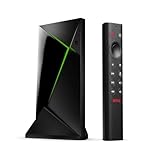
- Top Pick: NVIDIA Shield Android TV Pro | 4K HDR Streaming Media Player High Performance, Dolby Vision, 3GB RAM, 2X USB, Works with Alexa, Model:945-12897-2500-101
- Best Value: Voice Replacement Remote Control for NVIDIA Shield TV and NVIDIA Shield TV Pro Streaming Media Player 2015/2017/2019 All Models
- Premium Choice: NVIDIA Shield TV Pro 8 GB Wi-Fi Ethernet LAN Black 4K Ultra, W125800849 (Ethernet LAN Black 4K Ultra HD Shield TV Pro, Tegra X1+, 2048 MB, 8 GB, MicroSD (TransFlash),)
Shield TV vs Shield TV Pro is the decision every cord-cutter and home-theater fan runs into the moment they look at Nvidia’s streaming lineup. On the surface the two devices play the same 4K HDR content and run the same Android TV software, yet they are aimed at very different buyers, and the price gap between them is real money. This comparison gives you a quick verdict, a side-by-side specs table, a feature-by-feature breakdown, a smart alternative, and a clear recommendation so you can decide in a couple of minutes rather than an afternoon of research.
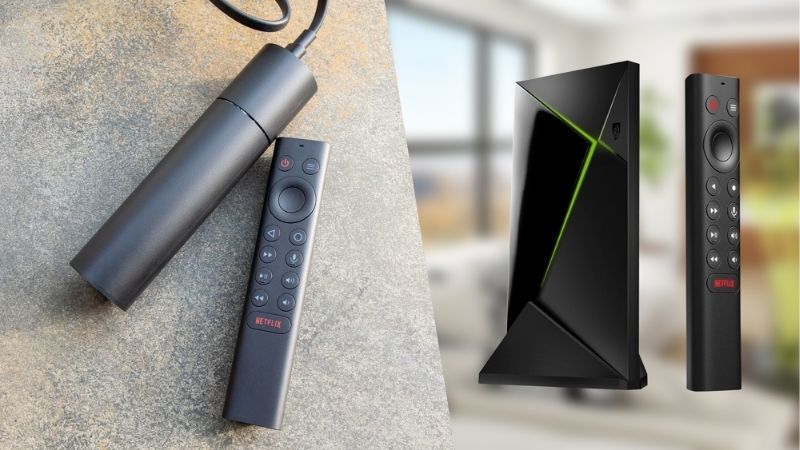
Shield TV vs Shield TV Pro: Quick Verdict and Specs
For all the debate online, the choice comes down to a simple question of how you plan to use the device. Both share the same Tegra X1+ processor and the same excellent AI upscaling, so raw streaming quality is nearly identical between them. What actually separates the two is storage, memory, expandability, and the extra jobs the Pro is built to take on, and the sections below start with the bottom line before showing the numbers behind it.
The Quick Verdict for Busy Shoppers
If you only want a fast, superb 4K streamer for Netflix, Disney, YouTube, and the like, the standard Shield TV is all you need and clearly the better value. It does the core job flawlessly, and you will not feel shortchanged watching anything on it.
If you plan to run a Plex media server, sideload heavier apps, use USB drives, or lean on the device as an always-on smart-home hub, the Shield TV Pro’s extra memory and ports justify the premium. The short version is simple: Shield TV for pure streaming, Shield TV Pro for power users who want the box to do more than play video.
Keep that split in mind as you read on, because almost every difference below reinforces it. Neither device is objectively better than the other; one is simply a better match for a particular kind of buyer, and knowing which buyer you are makes the rest of this comparison quick to act on.
It also means you can safely ignore a lot of the online back-and-forth. Much of that debate compares the two on picture quality, where they are identical, rather than on the capabilities that actually distinguish them, so filtering for your real use case cuts through the noise fast.
Full Comparison Table
The numbers make the split obvious. Skim the table for the two rows that match your use case, and the rest of this comparison explains what they mean in daily life rather than on a spec sheet.
| Spec | Shield TV | Shield TV Pro |
|---|---|---|
| Processor | Tegra X1+ | Tegra X1+ |
| RAM | 2 GB | 3 GB |
| Storage | 8 GB (+ microSD) | 16 GB |
| Form factor | Compact tube | Set-top box |
| USB ports | None | 2x USB 3.0 |
| Output | 4K HDR, Dolby Vision, Atmos | 4K HDR, Dolby Vision, Atmos |
| AI upscaling | Yes | Yes |
| Approx price | 149 | 199 |
Notice how many rows are identical. The processor, output formats, and AI upscaling match exactly, which is why picture quality is a wash and the decision hinges entirely on the memory, storage, and connectivity rows instead.
Price and Value Snapshot
The Pro typically costs about 50 more than the standard Shield TV, and that single figure frames the whole decision. What you get for it depends entirely on your habits rather than on any difference in streaming quality.
For pure streaming, that 50 buys almost nothing you will notice in day-to-day picture quality, since the upscaling and output are identical. For a Plex host or a tinkerer, the same 50 unlocks a genuinely more capable little computer, which is why the value verdict flips completely depending on the buyer.
A useful way to think about it: the standard model is priced as a premium streamer, while the Pro is priced as a compact media server that also streams. Match the price you pay to the job you actually need, and neither option feels expensive.
Design, Performance, and Everyday Streaming
Because both devices share the same silicon and the same AI features, everyday streaming feels remarkably similar on each. The differences show up in physical design, in how hard you can push the hardware, and in the small conveniences that add up over months of use, so this section walks through what you will actually notice from the couch rather than from a spec comparison.
Form Factor and Design Differences
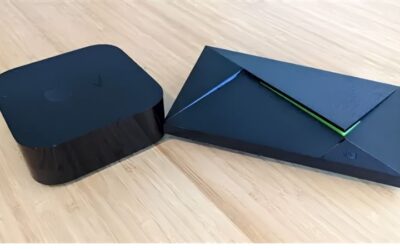
The standard Shield TV is a compact tube that hides behind your TV or tucks into an entertainment center, with the power cord and Ethernet at its ends. It even includes a microSD slot to expand that modest 8 GB of storage when apps pile up.
The Shield TV Pro is a flat set-top box designed to sit on a shelf, and it adds two USB 3.0 ports for drives, controllers, or TV tuners. The practical takeaway is straightforward: pick the tube for hidden minimalism, and the box if you actually need to plug things in.
This is more consequential than it first appears. The tube’s hidden design is genuinely convenient for a clean living room, but its lack of USB is a hard limit you cannot work around later, whereas the Pro’s ports quietly enable a whole class of uses the tube simply cannot support.
AI Upscaling and 4K Playback
Both devices use Nvidia’s AI-enhanced upscaling, which intelligently sharpens 720p and 1080p content toward 4K in real time. It remains the standout feature that still sets Shield apart from cheaper streamers years after launch, and it is the clearest example of Nvidia’s technology doing work you can actually see on screen.
HDR10, Dolby Vision, and Dolby Atmos are all supported on both models, so your premium content looks and sounds its best on either one. In genuine side-by-side viewing, most people simply cannot tell the two apart on picture quality alone, because the upscaling engine driving them is identical.
That parity is the single most important fact in this whole comparison for a streaming-only buyer. If image quality is your only concern, you can stop worrying about the price gap entirely, because you are not paying extra for a better picture on the Pro, only for capabilities you may never use.
Interface Speed and App Handling
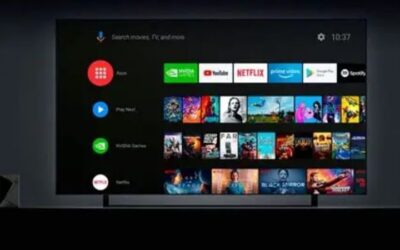
The shared Tegra X1+ keeps the Android TV interface snappy on both, with fast app launches and smooth menu navigation. This is a big part of why Shield devices still feel premium long after release.
The Pro’s extra gigabyte of memory, 3 GB against the standard model’s 2 GB, helps most when you juggle many apps or run background services, since it reduces how often apps reload from scratch. For casual users flipping between a few streaming apps, both feel equally quick, and the RAM advantage only becomes obvious under heavier multitasking.
Over a long ownership period, that memory headroom also cushions the Pro as apps grow larger and more demanding with updates. It is a subtle form of future-proofing that rarely shows up in a quick demo but can matter a couple of years down the line.
None of this changes the core takeaway for a streaming-only buyer, but it does explain why heavy users gravitate to the Pro over time. The extra memory is not about raw speed today so much as resilience as the software around it grows heavier with each update.
Power Users, The Alternative, and Final Verdict
The real dividing line between these two devices is what you ask them to do beyond streaming. This is exactly where the Pro earns its name and where the standard model shows its limits, so after weighing the power-user features, a cheaper alternative, and the honest trade-offs, the recommendation becomes easy to make.
Plex, Gaming, and Smart Home Duties
The Shield TV Pro is a longtime favorite as a Plex Media Server host, because the extra RAM and USB 3.0 storage let it transcode and serve media reliably, something the standard tube is not really built to do well. For a home media library, this alone can justify the Pro.
Both models can stream games through GeForce NOW and act as capable smart-home hubs, but the Pro’s headroom suits always-on background tasks far better. If your device will regularly do more than stream video, the Pro is the safer long-term pick by a comfortable margin.
The pattern here is consistent: every heavy, persistent workload favors the Pro, while every light, single-purpose task is served equally well by the cheaper model. Map your intended jobs against that pattern and the right device names itself.
A concrete example helps: hosting a modest Plex library for two or three simultaneous streams, with the occasional transcode, is comfortably within the Pro’s wheelhouse but will frustrate the standard tube. If that scenario matches your household, the decision is effectively made for you before you even look at the price.
The Alternative and Pros and Cons of Each Shield Model
If both Shields feel like more than you need, a mainstream 4K streaming stick from another brand covers basic streaming for far less, though you give up the AI upscaling and Android TV flexibility that make Shield special. It is the budget fallback, not an equal.
Shield TV pros: lower price, compact hidden design, microSD expansion, and streaming quality identical to the Pro. Cons: only 2 GB of RAM, no USB ports, and it is not ideal for Plex hosting or heavy sideloading.
Shield TV Pro pros: 3 GB of RAM, 16 GB of storage, dual USB 3.0, and an excellent role as a Plex and smart-home host. Cons: it costs more, has a larger footprint on the shelf, and is genuine overkill for anyone who only streams.
See More:
Final Verdict and Recommendation
Buy the Shield TV if you want a top-tier 4K streamer at the lower price and have no plans beyond streaming and the occasional cloud game. It is the smart-money choice for most living rooms, full stop.
Buy the Shield TV Pro if you run Plex, sideload heavily, rely on USB storage, or simply want the most future-proof Shield for a busy media setup. Prices on both shift with sales, so use the links on this page to check today’s deal before you decide which one fits your setup.
Either way, you are choosing between two versions of the best Android TV streamer available, so there is no bad outcome here, only a better-matched one for your habits.
The Shield TV vs Shield TV Pro question really rewards honesty about your own habits: identical streaming quality means most people are perfectly happy with the cheaper tube, while power users get real, lasting value from the Pro’s extra muscle.
Whichever way you lean in the Shield TV vs Shield TV Pro debate, both remain the best Android TV streamers you can buy today. Check the latest prices and pick the one that matches how you actually use your living room.
Frequently Asked Questions
What is the actual hardware difference between the Shield TV and Shield TV Pro?
Both use the Tegra X1+ processor, but the Pro doubles the memory to 3GB and the storage to 16GB, and adds two USB 3.0 ports. The tube-shaped standard Shield has 2GB of RAM, 8GB of storage, and a microSD slot instead. The Pro also runs a slightly higher performance profile.
Does the Pro upscale 1080p to 4K better?
Both models include NVIDIA AI upscaling, but the Pro has the headroom to run it at higher quality settings on demanding sources. In practice the difference on good content is modest. If you mostly stream native 4K from Netflix, Disney Plus, or YouTube, upscaling quality is not a reason to pay extra.
Can I run a Plex Media Server on either one?
Only the Pro is really suitable. Its extra RAM, storage, and USB 3.0 ports let you attach an external drive and serve a library, and it handles the server workload without choking. The standard Shield can act as a Plex client perfectly well, but is not a good host device.
Is the Shield TV Pro still worth buying given its age?
The hardware dates from 2019, yet NVIDIA has supported it with software updates for years and it still handles Dolby Vision, Dolby Atmos, and every major streaming app. Buy it for the upscaling, GeForce NOW support, and Plex server ability. If you only need basic streaming, cheaper modern sticks do the job.
Which one is better for game streaming?
The Pro, because of its USB ports and extra memory. Both support GeForce NOW at up to 4K HDR and both work with NVIDIA gamepads and Bluetooth controllers, but the Pro is more comfortable with local network streaming from a gaming PC and with attaching wired peripherals for lower latency input.
As an Amazon Associate we earn from qualifying purchases at no extra cost to you.






Write Your Review
No reviews yet. Be the first to share your experience!