
- Top Pick: ZOTAC Gaming GeForce RTX 5070 Ti Solid SFF OC DLSS 4 16GB GDDR7 256-bit 28 Gbps PCIE 5.0 Gaming Graphics Card, IceStorm 2.0 Advanced Cooling, ZT-B50710J3-10A
- Best Value: ZOTAC Gaming GeForce RTX 5070 Solid OC DLSS 4 12GB GDDR7 192-bit 28 Gbps PCIE 5.0 Gaming Graphics Card, IceStorm 2.0 Cooling, Spectra RGB Lighting, ZT-B50700J-10A
- Premium Choice: ZOTAC Gaming GeForce RTX 5070 Ti Solid SFF OC DLSS 4 16GB GDDR7 256-bit 28 Gbps PCIE 5.0 Gaming Graphics Card, IceStorm 2.0 Advanced Cooling, ZT-B50710J3-10P
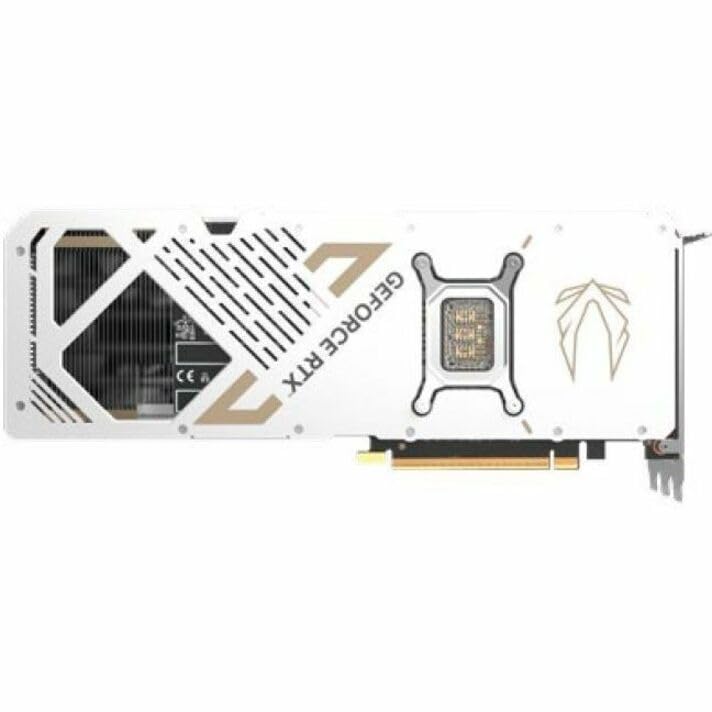


ZOTAC Gaming GeForce RTX 5070 SOLID is one of the most talked-about mid-range Blackwell cards of this generation, and shoppers keep landing on it for a simple reason: it promises full RTX 5070 performance in a compact, cool, no-nonsense package. If you are planning a 1440p build and want strong frame rates without paying extra for flashy lighting, this model sits squarely in the value sweet spot. This review digs into the cooler, real gaming performance, DLSS 4, the current pricing picture, and the honest trade-offs so you can decide with confidence rather than guesswork.
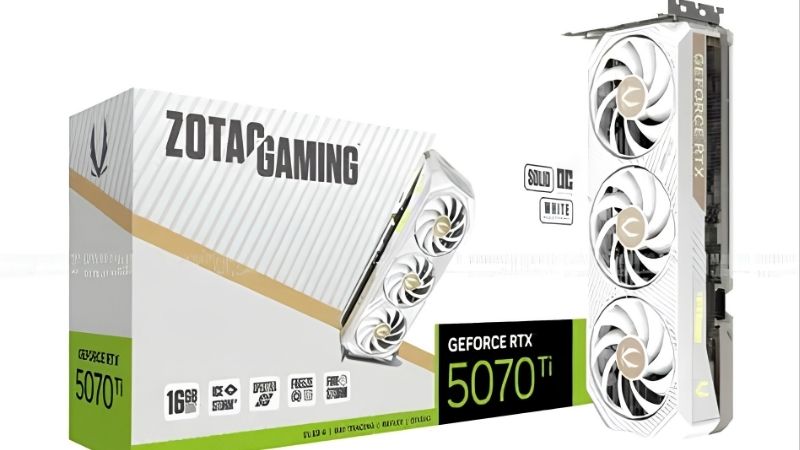
ZOTAC RTX 5070 SOLID: Design, Cooling, and Build Quality
The SOLID line is ZOTAC’s “does the job well, skips the theatrics” tier, and that philosophy shapes everything about this card. Instead of a triple-slot monster covered in RGB, you get a dense dual-fan cooler tuned specifically for the RTX 5070’s 250 W power budget. For most buyers assembling a mid-tower or a slightly smaller case, that restraint is exactly what makes this model worth a closer look before you commit to a pricier alternative.
As an Amazon Associate we earn from qualifying purchases at no extra cost to you.



A Compact 2.5-Slot Cooler That Punches Above Its Size
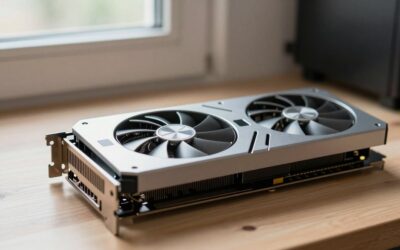
The card uses ZOTAC’s IceStorm cooling with two large fans and a fin stack sized for a 250 W board. Because the RTX 5070 is far more power-efficient than the 40-series cards it replaces, that cooler rarely has to work hard, which keeps both temperatures and noise low in normal use.
At roughly 30 cm long and 2.5 slots thick, it is genuinely compact for a modern GPU. That matters if you are reusing an older chassis or want breathing room around the card for airflow. ZOTAC also includes a fan-stop feature, so the fans idle completely on the desktop and only spin up under real gaming load.
Because the cooler is engineered around a modest 250 W target rather than a 350 W flagship, it also runs into far fewer thermal-throttling situations. That headroom is part of why the SOLID tends to hold its boost clocks steadily through long sessions instead of sagging as the silicon heats up, which is exactly the behavior competitive players and long-session gamers care about.
Real-World Temperatures and Noise
Across community testing and owner reports, the SOLID typically holds GPU temperatures in the mid-60s to low-70s Celsius during extended 1440p sessions inside a well-ventilated case. Those are comfortable numbers that leave plenty of thermal headroom.
Noise is the single most repeated praise in 4-5 star reviews: many owners describe the card as barely audible over their case fans. The most common 2-3 star complaint is coil whine on a minority of units, which is luck-of-the-draw across every brand rather than a ZOTAC-specific flaw. If your case has weak airflow, expect temperatures to climb a few degrees, so a couple of intake fans pay off here.
Case Fit, PSU, and Cable Practicalities
Before you buy, run a quick practical check: confirm your case supports a card around 30 cm long. Most mid-towers do, but small-form-factor builders should measure first to avoid a return.
The RTX 5070 draws 250 W, and Nvidia recommends a 650 W power supply. A quality 650-750 W unit gives comfortable headroom for a mid-range Ryzen or Core CPU. The card uses a 16-pin (12V-2×6) connector with an included adapter; seat it fully until it clicks to avoid the connector problems that troubled early high-wattage cards.
Gaming Performance of the GeForce RTX 5070 SOLID
Cooling only matters if the silicon delivers, so here is where the RTX 5070 earns its keep. This is a 12 GB GDDR7 card on a 192-bit bus with 6,144 CUDA cores, positioned as the mainstream 1440p champion of the Blackwell stack. Because the SOLID runs at reference-plus clocks, its performance tracks closely with the wider RTX 5070 pool, so you are not sacrificing speed for that quiet, compact design.
| Specification | ZOTAC RTX 5070 SOLID |
|---|---|
| Architecture | Blackwell (GB205) |
| CUDA cores | 6,144 |
| Memory | 12 GB GDDR7 |
| Memory bus | 192-bit |
| Total board power | 250 W |
| Power connector | 1x 16-pin (adapter included) |
| Recommended PSU | 650 W |
| Length | ~30 cm, 2.5-slot |
1440p Is the Real Home for This Card
At 1440p with high or ultra settings, the RTX 5070 comfortably drives the vast majority of current titles well above 60 fps in raster, and often into triple digits in lighter or well-optimized games. This is the resolution the card was built for.
It can play at 4K too, but 12 GB of VRAM and the 192-bit bus mean you will lean on upscaling for the heaviest 4K titles; treat 4K as a bonus rather than the core use case. For 1080p high-refresh esports, the card is overkill in the best way, pushing very high frame rates for 144 Hz-plus monitors.
To put the tier in context, the RTX 5070 sits a clear step above the previous-generation 4060 Ti class and trades blows with last generation’s upper-mid cards, but with better efficiency and the newer Blackwell feature set. For a buyer who upgrades every few generations, that positioning is what makes 1440p feel comfortable rather than borderline, both today and a couple of years down the line as games grow more demanding.
DLSS 4 and Multi Frame Generation Change the Math
The Blackwell headline feature is DLSS 4 with Multi Frame Generation, which can synthesize multiple frames for each traditionally rendered frame. In supported games this dramatically lifts on-screen smoothness beyond what the raw silicon alone would suggest.
This is the forward-looking edge that separates a new Nvidia card from older hardware: as more titles adopt DLSS 4, the effective longevity of this GPU improves through driver and game updates rather than raw horsepower. A fair caveat, though, is that frame generation shines above a solid base frame rate. Use it to turn 70 fps into a buttery 140-plus, not to rescue an unplayable 25 fps.
Ray Tracing Without the Usual Penalty
Blackwell’s upgraded RT cores let the RTX 5070 handle ray tracing at 1440p far more gracefully than the mid-range cards of two generations ago. Effects that once cratered frame rates are now genuinely usable here.
Pairing ray tracing with DLSS 4 is the intended workflow, and it lets you switch on meaningful lighting and reflections while keeping frame rates high. In pure path-traced showcases the card still asks for upscaling, but for mainstream RT the experience is smooth and genuinely enjoyable.
It helps to set expectations by tier: this is a card that makes ray tracing usable at 1440p, not one built to brute-force full path tracing at native 4K. Understood that way, the RT capability becomes a real selling point rather than a checkbox, and it is one of the clearest reasons owners cite for choosing the RTX 5070 over cheaper alternatives that stumble the moment RT is switched on.
Pricing, Pros and Cons, and Who Should Buy It
Specs and features set expectations, but value is decided at checkout, and right now the GPU market is anything but calm. Before you commit, it helps to weigh the card’s concrete strengths and weaknesses against what you will actually pay for it this month.
Pros and Cons of the ZOTAC RTX 5070 SOLID
Pros: quiet and compact cooler; efficient 250 W design; excellent 1440p performance; DLSS 4 Multi Frame Generation for future longevity; strong ray tracing for its class; a friendly 650 W PSU requirement that suits modest builds.
Cons: 12 GB of VRAM is adequate today but not generous for heavy 4K or long-term future-proofing; minimal RGB and extras if you wanted a showpiece; occasional coil-whine reports on some units; and a likely premium over list price whenever stock runs tight.
Should You Buy Now? A Volatile Component Market
Timing is a real question in 2026. Laptop and PC component prices have been trending upward, driven largely by rising memory costs, and that pressure reaches graphics cards too. A 12 GB GDDR7 card like this is directly sensitive to memory pricing, so the sticker you see can move.
The encouraging news is that the steep climb of late 2025 has flattened out. Some hardware makers, including Framework, have reported a stretch of relative price stability, even while cautioning that the market could still swing again. In other words, the panic phase appears to have paused.
Fresh supply is on the way, but it is not imminent. OEMs can now source DDR5 from Chinese suppliers such as CXMT, and Micron is building two new plants in Idaho. Those fabs, however, are not expected to come online until roughly 2027-2028, so they will not affect the price of the card you buy this year.
The practical takeaway is simple: prices have paused rather than dropped, and real relief is still a year or more away. If you find the SOLID at or near its expected price and you need a GPU now, holding out for a big discount is a gamble against a market that may not cooperate. Buying a well-cooled card at a fair price today is the safer, lower-stress play.
See More:
Who This GPU Is Perfect For
This card is a natural fit for the 1440p gamer who wants high frame rates, quiet operation, and a clean build without paying flagship money. It hits that target group almost exactly.
It also suits upgraders coming from a 2060, 3060, or similar card, where the jump in raster, ray tracing, and DLSS 4 will feel transformative rather than incremental. Owners in that group consistently report the biggest satisfaction, because the generational leap is large enough to justify the spend on its own.
Who should look elsewhere? If you game primarily at 4K with maxed textures, or you want a card to last five or more years without compromise, the 12 GB buffer may push you toward a 16 GB option instead. For everyone else building around 1440p, this is close to the ideal balance. If that sounds like your build, checking the current price and availability takes only a moment, and the button on this page will take you straight to the latest listing so you can compare today’s deal before stock shifts again.
The ZOTAC Gaming GeForce RTX 5070 SOLID earns its popularity by nailing the fundamentals: cool, quiet, efficient, and genuinely strong at 1440p, with the added runway of DLSS 4. It is not the flashiest card on the shelf, and 12 GB of VRAM sets a sensible ceiling, but for the money it targets the right buyer almost perfectly.
With component prices paused but far from crashing, locking in a fair price on the ZOTAC Gaming GeForce RTX 5070 SOLID today is a reasonable, low-drama upgrade rather than a bet on distant 2027 supply. Check the latest price to see exactly where it lands for your build.
Frequently Asked Questions
How big is the ZOTAC RTX 5070 SOLID and will it fit my case?
The SOLID is a triple-fan, roughly 2.5 to 3 slot card in the low 300mm range, so it needs a standard mid-tower rather than a compact chassis. Measure clearance from the rear bracket to any front radiator or drive cage, and confirm your side panel closes over the power cable bend.
What power supply does it need?
The RTX 5070 has a 250W board power rating and NVIDIA recommends a 650W system supply. ZOTAC includes a 12V-2×6 adapter that connects to two 8-pin PCIe cables. Use two separate cable runs rather than one daisy-chained pigtail, and make sure the 16-pin plug is fully seated before closing the case.
Is 12GB enough, or should I wait for a 16GB card?
At 1440p, 12GB handles current games at maximum settings without issue. The concern is 4K with ultra texture packs and path tracing, where allocation can exceed capacity. If you game at 1440p and plan to keep the card three or four years, 12GB paired with DLSS 4 remains workable.
How does the SOLID cooler perform compared to premium models?
ZOTAC uses a straightforward triple-fan heatsink with a zero-RPM idle mode. It keeps the GPU well within its thermal limits at stock settings, typically landing in the mid-60s to low-70s Celsius under gaming load. It is not the quietest card on the market, but noise stays reasonable with a custom fan curve.
Does it overclock well?
Blackwell cards have limited manual headroom because boost algorithms already push near the voltage and power ceiling. Expect modest gains from raising the power limit and applying a small memory offset. A better use of your time is undervolting, which can cut temperatures and noise while holding nearly identical frame rates.
Ready to decide? Our #1 pick for 2026 is the Specification.
Live price & availability on Amazon.









Write Your Review
No reviews yet. Be the first to share your experience!