


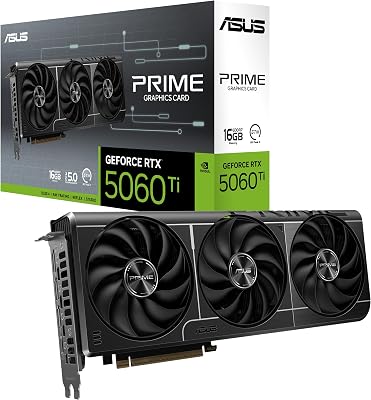
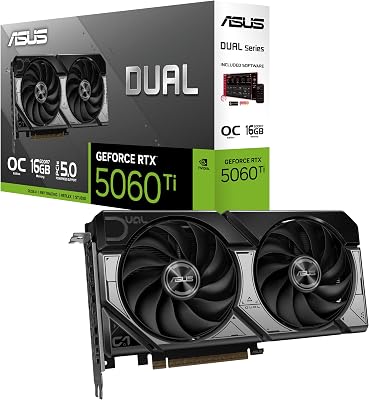

Asus Prime RTX 5060 Ti 16GB OC is the card mainstream buyers turn to when they want Asus build quality, a large memory buffer, and a factory overclock without paying flagship prices. If you are weighing this exact variant, you want to know what the Prime tier delivers, how the 16 GB and the overclock perform, and whether it fits your build and budget. This review lays out the specs, the value, and an honest read so you can decide fast.
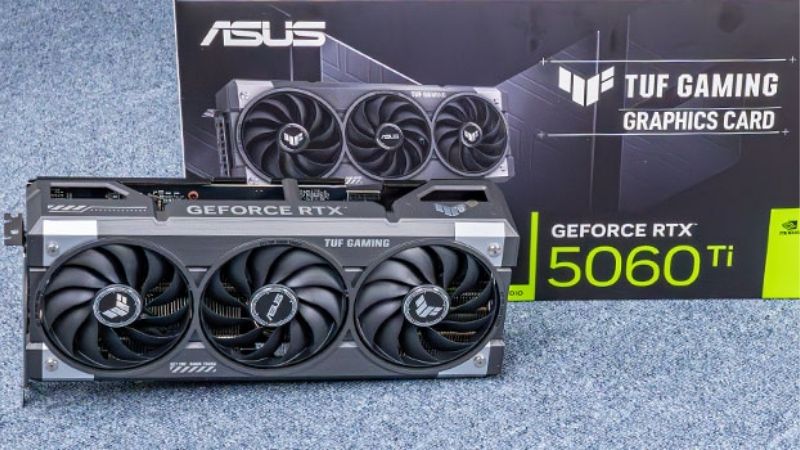
Asus Prime RTX 5060 Ti 16GB OC Design and Cooling
Asus positions the Prime line as its clean, well-built value tier, sitting above the entry Dual models but below the premium TUF and ROG boards. On a card like the 5060 Ti, that positioning targets buyers who want dependable Asus engineering and a modest overclock at a sensible price rather than a flagship shroud.
As an Amazon Associate we earn from qualifying purchases at no extra cost to you.


The Prime Cooler and Thermal Performance
The Prime cooler is designed to keep the 5060 Ti comfortable through long sessions, and because this is an efficient, modest-power card, it does not need an enormous heatsink to do so. The result is steady temperatures and fans that idle off during light desktop use, ramping gently only under load.
Sustained clocks are what actually matter, and an effective cooler is what lets the factory overclock hold rather than throttle away. Owner feedback generally praises the Prime for running cool and quiet, which is exactly what a mainstream buyer wants from a card that will spend years in a mid-size build.
The modest power draw also means the card dumps less heat into your case and room, keeping the whole system pleasant during extended play. That low thermal footprint is part of why the Prime fits so easily into everyday builds without demanding aggressive cooling.
There is a longevity benefit to running cool that is easy to overlook. A GPU kept in a comfortable thermal band puts less stress on its components over years of use and sustains its clocks more consistently, which matters for a card you intend to keep through several generations of games. Good cooling is not just about a quieter room today; it is about the card behaving the same way years from now.
Dimensions, Slot Size, and Case Fit
Even a mainstream card deserves a quick measurement check before you buy. Confirm the card’s length and thickness against your case’s listed maximum GPU clearance, and make sure it does not collide with a front radiator or drive cage.
The 5060 Ti class is generally friendlier to compact builds than higher tiers, and the Prime’s sensible size reflects that. Still, if you run a small ATX or mATX case, verify both length and slot thickness so there is no surprise on installation day.
A sturdy backplate adds rigidity and helps the card resist sag over time. Seat the power connector fully until it clicks, since a partially seated connector is a frequent and entirely avoidable cause of thermal or stability complaints on modern boards.
Build Quality and the Prime Tier
Asus build quality is a large part of what you pay for with the Prime line. The card pairs solid construction with a clean, understated look, prioritizing durability and reliability over flashy aesthetics, which suits buyers who want a dependable card that simply works.
The Prime tier typically includes Asus’s manufacturing touches like careful component selection and a restrained design language. There is no elaborate lighting here, which keeps the price focused on the essentials and appeals to buyers who prefer a subtle build.
The practical takeaway is that the Prime is about dependable engineering at a fair price. If you value a trusted brand and solid build over spectacle, that is exactly the trade the Prime line is designed to offer.
The Prime tier is also a sensible middle ground within Asus’s own range. It gives you more polish and often better cooling than the entry Dual models, without the price jump to the premium TUF and ROG boards that add heavier coolers and elaborate lighting. For a mainstream buyer who wants Asus reliability without paying for features they will not use, the Prime hits a genuinely practical sweet spot in the lineup.
RTX 5060 Ti 16GB OC Performance and Features
The reason to choose the 16 GB OC variant is the combination of a large memory buffer and a small factory overclock. Understanding what each delivers is the key to judging this card’s value for your particular use.
1080p and 1440p Frame Rates
At 1080p the 5060 Ti delivers high frame rates across modern titles and easily drives a fast high-refresh monitor in competitive games. This is its most comfortable resolution and where it feels effortless in day-to-day play.
At 1440p it remains very capable, especially with sensible settings and DLSS where available, making it a strong choice for a 1440p high-refresh display. The factory overclock adds a small bump on top, though the performance tier is set by the GPU itself.
Treating this as a 1080p-to-1440p performer keeps your expectations aligned with reality. It is not a 4K card, but for the resolutions most mainstream players actually use, it is a comfortable and capable fit.
Why 16GB and the OC Matter
The 16 GB buffer is the specification that ages best and, for many buyers, the real reason to choose this variant over an 8 GB card. It provides the headroom to hold high-resolution textures without the compromises that pinch smaller cards, and it makes local AI and creative work genuinely practical.
As game texture budgets keep growing, that memory headroom is what protects the card’s usefulness over the years you plan to keep it. An 8 GB card of similar speed will force texture compromises sooner, which is exactly the kind of trade most buyers upgraded to avoid.
The factory overclock is a smaller, welcome bonus on top. It adds a few percent of free performance, and combined with the 16 GB buffer, it makes the card feel more capable and future-ready than its price suggests.
It is worth being concrete about the alternative. An 8 GB card of similar core speed will run out of memory in demanding titles and hit a hard wall on larger local AI models, no matter how fast its core is. Memory is the kind of limit that raw speed cannot compensate for, which is precisely why the 16 GB configuration is the one to choose when the price gap over an 8 GB card is modest.
DLSS 4 and Blackwell Features
The card’s Blackwell architecture unlocks DLSS 4 with Multi Frame Generation, which can meaningfully boost frame rates in supported titles and extend the card’s usable performance well beyond its raw numbers. For a mainstream card, this software layer is a large part of the value.
The forward-looking benefit is concrete: NVIDIA keeps expanding its AI feature set through driver updates, so a card bought today often performs better in newly supported games later. For a buyer keeping the card several years, that ongoing optimization stretches its life.
Combined with the 16 GB buffer and the overclock, these features make the card punch above its bracket in the ways that matter most for longevity. It is a mainstream card with a genuinely future-friendly feature set.
Is the Asus Prime RTX 5060 Ti 16GB OC Worth Buying?
The value case rests on whether you want Asus build quality, 16 GB of memory, and a factory overclock at value pricing, and whether the 2026 market rewards buying now. For the right buyer, this variant is one of the smartest picks in its class.
Pros and Cons From Owner Feedback
The strengths that recur in positive reviews are the reassuring 16 GB buffer, trusted Asus build quality, the free factory overclock, strong 1080p and capable 1440p performance, and quiet, cool operation. Buyers who wanted a dependable card with plenty of memory are consistently satisfied.
The criticisms are narrow and honest. The most common complaints center on the plain aesthetics lacking lighting, a modest overclock rather than a dramatic one, and the same market-driven price swings affecting every GPU right now. None of these are faults in the silicon or its performance.
Weighed together, the drawbacks are about looks and expectations, not capability. For a buyer who values build quality and 16 GB of memory at a fair price, that is a favorable trade.
2026 Pricing: Buy Now or Wait?
Graphics card prices trended upward and have not fully released that pressure. The qualified good news is that prices stopped climbing as steeply as they did at the end of 2025, and the market has entered a period of relative stability, though analysts still warn volatility is not over. The panic phase eased; a real discount did not arrive.
Anyone hoping to simply wait for cheaper cards should know the relief is further off than it looks. New memory supply is opening up, but the factories that would loosen pricing are not expected to run until 2027 to 2028. Because this card carries 16 GB, memory pricing has an outsized effect on it, so a card you need now is unlikely to get meaningfully cheaper soon, which nudges the practical buyer toward acting while pricing is stable.
Who Should Buy This Card
The Asus Prime 5060 Ti 16GB OC is the right pick for a mainstream 1080p or 1440p gamer who values trusted Asus build quality and the security of a large memory buffer at value pricing, and especially for someone who also dabbles in local AI or creative work. In a mid-size build with a modest power supply, it fits cleanly.
It is a weaker fit for someone chasing 4K ultra performance, elaborate aesthetics, or the absolute maximum overclock headroom, who should look at a higher tier or a premium Asus board. But for dependable value with 16 GB of memory, this card is an easy recommendation.
See More:
- NVIDIA GeForce Game Ready Driver
- NVIDIA CUDA Toolkit Archive
- Gigabyte GeForce RTX 5070 Windforce OC
- AMD Radeon RX 9070 XT vs NVIDIA GeForce RTX 5070
- PNY GeForce RTX 5070 Ti Triple Fan
Conclusion
The Asus Prime RTX 5060 Ti 16GB OC delivers exactly what a value-focused buyer should want: a generous 16 GB buffer, trusted Asus build quality, a free factory overclock, DLSS 4 and Blackwell features, and quiet cooling at a fair price. Its only real caveats are plain looks and a modest overclock, both easy to accept for the right buyer, while the 16 GB memory keeps it useful for both gaming and local AI. With 2026 prices stable but unlikely to fall soon, locking in a card that fits your build and budget today is a defensible move, so check the latest price and availability through the link below before stock and pricing shift again.
Frequently Asked Questions
Is the 16GB version worth the premium over the 8GB RTX 5060 Ti?
Yes, for most buyers. Both variants share the same GPU and 128-bit bus, so the only difference is memory capacity. The extra 8GB removes texture streaming stutter at 1440p, helps in modded games, and makes the card far more capable for local AI and video work.
What PSU does the ASUS Prime RTX 5060 Ti need?
The card is rated near 180W and NVIDIA recommends a 600W system supply. It uses a single 8-pin PCIe connector rather than the 16-pin found on higher tiers, which makes it an easy drop-in upgrade for older builds without buying a new power supply.
How big is the Prime cooler and will it fit smaller cases?
ASUS Prime models are dual-fan, roughly 2.5 slots and around 220 to 270mm depending on revision, which is far more accommodating than triple-fan designs. It fits most mid-towers easily and many compact cases. Check the exact listed length, as ASUS has shipped multiple Prime variants.
What resolution is this card best suited to?
It is a strong 1080p card that handles 1440p well with DLSS enabled. Expect high frame rates at 1080p maximum settings and comfortable 60fps or better at 1440p in most modern titles with DLSS Quality. The 128-bit bus, not VRAM, is the main limit at higher resolutions.
Does the factory overclock make a real difference?
Marginally. ASUS OC BIOS settings typically add a small clock bump worth low single-digit percentages. The Prime cooler and its dual BIOS or quiet profile matter more day to day, since sustained boost clocks depend on thermals. Consider undervolting for better efficiency and lower noise.

Write Your Review
No reviews yet. Be the first to share your experience!