
- Top Pick: GIGABYTE Radeon RX 9070 XT Gaming OC 16G Graphics Card, PCIe 5.0, 16GB GDDR6, GV-R9070XTGAMING OC-16GD Video Card
- Best Value: GIGABYTE Radeon™ RX 9070 XT Gaming OC ICE 16G Graphics Card (16GB GDDR6, 256-bit, PCIe 5.0, HDMI/DP 2.1, 2.7 Slot, Hawk Fan, Server-Grade Thermal Gel, Reinforced Structure)
- Premium Choice: ASUS Prime Radeon RX 9070 XT 16GB GDDR6 OC Edition Gaming Graphics Card


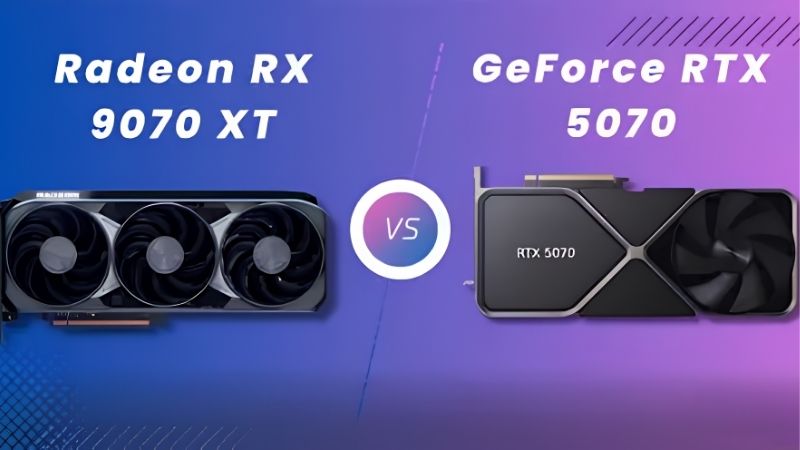
5070 vs RX 9070 XT is the exact question thousands of PC builders are asking before they spend real money in 2026. Both cards sit in the sweet spot for 1440p gaming, both promise strong ray tracing, and both are fighting for the same wallet. This side-by-side breaks the matchup down with hard specs, real-world frame rates, VRAM headroom, power draw and current pricing, so you can skip the twenty-minute videos and pick the winner in a few minutes.
The Quick Verdict and Full Spec Sheet
Before the deep analysis, here is the short version. The RTX 5070 and the RX 9070 XT are close rivals, but they win on different fronts. The sections below give you the fast answer, a full spec table, and the 2026 pricing context that quietly decides which card is actually the smarter buy right now.
As an Amazon Associate we earn from qualifying purchases at no extra cost to you.


Quick Verdict: Who Wins the 5070 vs RX 9070 XT Fight
If you want the one-line answer: the RX 9070 XT is usually the stronger raw-performance and VRAM pick for 1440p and 4K rasterized gaming, while the RTX 5070 wins on ray tracing, DLSS 4 with Multi Frame Generation, power efficiency and software features.
For pure frames per dollar in traditional games, AMD’s 16GB card tends to lead. For ray-traced titles, streaming, AI-assisted workflows and the smoothest upscaling, Nvidia’s card pulls ahead. Neither is a bad choice; they simply optimize for different players.
So the winner depends on your library and your monitor. A competitive or high-refresh 1440p gamer, or anyone who plays mostly esports and rasterized AAA titles, leans toward the 9070 XT for its extra raw frames and memory. A ray-tracing, streaming, creator or feature-first buyer leans toward the 5070 for DLSS 4 and a quieter, cooler system. If you are torn, weigh how many of your favorite games actually use heavy ray tracing today, because that single answer settles most of these arguments.
Full Comparison Table: Specs Side by Side
Numbers first. The table below lists the core specifications that actually move performance, so you are not guessing from marketing slides. These are the figures that decide frame rates, memory headroom and how the card fits your system.
| Spec | RTX 5070 | RX 9070 XT |
|---|---|---|
| Architecture | Nvidia Blackwell | AMD RDNA 4 |
| Cores | 6,144 CUDA cores | 4,096 stream processors (64 CUs) |
| VRAM | 12GB GDDR7 | 16GB GDDR6 |
| Memory bus | 192-bit | 256-bit |
| Board power | ~250W | ~304W |
| Recommended PSU | 650W | 750W |
| Launch MSRP | 549 | 599 |
| Upscaling | DLSS 4 + Multi Frame Gen | FSR 4 |
On paper the AMD card leads in memory capacity, bus width and rasterized throughput, while the Nvidia card leads in power efficiency, encoder quality and software features like DLSS 4. Keep those two themes in mind for the rest of the comparison, because almost every real-world difference below traces back to one of them. Note too that the 50-dollar MSRP gap is small enough that a single sale can flip which card is the better value on any given day.
How 2026 GPU Prices Change This Matchup
Specs are only half the story in 2026, because pricing has been unusually volatile. Component and laptop prices have kept trending upward, and that pressure spills straight into graphics cards. A 50-dollar MSRP gap can vanish or double depending on the week you shop.
There is cautious good news: prices stopped climbing as steeply as they did in late 2025, and some hardware makers such as Framework have reported a period of relative stability, while still warning that the volatility is not fully over.
But real relief is further out. New memory supply is opening up, OEMs can source DDR5 from Chinese suppliers such as CXMT, and Micron is building two fabs in Idaho, yet those plants only come online around 2027 to 2028. The takeaway for buyers is simple: prices have flattened, not fallen, so lock in a good deal when you see one rather than waiting for a crash that may not arrive soon. In practice this means you should set a target price for whichever card you prefer, then buy the moment a legitimate discount appears, because holding out for 2027-era pricing could cost you two years of use. It also means comparing the live street price of both cards matters far more in 2026 than comparing their launch MSRPs, since real listings can drift well above or below those numbers.
Deep Dive Face-Off: Performance, VRAM and Power
This is where the 5070 vs RX 9070 XT battle is actually decided. We compare them by the criteria that matter to real builders: gaming performance across resolutions, VRAM and upscaling technology, and finally power draw and physical fit inside your case.
1440p and 4K Gaming Performance Analysis
At 1440p, the resolution both cards are built for, the RX 9070 XT generally posts higher average frame rates in rasterized titles, often comfortably clearing 100 fps in demanding games, thanks to its wider 256-bit bus and larger raw throughput.
The RTX 5070 stays close and can match or beat it once ray tracing is switched on, where Nvidia’s dedicated RT cores and mature drivers show their strength. At 4K, the 9070 XT’s 16GB buffer helps it hold minimum frame rates more consistently in texture-heavy scenes.
Practical takeaway: for a 1440p 144Hz-plus panel, both deliver an excellent experience out of the box. The AMD card gives you a little more raw headroom for future titles and high-refresh esports, and the Nvidia card gives you a smoother ray-traced picture with better frame pacing in supported games. If your monitor is a 1440p 165Hz or 240Hz panel, either card will keep it fed in most titles; if you are eyeing a 4K display, favor the 16GB buffer of the 9070 XT for steadier minimums.
VRAM, Ray Tracing and DLSS 4 vs FSR 4
VRAM is the clearest split. The RX 9070 XT ships with 16GB, the RTX 5070 with 12GB. For 1440p today, 12GB is usually enough, but modern titles with high-resolution texture packs, ray tracing and frame generation are steadily creeping toward that ceiling, and once a game exceeds your VRAM the result is stutter rather than a gentle slowdown. The 16GB card simply has more long-term headroom, which matters most if you keep a GPU for four or five years instead of upgrading every generation.
Upscaling is where Nvidia leans on proprietary technology. DLSS 4 with Multi Frame Generation can insert additional AI-generated frames for dramatically higher perceived smoothness, and it keeps improving through driver updates. AMD’s FSR 4 has closed the quality gap significantly and looks excellent, but Nvidia’s ecosystem and per-game tuning remain a step ahead.
If you care about future software gains, driver-side improvements and AI features, the RTX 5070 is the more forward-looking bet, because Nvidia keeps adding value to DLSS over a card’s lifetime. If you care about guaranteed memory headroom for the next few years, the 9070 XT answers that today with hardware you already own, no software promises required. This is the classic Nvidia-versus-AMD trade-off in 2026: bet on software and features, or bet on raw hardware you can count on now.
Power Draw, Thermals and Real-World Build Fit
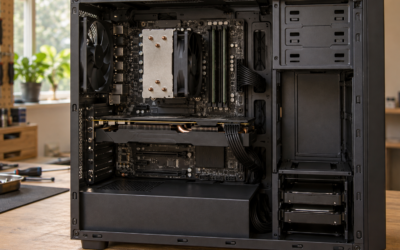
Power and heat quietly decide whether a card actually fits your build, and this is where many upgrades go wrong. The RTX 5070 draws around 250W and is happy on a quality 650W PSU, making it an easy drop-in for most existing systems. The RX 9070 XT pulls roughly 304W, and AMD partners recommend a 750W supply for headroom, so an older or lower-wattage PSU may need replacing, adding to the true cost of the card.
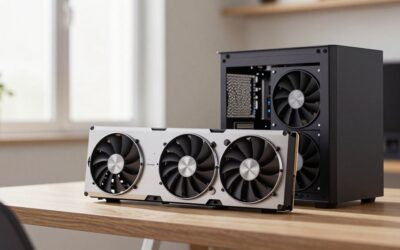
That difference matters for small-form-factor builds, older power supplies and summer thermals. The 5070 typically runs cooler and quieter in the same case, while many 9070 XT models are larger triple-fan designs that need more room and airflow.
Before buying, check three things: your PSU wattage and connectors, your case clearance in millimeters, and your case airflow. A card that is 20 to 30mm too long is a return you can easily avoid with one measurement and a quick look at the model’s spec page. For small-form-factor or hot climates, the cooler, lower-power 5070 is the safer pick; for a roomy tower with strong airflow, the 9070 XT’s extra heat is a non-issue.
Value, Alternatives and the Final Call
Performance means little without value, so this final section weighs the pros and cons, offers a cheaper alternative if both cards stretch your budget, and gives a clear recommendation for each type of buyer in the 5070 vs RX 9070 XT decision.
Pros and Cons of the 5070 vs RX 9070 XT
Here is the honest balance sheet for both cards, based on their specifications and how each behaves inside real systems rather than on a spec sheet alone.
| RTX 5070 | RX 9070 XT |
|---|---|
| Pros: Better ray tracing; DLSS 4 Multi Frame Gen; lower power and quieter; strong NVENC for streaming and creators; mature drivers. | Pros: 16GB VRAM; stronger rasterized 1440p/4K; often better frames per dollar; wide 256-bit bus. |
| Cons: Only 12GB VRAM; narrower 192-bit bus; usually pricier per rasterized frame. | Cons: Higher power draw and heat; FSR 4 slightly behind DLSS in some titles; larger coolers. |
Read this table against your own use case: the deciding factor is almost always whether you prioritize ray tracing and features, or raw frames and memory.
The Alternative: What If Both Are Too Pricey?
If 2026 pricing pushes both cards out of budget, do not overspend. The step-down class, cards like the RTX 5060 Ti 16GB or the RX 9060 XT 16GB, delivers a large share of the 1440p experience for meaningfully less money.
These alternatives keep the 16GB buffer that matters for longevity, trade some frames at higher resolutions, and often represent the true value sweet spot when flagship mid-range prices are temporarily inflated. For a 1080p or entry-level 1440p gamer, the savings can be substantial with only a modest hit to the experience, and that freed-up budget can go toward a better monitor, more RAM or a faster SSD, all of which improve real-world enjoyment as much as a slightly stronger GPU.
A smart move is to compare the live price of all four cards before checkout, because a temporary discount can make the objectively better card the cheaper one on any given day.
Final Verdict: Who Should Buy Which GPU
Buy the RX 9070 XT if you play mostly rasterized games at 1440p or 4K, want maximum frames per dollar, and value the 16GB memory buffer for the next few years of increasingly texture-hungry games. It is the pragmatic choice for the player who wants the highest average frame rate and the least worry about running out of VRAM before the card is due for retirement.
Buy the RTX 5070 if ray tracing, DLSS 4 with Multi Frame Generation, streaming via NVENC, content creation, quieter operation and lower power draw are your priorities, and 12GB is comfortably enough for the games you actually play. It is the choice for the buyer who wants the most polished feature set and the smoothest ray-traced image, and who plans to lean on Nvidia’s software as it improves over the card’s life.
Either way, both are excellent 1440p cards, and the smarter purchase is often simply whichever one is discounted on the day you are ready to buy.
See More:
Conclusion
The 5070 vs RX 9070 XT battle has no single knockout winner, and that is good news for you: it means you can choose based on your own games, monitor and budget rather than hype. The RX 9070 XT rewards raw-performance and VRAM buyers, the RTX 5070 rewards ray-tracing and feature-first buyers, and 2026’s flat-but-high pricing means the best time to buy is the moment a real deal appears. Check the latest live price and availability for both cards through the links on this page before you commit, because prices move weekly and locking in the right card at the right moment is how you get the most GPU for your money.
Frequently Asked Questions
Is 12GB on the RTX 5070 enough compared with 16GB on the 9070 XT?
At 1440p, 12GB is workable today but leaves less headroom, especially with maximum textures, ray tracing and frame generation all active, since generated frames also consume memory. The 9070 XT’s 16GB is the more future-proof configuration and is the strongest single argument in favour of the AMD card.
Which card is actually faster?
The RX 9070 XT sits a tier above the RTX 5070 in raster performance, using 64 compute units and a 256-bit bus against the 5070’s 6144 CUDA cores on a 192-bit bus. Expect the AMD card to lead in most rasterised games, with NVIDIA closing or reversing the gap in heavy ray tracing.
How do the power requirements differ?
The 5070 is the more efficient part at roughly 250 watts using a 12V-2×6 connector, and it is happy on a good 650 watt supply. The 9070 XT draws around 304 watts through two 8-pin connectors and wants 750 watts or more. In a small case or with a mid-range PSU, the 5070 is the easier fit.
Does frame generation change the comparison?
It can. DLSS 4 multi frame generation can produce far higher on-screen frame rates on the 5070, which looks decisive in marketing charts. It does not reduce input latency the way real frames do, and it needs enough base frame rate to feel right. Judge it in the games you play rather than from charts.
Which is the better 1440p buy?
For pure gaming at 1440p with high textures, the 9070 XT’s extra performance and 16GB make it the stronger pick when prices are comparable. Choose the 5070 if you want lower power draw, a compact build, DLSS quality and multi frame generation, or CUDA support for creative and AI workloads.

Write Your Review
No reviews yet. Be the first to share your experience!