
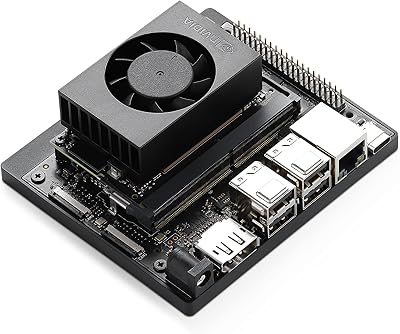
- Top Pick: NVIDIA Jetson AGX Orin 64GB Developer Kit with Ethernet, USB, Display Port
- Best Value: seeed studio NVIDIA Jetson Orin NX 16GB Edge AI Device – reComputer J4012, 4xUSB 3.2, M.2 Key E & Key M Slot, Pre-Installed Jetpack System with NVIDIA Jetpack on 128GB NVMe SSD
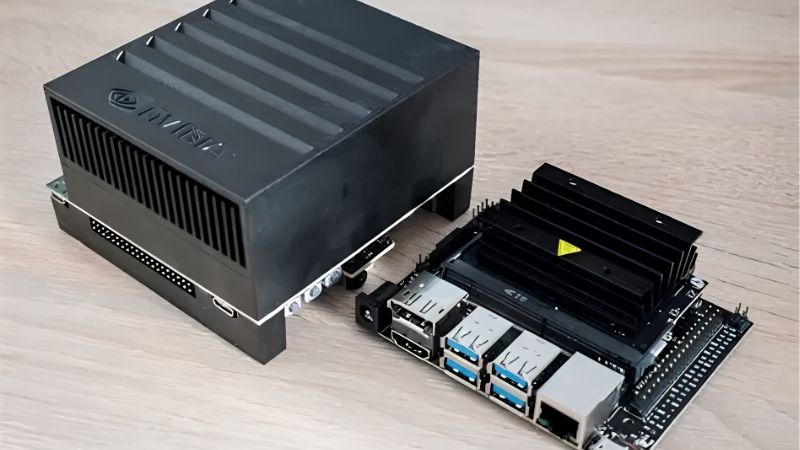
- Premium Choice: NVIDIA Jetson Xavier NX Developer Kit (812674024318)
- Understanding NVIDIA Jetson Pricing
- What Drives the NVIDIA Jetson Price
- Is the NVIDIA Jetson Price Worth It
- Final Verdict on the NVIDIA Jetson Price
- Total Cost Beyond the Kit
- Model to Workload at a Glance
- More Picks Worth Considering
- JetPack and Software in Brief
- Who Should Skip Jetson
- Common Mistakes
- Buyer Questions
- Related Guides
- Frequently Asked Questions
- Related Articles

NVIDIA Jetson price questions come from developers, roboticists, and hobbyists weighing NVIDIA’s edge AI platform for their next project. You want to know what the lineup costs, the difference between dev kits and production modules, and whether the price is justified for what you are building, without a long video. This guide lays out the pricing picture and a clear verdict so you can plan your project with confidence, and you should always confirm current figures against official listings.
Understanding NVIDIA Jetson Pricing
Before deciding anything, you need to understand what the Jetson family is and how its pricing is structured. This section covers the lineup, the general price ladder, and what you actually get for the money, so the nvidia jetson price makes sense in the context of your project. Understanding what you are paying for is the fastest way to avoid buying the wrong tier.
As an Amazon Associate we earn from qualifying purchases at no extra cost to you.


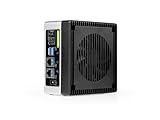


What the Jetson Lineup Includes
The NVIDIA Jetson family is a range of small, power-efficient computers designed for edge AI, robotics, and embedded applications rather than gaming. It spans from affordable entry boards aimed at students and hobbyists up to powerful modules built for advanced robotics and industrial systems. That breadth means there is usually a Jetson sized for almost any edge AI ambition.
Each tier pairs an NVIDIA GPU-based system-on-module with the software stack needed to run AI workloads locally, at the edge, without relying on the cloud. That local AI capability is the core of what the platform offers. Running AI models on the device itself, without the cloud, is the whole reason Jetson exists.
Lineup read: Jetson is a family of edge AI computers, from entry hobbyist boards to high-end robotics modules. Knowing where your project sits on that range is the first step to a sensible budget.
The Jetson Price Ladder
Jetson pricing spans a wide range depending on the performance tier and whether you buy a developer kit or a production module. Here is a general view of how the ladder is structured, offered as guidance since exact prices change and should be confirmed officially.
| Tier | Typical use | Relative price |
|---|---|---|
| Entry dev kits | Learning, hobby AI, prototyping | Lowest |
| Mid-range modules | Robotics, edge inference | Moderate |
| High-end modules | Advanced robotics, industrial AI | Highest |
The key point is that the nvidia jetson price scales with AI performance and intended use, so the right tier depends entirely on your project’s demands. There is no single right price, only the right tier for the workload you have in mind.
What You Get for the Price
What the Jetson price buys is a compact, power-efficient AI computer capable of running machine learning models locally, which is difficult to match with general-purpose hardware at the same size and power draw. That efficiency and small footprint are central to its value. Few alternatives match that blend of AI compute, low power, and compact size.
You also get NVIDIA’s mature software ecosystem, which simplifies deploying AI workloads and is a major reason developers choose the platform. For the right project, that combination justifies the cost. For the wrong project, though, you may be paying for capability you will never use.
Value read: the price buys efficient local AI performance plus a strong software stack, which is hard to replicate cheaply. That software maturity is a large part of what you are actually buying with a Jetson.
What Drives the NVIDIA Jetson Price
Understanding what shapes the cost helps you choose the right tier. This section covers the difference between dev kits and modules, the performance you are paying for, and who each Jetson suits, so you can judge the nvidia jetson price against your real needs. Getting this right is the difference between a Jetson that transforms your project and one that gathers dust. The tier you choose should follow the workload, not the other way around.
Dev Kits vs Production Modules
A developer kit bundles a Jetson module with a carrier board, ports, and everything needed to start building, which makes it the easiest and often most cost-effective way to begin. Production modules, sold on their own for integration into finished products, are priced differently and intended for deployment at scale. Choosing the wrong format is a common way to either overspend or complicate a simple project.
For learning, prototyping, and most hobby projects, a dev kit is the sensible purchase, while production modules suit companies building Jetson into products. Choosing the right format is the first step in understanding the price. Once you know which format you need, the rest of the pricing picture falls into place.
Format read: buy a dev kit to learn and prototype, and consider modules only when integrating Jetson into a finished product. For a one-off build or learning project, that route is usually unnecessary complexity.
Performance and AI Capability
The main driver of the Jetson price is AI performance, measured in the compute available for machine learning inference. Higher tiers deliver far more capability for demanding robotics and multi-camera or multi-model workloads, which justifies their higher cost. You are paying directly for AI compute, so the price tracks the capability closely.
Entry boards handle lighter AI tasks and learning well, while high-end modules target complex, real-time applications. Matching the performance tier to your workload is essential to avoid overpaying or underbuying. Matching the tier to your models is where most of the value decision actually happens.
Performance read: you pay for AI compute, so match the tier to how demanding your models and application really are. A demanding multi-camera robot needs far more than a simple sensor project does.
Who Each Jetson Is For
Entry Jetson boards suit students, hobbyists, and developers learning edge AI or building simple projects on a budget. Mid-range modules fit serious robotics and edge inference work, while high-end modules target advanced, industrial, and commercial applications. Each tier is built with a clear class of project in mind, which guides the choice.
Identifying which group you fall into is the fastest way to know which Jetson price is right for you. Buying more capability than your project needs is the most common way to overspend. Buying only the capability your project needs is the surest route to good value.
Audience read: match the Jetson tier to your role and project, from hobby learning up to industrial robotics.
Is the NVIDIA Jetson Price Worth It
Whether the price is justified depends on your project and alternatives. This section covers where Jetson genuinely shines, its honest pros and cons, and the alternatives worth weighing, so you can decide if the platform is right for you. Being honest about your project’s real demands is the fastest way to avoid overspending. Not every idea actually needs edge AI to succeed.
Where Jetson Shines
Jetson shines when you need real AI performance in a small, power-efficient package that runs locally, such as in robots, drones, smart cameras, and embedded systems. Its combination of compute, efficiency, and software support is difficult to match at the same size and power. That efficiency in a compact form is exactly what makes Jetson special for edge use.
For edge applications where sending data to the cloud is impractical, the platform’s local processing is a genuine advantage. That is the scenario where the price is easiest to justify. When the cloud is not an option, local processing turns the cost into a clear necessity.
Strength read: Jetson excels at efficient, local edge AI where size, power, and offline capability matter.
Pros and Cons
Here is the honest pros and cons view of the nvidia jetson price and platform, so you know what you are committing to. None of the drawbacks are dealbreakers for the right project, but all deserve honest weighing. Going in with clear eyes prevents disappointment later.
Pros: strong local AI performance, excellent efficiency and small size, a mature software ecosystem, and options across many budgets. Cons: higher cost than general-purpose hobby boards, a learning curve for beginners, and overkill for projects that do not need AI. For those, simpler and cheaper hardware will serve you just as well.
For edge AI and robotics, the pros clearly justify the price, while simpler projects may be better served by cheaper hardware. Matching the platform to your actual needs is the key to good value. Buying only the capability your workload demands is the surest route to spending well. Overbuying here is just as costly as underbuying.
Alternatives to Consider
If your project does not need serious AI compute, a general-purpose single-board computer can be far cheaper and perfectly adequate. For heavy AI development that is not size-constrained, a desktop with a standard NVIDIA GPU may offer more performance per dollar. Jetson earns its price specifically when size and efficiency, not raw power alone, are the priority.
Jetson makes the most sense specifically when you need edge AI in a compact, efficient form, which is where cheaper alternatives fall short. Weighing these options ensures you pay for Jetson only when it is genuinely the right tool.
Alternatives read: consider cheaper boards for non-AI projects and desktop GPUs for size-unconstrained AI work.
See More:
- RX 9060 XT vs RTX 4060
- NVIDIA GeForce GTX 1650 driver
- Intel Iris Xe graphics driver
- 9060 XT 16GB vs 5060 8GB
Final Verdict on the NVIDIA Jetson Price
The nvidia jetson price is justified when you genuinely need efficient, local edge AI performance in a compact package, backed by NVIDIA’s mature software ecosystem, which is exactly what robotics, drones, and embedded systems demand. Choose a dev kit to learn and prototype, match the performance tier to your workload, and consider cheaper alternatives only if your project does not truly need AI compute. For the right edge application, the platform delivers capability that is hard to match at the same size and power. Use the button below to check current Jetson prices and pick the tier that fits your project, and confirm the latest figures against official sources.
Total Cost Beyond the Kit
The kit is only the first line of the bill. A Jetson board needs storage, power, cooling, and a way to see what it is doing, and each of those adds cost. The table below lists the extras most buyers end up adding, so the budget reflects the real system rather than the board alone.
| Extra | Why it adds cost |
|---|---|
| NVMe SSD | The on board storage is small, and AI models and datasets need room |
| Power supply | A weak supply causes brownouts under load; the official supply is sized for the board |
| Wi-Fi and Bluetooth | Some kits include a card, others leave it out |
| Camera | Vision projects need a camera module, and the mount and cable add up |
| Enclosure and cooling | A case and a fan keep the board cool and protected on a desk or a robot |
| Display and cables | A monitor, keyboard, and mouse are needed for the first setup |
Model to Workload at a Glance
| Kit | Memory | AI compute | Best fit |
|---|---|---|---|
| Yahboom Orin Nano Super AI Large Model Kit | 8GB | 67 TOPS | Learning, small vision projects |
| Yahboom Orin NX 8GB Basis Kit | 8GB | 117 TOPS | Robotics, multi camera vision |
| NVIDIA Jetson Thor Developer Kit | 128GB | 2070 TOPS | Humanoid robotics, large models |
| NVIDIA Jetson Orin Nano Super Developer Kit | 8GB | 67 TOPS | Entry level official kit |
| reComputer J4012 Orin NX 16GB | 16GB | 100 TOPS | Mid range robotics |
| NVIDIA Jetson AGX Orin 64GB Developer Kit | 64GB | 275 TOPS | Heavy multi sensor work |
More Picks Worth Considering
Yahboom Jetson Orin Nano Super 8GB AI Large Model Kit
The Yahboom Jetson Orin Nano Super 8GB AI Large Model Kit suits a buyer who wants the official Orin Nano Super board. It carries the same 8GB of memory and 67 TOPS of AI compute as the official kit, but it adds a solid state drive, a wireless card, and the accessories needed to start building. It fits learning, small vision projects, and home automation with a camera. It does not fit a buyer who wants the bare Basic Kit already in the guide, since this is the larger AI Large Model Kit with more in the box, and it is not the right pick for a project that needs more than 8GB of memory. The listing notes that a bootloader flash is needed before the included image will run, so follow the maker steps in order. It also does not fit a buyer who wants a fanless build.
Yahboom Jetson Orin NX 8GB Basis Kit

The Yahboom Jetson Orin NX 8GB Basis Kit suits a buyer who has outgrown the Nano and needs more AI compute without moving to a flagship kit. Its Orin NX module delivers 117 TOPS, which handles multi camera vision and robotics workloads that strain the Nano, and the kit includes a 256GB solid state drive, an acrylic case, and a ROS2 Ubuntu setup that suits robotics work. It fits a builder who is moving from learning to a real robot or a multi sensor project. It does not fit a buyer who wants the official NVIDIA developer kit, since this is a third party kit built around the same module family, and it is not the right pick for a project that needs the 16GB NX module, since this kit carries 8GB. Check that the module in the box matches the NX 8GB listing before ordering.
NVIDIA Jetson Thor Developer Kit
The NVIDIA Jetson Thor Developer Kit suits a team building humanoid robots or running large AI models at the edge. Its Blackwell graphics processor with 2560 CUDA cores and 96 Tensor cores, paired with 128GB of unified memory, handles workloads that no smaller Jetson can run, and it is the platform NVIDIA positions for physical AI. It fits research labs, robotics startups, and builders who need the largest model support in the Jetson line. It does not fit a hobby budget, since it sits far above every other kit in this guide, and it is not the right pick for a single camera project or a first Jetson build, since the smaller kits do that work for far less. It also does not fit a fanless or battery powered design. Plan the power supply and the cooling before ordering.
JetPack and Software in Brief
Every Jetson kit runs on JetPack, the software stack that includes the operating system, the CUDA libraries, and the AI frameworks. Newer kits need newer JetPack versions, and an old image will not boot on a new board, so check the JetPack version against the kit before flashing. Keep the software and the model files on the solid state drive rather than the SD card, since the drive is faster and lasts longer. Update the system before installing a large framework, and keep a clean image as a spare so a broken update does not cost a day. Most community guides assume a specific JetPack version, so match the guide to the installed version rather than the other way around.
Who Should Skip Jetson
A Jetson kit is the wrong buy for someone who only wants to run a chatbot, since a hosted service or a laptop does that work with less setup. It is also the wrong buy for a buyer who needs a general purpose computer, since a Jetson is built for AI at the edge, not for office work. A beginner who has never used Linux should start with a Raspberry Pi or a hosted notebook instead, and move to Jetson once the workflow is clear. Finally, anyone who needs a finished product rather than a kit should buy a ready made AI camera or robot, since a Jetson kit is a starting point, not a finished device.
Common Mistakes
The first mistake is buying a kit for a model that needs more memory than the board has, which leads to slow or failed runs. The second is using a weak power supply, which causes random shutdowns under load. The third is installing the wrong JetPack version, which leaves the board unable to boot. The fourth is storing models on a slow SD card instead of a solid state drive, which makes every run feel sluggish. The fifth is skipping the cooling, since a hot board throttles and the performance drops. Each of these is easy to avoid by checking the model size, the power supply, and the software version before the first boot.
Buyer Questions
Which Jetson should a beginner buy? The Orin Nano Super is the best start, since it is the lowest cost way into the current line and it runs the standard tutorials. Move up only when a project outgrows it.
Do I need the official kit or a third party kit? The official kit is the safest start, since the guides match it exactly. A third party kit adds storage and accessories, but it may need extra setup steps.
Can a Jetson run large language models? Yes, within its memory limit. Small and medium models run well on the Nano and NX, while the largest models need the Thor or a desktop graphics card.
Frequently Asked Questions
What does a Jetson developer kit cost?
Entry level Orin Nano developer kits sit in the low hundreds of dollars, mid-tier Orin NX modules run several hundred more, and AGX class kits climb into the thousands. The newest high performance robotics platforms are priced well above that. Developer kits always cost less than buying the module plus a carrier board separately.
Why are modules more expensive than developer kits?
Developer kits are subsidised evaluation hardware sold at a low margin to build the ecosystem, and they carry a fixed reference carrier board. Production modules are priced for volume deployment, come with defined lifecycle support commitments, and are sold alongside third party carrier boards you select for your specific enclosure and interfaces.
What else do I need to budget for?
Plan for a suitable power supply that comfortably exceeds the peak power mode you intend to run, fast storage since a slow SD card cripples the experience, a compatible camera module or USB camera, and cooling if your module ships bare. A host Linux machine for flashing is also worth accounting for.
Is a Jetson cheaper than a desktop GPU for AI work?
Not per unit of compute. A desktop RTX card delivers far more throughput for the money. Jetson wins on power efficiency, physical size and integrated camera and sensor interfaces, which matter when the device runs on battery in a robot or camera. Buy it for the deployment constraints, not for value per TOPS.
Which model gives the best value for a first project?
The Orin Nano developer kit. It provides enough inference performance for real vision workloads, runs the same JetPack software stack as the larger modules so your code ports upward, and costs little enough that a mistake is not painful. Move to Orin NX or AGX only once you have measured a genuine performance shortfall.



Write Your Review
No reviews yet. Be the first to share your experience!