

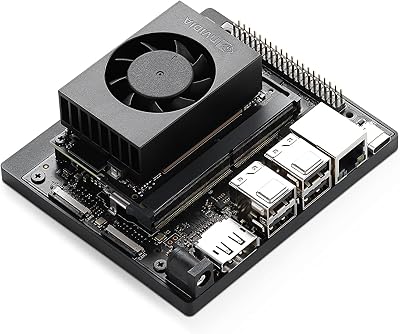
Nvidia Jetson Xavier Developer Kit brought genuine data-centre-style AI power to a board small enough to sit on your desk, and it became a favourite for robotics, computer vision and edge-AI projects. Years on, it remains a capable platform for learning and prototyping, though newer options now sit alongside it. This review looks objectively at what the kit offers, how it performs in real edge-AI work, where it stands in 2026, and whether it is still the right choice for your project or classroom. The short answer is that it remains a strong learning and prototyping platform, with age being the main thing to weigh against it.
What the Nvidia Jetson Xavier Developer Kit Is
Before judging its value, it helps to understand what this kit actually is and what problem it was built to solve. It is a very different product from a gaming graphics card, aimed at a completely different user.
As an Amazon Associate we earn from qualifying purchases at no extra cost to you.





Overview and What Is in the Kit
The Jetson Xavier Developer Kit is a compact single-board computer built for edge AI, pairing a powerful system-on-chip with the ports and software needed to start developing quickly. It is designed to run AI models directly on the device rather than relying on a distant server. Keeping the intelligence on the device itself is the core idea of edge AI, and this kit exists to make that practical.
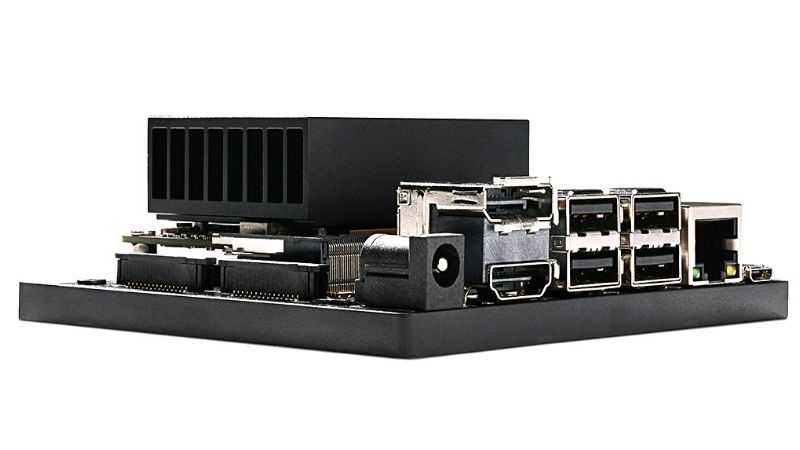
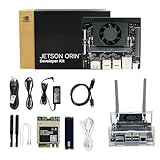
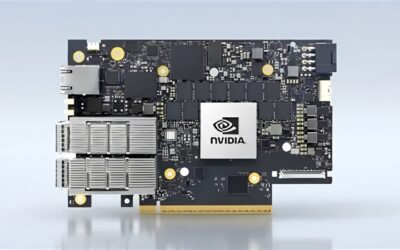
The kit includes the Xavier module mounted on a carrier board, with connectivity for cameras, sensors, displays and networking, plus access to Nvidia’s development software. This makes it a ready-to-use foundation for building autonomous machines and intelligent devices.
In practice, it is a complete starting point for edge-AI development, not a component you slot into a PC. That all-in-one nature is a big part of its appeal for researchers, students and engineers. Out of the box you can connect a camera, load a model and start experimenting, which is exactly what makes it approachable.
Key Specs and AI Performance
At the heart of the kit is the Xavier system-on-chip, which combines a capable GPU, multiple AI accelerators and a multi-core ARM processor on a single, power-efficient package. Together these deliver substantial AI inference performance for a device of its size. That inference power, packed into a compact board, is what let the platform take on tasks previously reserved for larger machines.
The board carries a generous pool of shared memory that both the CPU and GPU can use, which is important for running larger AI models at the edge. This unified memory design helps it handle vision and robotics workloads that smaller boards cannot. Sharing one memory pool avoids the copying overhead that separate CPU and GPU memory would impose, which matters for real-time work.
Crucially, it achieves this within a modest power envelope, offering configurable power modes to balance performance against consumption. That efficiency is central to why it suits battery-powered and embedded deployments. Being able to dial power down for a mobile robot, then up for a benchtop test, gives developers valuable flexibility.
Who It Is Designed For
The kit is aimed at developers, researchers and students working on edge AI, robotics and embedded vision rather than at gamers or general PC users. Its whole purpose is to let people build and test AI applications that run locally on a device.
Robotics teams, university labs and companies prototyping autonomous machines are the core audience, since they need on-device AI in a compact, efficient form. For them, the kit is a practical bridge between an idea and a working prototype. Instead of wrestling with cloud infrastructure, teams can validate an edge-AI concept on real hardware within days.
For anyone outside that world, the kit has little relevance, as it is not a gaming or productivity device. Understanding this focus is essential before considering a purchase.
Real-World Performance and Use
Specifications only matter once you see how the kit behaves in actual projects. Here is how it handles edge-AI workloads, its software ecosystem, and its power and thermal behaviour.
Edge AI and Robotics Workloads
In real use, the Jetson Xavier Developer Kit is strong at running AI models for tasks like object detection, image classification and robotics control directly on the device. This on-device processing avoids the delay and connectivity needs of sending data to the cloud. For applications like a robot reacting to its surroundings, that local, low-latency decision-making is not optional but essential.
Its performance suits demanding edge applications such as autonomous robots, smart cameras and industrial inspection, where fast local decisions matter. The combination of GPU and dedicated AI accelerators handles these workloads smoothly for its class. Splitting work between the graphics cores and the AI accelerators is what lets the board keep up with real-time vision tasks.
For learning and prototyping, it comfortably runs popular AI frameworks and models, making it a capable platform for developing and testing ideas. That real-world capability is a large part of its lasting reputation. Many developers who learned edge AI on this board still recommend it precisely because it handles genuine projects rather than toy examples.
Software: JetPack and the Ecosystem
A major strength of the kit is Nvidia’s software support through the JetPack development kit, which bundles a Linux operating system with AI libraries and tools. This mature software stack dramatically lowers the barrier to starting edge-AI work.
Developers gain access to widely used AI frameworks, libraries for computer vision, and Nvidia’s broader tools, all tuned for the hardware. This ecosystem is one of the biggest reasons the platform remains popular for teaching and research. A consistent software stack across the Jetson family also means skills learned here transfer to newer boards later.
Strong documentation and a large community mean help is usually easy to find when problems arise. For students and newcomers especially, that support network is as valuable as the hardware itself.
Power Efficiency and Thermals
Power efficiency is a defining feature, with the kit offering selectable power modes so you can trade performance for lower consumption as a project requires. This flexibility is essential for embedded and battery-powered deployments.
Under heavy AI workloads the board does generate heat, and sustained use benefits from adequate cooling to maintain performance. The developer kit is designed with this in mind, but real deployments still need sensible thermal planning.
Overall, the balance of capable AI performance and modest power draw is exactly what edge computing demands. It is this efficiency, not raw speed, that makes the platform practical in the field. A device that must run continuously on limited power values steady efficiency far more than peak benchmark numbers.
Value, Age and Alternatives
Deciding whether to buy comes down to your goals, the kit’s age, and what else is available. Here is an honest look at the trade-offs and where this kit fits in 2026.
Pros and Cons of the Jetson Xavier Developer Kit
Here is the honest ledger for the Nvidia Jetson Xavier Developer Kit, based on how it performs for real edge-AI work.
Pros: strong on-device AI performance, generous unified memory, excellent JetPack software support, power efficiency, and a large developer community. Cons: an older-generation platform, niche appeal outside edge AI, and the need for thermal planning under heavy loads.
The pattern is clear: for its intended edge-AI audience it remains a capable and well-supported tool, while for everyone else it is simply not relevant. Its value depends entirely on whether your project needs on-device AI.
Where It Stands in 2026
It is important to be honest that the Xavier platform is no longer Nvidia’s newest edge-AI hardware, as more recent Jetson generations now offer higher performance. That means Xavier sits as a mature, proven option rather than a cutting-edge one.
For many learning and prototyping purposes, that maturity is actually a benefit, since the software is stable and the community knowledge is deep. Established tutorials and projects make it a reliable platform to learn on. When almost every common problem already has a documented solution online, the learning curve becomes far gentler.
The trade-off is that demanding new projects may outgrow it, and buyers should weigh whether they need the extra performance of a newer generation. For cutting-edge production work, the latest hardware may be the better investment.
Alternatives and Who Should Buy
Buyers chasing maximum edge-AI performance should look at Nvidia’s newer Jetson generations, which offer greater speed for the most demanding modern applications. These are the natural choice for advanced production deployments.
For students, hobbyists and teams prototyping or learning, however, the Xavier Developer Kit remains a sensible and capable platform, especially if found at a reasonable price. Its stability and support can outweigh the appeal of the newest hardware for these users. For a first edge-AI project, a proven and well-documented board often leads to success faster than the latest, less-charted option.
The right choice comes down to whether you need current-generation performance or a proven, well-documented platform to build and learn on. Matching the kit to your actual goals is what matters most.
See more:
Final Verdict: Is the Jetson Xavier Developer Kit Worth It?
The Nvidia Jetson Xavier Developer Kit remains a genuinely capable edge-AI platform, with strong on-device performance, excellent JetPack software and the efficiency that embedded projects demand. Its main caveat is age, since newer Jetson generations now offer more performance for the most demanding work, so cutting-edge production projects may prefer the latest hardware. For students, researchers and teams prototyping robotics and computer-vision ideas, though, it is still a reliable, well-supported choice, particularly at a fair price. Weigh your performance needs honestly against its proven maturity, and check current pricing and stock on the Nvidia Jetson Xavier Developer Kit through the link below before you buy.
Frequently Asked Questions
What is the Jetson Xavier Developer Kit designed for?
It is a compact edge AI development platform built around the Xavier system on chip, pairing a Volta-generation GPU with tensor cores, dedicated deep learning accelerators and ARM CPU cores. Typical uses are robotics, autonomous machines, smart cameras and industrial inspection where inference must run locally without cloud connectivity.
Is Xavier still worth buying now that Orin exists?
Orin modules offer several times the inference throughput at similar power, and receive longer JetPack software support. Xavier remains reasonable only if you find one cheap, already have code targeting it, or need a low-cost second unit for testing. For new production designs, choose Orin or newer.
What power supply and cooling does it need?
The AGX Xavier developer kit ships with a dedicated barrel-jack power adapter and includes an active heatsink and fan on the carrier board. Power modes are configurable, letting you trade performance for a lower wattage envelope. Passive cooling is only viable in the lowest power modes with good airflow.
Which software stack does it run?
Jetson devices run Nvidia JetPack, which bundles a Linux for Tegra Ubuntu image with CUDA, cuDNN, TensorRT, VPI and multimedia APIs. Note that JetPack versions are tied to specific hardware generations, so check that the framework and Python versions you need are supported before committing to older silicon.
Can I use it as a general-purpose desktop or gaming machine?
Not effectively. The ARM CPU and Linux for Tegra environment limit software compatibility, there is no x86 game support, and the GPU driver stack targets compute and vision rather than desktop gaming. Treat it strictly as an embedded AI development board rather than a small form factor PC.





Write Your Review
No reviews yet. Be the first to share your experience!