
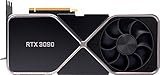
- Top Pick: NVIDIA GeForce RTX 5080 Founders Edition
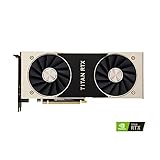
- Best Value: NVIDIA Titan RTX Graphics Card (Renewed)
- Premium Choice: Nvidia GeForce GTX 1070 Founders Edition (Renewed)
Nvidia Inception is the chip giant’s free program for AI startups, and it has grown into one of the largest startup ecosystems in the world. Unlike a traditional accelerator, it takes no equity, charges no fees, and has no cohort or deadline. This article explains exactly what Nvidia Inception is, who can join, what benefits members receive, and whether it is worth applying to for an AI founder.


What Nvidia Inception Is
Before chasing the benefits, it helps to understand what kind of program this actually is. It differs from what most founders expect from an accelerator.
As an Amazon Associate we earn from qualifying purchases at no extra cost to you.





A Free, No-Equity Program
The absence of any equity requirement is the single detail that most sharply distinguishes Inception from conventional startup accelerators, which typically take a slice of ownership in exchange for their support. Because Nvidia asks for no stake and charges no fee, founders face almost no cost or dilution in joining, which lowers the barrier to entry dramatically. The company recoups its investment indirectly, through the hardware and cloud services that member startups eventually buy as they scale, making the arrangement a long game rather than an immediate transaction.
Nvidia Inception is a free membership program designed to nurture AI, data-science, and high-performance-computing startups. There are no application fees, no membership fees, and crucially no equity requirement.
This no-strings-attached model sets it apart from many startup programs, since founders keep full ownership of their company while still tapping Nvidia’s resources.
Nvidia offers it free because every startup that builds on its technology becomes a potential long-term customer, so the program is ultimately a way to seed future demand for Nvidia’s hardware and cloud.
Not a Traditional Accelerator
This open-ended structure changes the psychology of joining entirely. Rather than competing for a scarce number of spots in a fixed cohort and racing toward a demo day, startups simply apply and, if eligible, gain access to an enormous standing network of resources they can draw on at their own pace. There is no pressure of a ticking clock and no forced relocation, which suits the reality that AI startups mature on very different timelines. The trade-off is that Inception offers breadth and resources rather than the intense, hands-on mentorship of a boutique accelerator.
Despite sometimes being called a virtual accelerator, Inception is not a time-boxed program. There is no cohort, no demo day, no three-month sprint, and no relocation required.
Instead, it works as an ongoing platform that startups can join at any time and stay in as they grow, with benefits meant to evolve alongside the company from prototype through later stages.
By 2026 the program had grown into a network of many thousands of member startups worldwide, making it less a competitive cohort and more a vast ecosystem to plug into.
Who Can Join
The eligibility rules are designed to admit genuine, active startups while filtering out organizations that would not fit the program’s purpose. Requiring at least one developer, a live website, formal incorporation, and a company less than a decade old ensures members are real, operating businesses building technology rather than shell entities or hobby projects. The exclusions, covering consultancies, resellers, cloud providers, public companies, and crypto-focused firms, keep the focus squarely on the emerging AI and computing startups whose growth stands to reinforce Nvidia’s broader ecosystem.
Eligibility is broad but specific. A startup must employ at least one developer, maintain a working website, be officially incorporated, and be less than ten years old, though generating revenue is not required.
Some categories are excluded, however, including consulting and outsourced development firms, cloud service providers, resellers and distributors, public companies, and cryptocurrency-focused companies.
This wide door means most genuine, early-stage AI startups qualify, from solo-founder projects to venture-backed companies, as long as they are building real technology on or relevant to Nvidia’s stack.
The Benefits
The heart of Inception is its package of resources. These span compute, training, hardware, and connections.
Cloud Credits and DGX Cloud
For a young AI company, compute is often the single largest and most painful expense, so these credits can be transformative when they come through. Access to advanced GPUs without a large upfront hardware purchase lets a startup train and test models it could not otherwise afford, effectively subsidizing the most expensive part of building AI. The important caveat is that the largest headline amounts depend on separate approval from the partner providers and on the startup’s profile, so founders should plan around what they can realistically secure rather than the maximum figures.
Among the most valuable benefits are cloud credits, offered through partners rather than Nvidia directly. Members can pursue packages such as substantial AWS Activate credits and generous credits from providers like Nebius.
Inception also offers access to Nvidia’s own DGX Cloud, including a discount and credits that let startups run advanced GPUs like H100-class hardware without buying it outright.
Because these credits route through partners, the exact amounts vary by startup profile and are not guaranteed, so founders should treat the headline figures as ceilings rather than certainties.
Training, SDKs and NIM
This technical layer is arguably where the most reliable value sits, since unlike partner credits it does not depend on separate approvals. Deep Learning Institute credits give teams structured, high-quality training in exactly the skills modern AI development demands, while full access to Nvidia’s SDKs, libraries, and inference microservices lets small teams prototype sophisticated applications quickly. For a startup with limited engineering bandwidth, the ability to lean on Nvidia’s mature tools and educational resources can meaningfully accelerate development, helping founders build on the company’s platform faster than they could working entirely on their own.
Members receive credits for the Nvidia Deep Learning Institute, unlocking self-paced courses and discounted workshops that teach practical skills in AI, data science, and accelerated computing.
They also gain access to Nvidia’s full developer stack, including SDKs, model libraries, and the developer forums, plus NVIDIA Inference Microservices for prototyping AI applications quickly.
This technical layer helps small teams build on Nvidia technology faster than they could alone, which is exactly the outcome Nvidia hopes to encourage.
Hardware Discounts and VC Connections
The go-to-market and investor dimension of Inception is easy to overlook but can rival the technical benefits in importance. Introductions to venture capitalists through Nvidia’s network carry real weight, since a connection facilitated by a company as central to AI as Nvidia can open doors that a cold outreach never would. Co-marketing support and member showcases add visibility that cash-strapped startups struggle to buy, and for founders in the middle of raising capital, these relationships and the credibility of association with Nvidia can prove more valuable than any single credit or discount.
Inception offers preferred pricing on select Nvidia hardware and software, structured as a rebate off the price a reseller charges, since Nvidia does not sell directly to members.
Beyond technology, the program provides a real go-to-market layer, including co-marketing support, member showcases, and exposure to investors through Inception Capital Connect and Nvidia’s broader venture network.
For founders raising money, those curated introductions to venture capitalists and networking events with Nvidia executives can be as valuable as any credit or discount.
Is It Worth It?
With so many benefits and no cost, the value question still deserves an honest look. The program’s worth depends on how a founder uses it.
What Inception Does and Doesn’t Do
Being clear-eyed about the program’s limits is essential to using it well. Inception is a resource platform, not a substitute for the hard work of finding customers, achieving product-market fit, or securing sustainable funding, and it will not compress the years it takes to build a real company. What it does is remove some friction and expense from building on Nvidia’s technology, which is genuinely useful but bounded. Founders who understand this and treat Inception as one tool among many, rather than a magic solution, tend to get far more out of it.
Inception delivers tools, training, credits, and connections, but it is not designed to help a startup find product-market fit or compress its company-building timeline the way an intensive accelerator might.
Its real aim is to ensure that when startups do build, they build on Nvidia technology and grow with it, which shapes both what members receive and what they should expect.
Founders who actively engage with the portal, pursue credits, and attend events tend to extract real value, while those who join only for the badge and never log in get little in return.
The Pros and Cons for Founders
The pros and cons are worth weighing plainly. On the plus side, the program is free, takes no equity, imposes no deadlines, and offers a stack of credits, training, and introductions with almost no downside to applying.
The application takes only a few hours, and benefits can be stacked with other startup programs from cloud providers, multiplying the potential value for a resourceful team.
On the downside, the biggest benefits like large cloud-credit amounts are not guaranteed and depend on partner approval, and the program will not, on its own, solve a startup’s core challenges of funding, product, or affordable ongoing compute.
Why Nvidia Offers It Free
Understanding Nvidia’s motive clarifies the whole arrangement. The company gives startups tools, training, and introductions, and in return startups give Nvidia ecosystem density, adoption, and future hardware demand.
Every member that scales up on Nvidia’s platform becomes a long-term customer and a proof point for the broader ecosystem, making the program a strategic investment rather than pure charity.
This alignment is precisely why the benefits are generous and free, and why founders can accept them without worrying about hidden costs or equity dilution.
See More:
- TechPowerUp GPU
- Nvidia H200 GPU price
- RTX 5050 Mobile
- Nvidia competitors
- Nvidia Reflex low latency on or off
The Bottom Line on Nvidia Inception
In summary, Nvidia Inception is a free, no-equity program that hands AI startups cloud credits, training, discounted hardware, and valuable VC connections, all in exchange for building on Nvidia’s technology. For nearly any eligible AI startup the downside is close to zero and the upside depends on how actively you engage, making it well worth applying to. To understand the Nvidia hardware that powers these startups, explore our GPU reviews and guides.
Frequently Asked Questions
What is NVIDIA Inception and does it cost anything?
Inception is NVIDIA’s free programme for AI and data science startups. There is no membership fee and NVIDIA takes no equity, which distinguishes it from an accelerator or incubator. Members receive technical resources, training credits, hardware and cloud discounts, go-to-market support and visibility opportunities, scaled according to the startup’s stage and technical engagement with the platform.
What are the eligibility requirements?
Applicants generally need to be an incorporated legal entity with a working website and a product or research direction built on accelerated computing or AI. The programme targets startups rather than established enterprises, with age and funding thresholds applied at review. Consultancies and resellers without their own product are typically not accepted. Approval is manual, not automatic.
What do members actually receive?
Credits for the Deep Learning Institute training catalogue, preferred pricing on hardware and on cloud GPU instances, access to preview software and technical documentation, engineering office hours, and inclusion in a partner directory. Higher tiers unlock introductions through the Inception VC Alliance and exposure at GTC. The value is heavily weighted toward startups that actively use it.
Does joining Inception mean NVIDIA will invest?
No. Inception is a resource programme with thousands of members, while equity investment comes separately through NVentures into a very small number of companies. Membership improves visibility and can lead to introductions, but there is no funding entitlement and no application path from one to the other. Treat them as distinct programmes with different objectives.
How long does the application take?
Applications are submitted through the NVIDIA developer portal and reviewed manually, typically taking days to a few weeks depending on volume and how clearly the submission describes the product. Incomplete company details, a placeholder website, or a vague description of how the product uses accelerated computing are the most common reasons for delay or rejection.





Write Your Review
No reviews yet. Be the first to share your experience!