
- Top Pick: Nvidia Hits $4 Trillion: How the Chipmaker Overtook Apple and Microsoft, Navigated Global Turmoil, and Became the Backbone of the AI Era
- Best Value: WHO REALLY OWNS AI?: The Hidden Power Map Behind Artificial Intelligence and What It Means for Your Money
- Premium Choice: The Pipe Owners: Who Controls AI Infrastructure and What That Power Means (The Machine Age)
Who owns Nvidia is a question with a surprising answer: no single person or family controls the company. Nvidia is a publicly traded business whose largest owners are giant institutional investors, while co-founder and CEO Jensen Huang remains the biggest individual shareholder with a stake of only a few percent. This article breaks down exactly who holds Nvidia, how its ownership is structured, and why the widely quoted percentages keep shifting.



The Short Answer: Nvidia’s Owners
Before diving into individual names, it helps to understand the big picture of how Nvidia is owned. The ownership splits into three broad buckets, and grasping them clears up most confusion.
As an Amazon Associate we earn from qualifying purchases at no extra cost to you.




It Is a Public Company
It is worth stressing how different this makes Nvidia from a privately held or founder-controlled firm. Anyone, from a giant pension fund to an individual buying a single share through a phone app, can become a part-owner of the company, and collectively those buyers set its market value in real time. There is no controlling family, no private-equity parent, and no government stake; ownership is simply whoever happens to hold the stock at any given moment, which is why the answer to the question is less a name than a constantly shifting mosaic of shareholders.
Nvidia trades on the Nasdaq under the ticker NVDA, which means its shares can be bought by anyone with a brokerage account. By mid-2026 it had become the most valuable listed company in the world, with a market capitalization exceeding four trillion dollars.
Because it is public, Nvidia is owned collectively by its shareholders rather than by a founder, a family, or a private-equity owner. Roughly 24 billion shares are outstanding, spread across institutions, insiders, and everyday retail investors.
This is the single most important fact to internalize: when people ask who owns Nvidia, the honest answer is that thousands of shareholders do, in proportions that change with every trade.
Institutions Own the Majority
The dominance of passive index funds within this institutional bucket is a subtle but important point. Many of these firms do not hold Nvidia because they made a deliberate bet on its future; they hold it because their funds are built to mirror major market indexes, and Nvidia’s sheer size forces it into those indexes at a heavy weighting. As money flows into index funds from ordinary savers, some of it automatically buys Nvidia, which means a large share of the company is owned almost mechanically rather than through active conviction about its prospects.
The largest slice of Nvidia belongs to institutional investors, which collectively hold roughly two-thirds of the company. These are asset managers, index funds, pension funds, and mutual funds investing on behalf of millions of clients.
Much of this ownership is passive, held through index funds that must own Nvidia simply because of its enormous weight in benchmarks like the S&P 500 and Nasdaq 100. As Nvidia grew, index funds automatically accumulated more of it.
This institutional dominance is typical of large public tech companies, where the biggest blocks of stock sit with asset managers rather than with any founder or executive.
Jensen Huang, the Largest Individual
Huang’s position is unusual for a company of Nvidia’s scale, since founder-CEOs of trillion-dollar firms often hold either much larger controlling stakes or much smaller ceremonial ones. His roughly three-and-a-half-percent holding sits in between: large enough to make him one of the richest individuals alive and to align him tightly with shareholders, yet far too small to give him outright control. That balance is part of what makes Nvidia’s ownership story interesting, because the man most associated with the company in the public mind owns only a sliver of it.
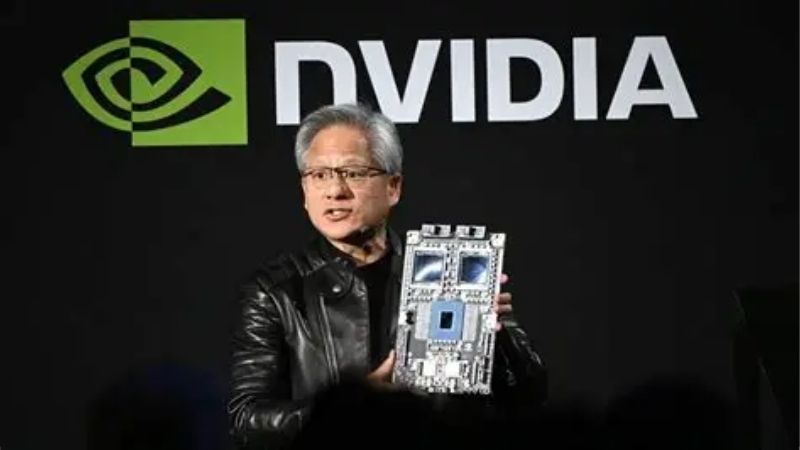
Among individuals, co-founder and CEO Jensen Huang is by far the biggest shareholder, holding roughly three and a half percent of the company. Thanks to Nvidia’s scale, even that modest percentage is worth well over one hundred billion dollars.
Huang’s stake makes him one of the wealthiest people on earth, yet it is a small fraction of the whole company, a reminder of how much value Nvidia has created for outside shareholders.
His holding has gradually declined over the years through employee stock awards and occasional planned sales, but it still keeps his interests firmly aligned with those of long-term investors.
The Biggest Shareholders
Zooming in on the specific names makes the ownership picture concrete. A handful of firms and individuals account for a large share of the company.
Vanguard, BlackRock and the Index Giants
The scale of these positions is staggering in absolute terms even when the percentages sound modest. Because Nvidia’s market value runs into the trillions, a single-digit percentage stake translates into hundreds of billions of dollars, making Nvidia one of the largest holdings in these firms’ entire portfolios. That concentration cuts both ways: it gives the index giants enormous nominal voting power, yet because they are passive stewards managing money for millions of clients, they rarely use that power to challenge a management team that has delivered such extraordinary returns.
The two largest shareholders are Vanguard and BlackRock, the world’s biggest asset managers, which together with a couple of peers control more than twenty percent of Nvidia between them.
Vanguard typically holds somewhere around eight to nine percent, and BlackRock a bit less, with the exact figures moving as funds rebalance and as regulatory filings update throughout the year.
Their enormous positions reflect Nvidia’s central place in global index funds rather than any active bet, since these firms largely track the market as a whole.
Fidelity, State Street and Others
These secondary institutions illustrate how thoroughly Nvidia has become embedded across the financial system. Between actively managed mutual funds, retirement accounts, and the exchange-traded products that track major indexes, the stock reaches into the portfolios of a huge share of ordinary investors, often without their realizing it. Someone with a workplace retirement plan invested in a broad market fund almost certainly owns a small piece of Nvidia through firms like these, which is a striking measure of how central the company has become to global markets.
Behind the two leaders sit other major institutions such as Fidelity, State Street, and Geode Capital, each holding a few percent of the company through their own funds and exchange-traded products.
State Street’s holdings, for example, are driven partly by its popular ETFs that include Nvidia as a core component, while Fidelity’s stake spans many actively managed and index funds.
Together, these secondary institutions add several more percentage points of ownership, deepening the concentration of Nvidia stock among a relatively small number of very large asset managers.
Insiders and Individual Holders
The presence of long-tenured insiders like early board members reflects Nvidia’s more than three decades of history, during which stock awards and early investments accumulated into meaningful personal stakes. These holdings, together with the founder’s, keep a layer of ownership in the hands of people directly tied to the company’s fortunes, which many investors view as reassuring. Retail investors round out the picture, and while any single individual’s influence is negligible, in aggregate everyday shareholders own a real slice of the company alongside the institutional heavyweights.
Beyond Jensen Huang, other insiders and early figures hold meaningful stakes, including longtime board members and executives such as Mark Stevens, Tench Coxe, and finance chief Colette Kress.
As a group, Nvidia’s directors and executive officers own a low single-digit percentage of the company, a figure that reflects decades of stock awards and early participation in the business.
Retail investors, meaning ordinary individuals buying shares directly, make up the remainder, though their influence on company decisions is small compared with the big institutions.
How Nvidia’s Ownership Works
Numbers alone do not capture how control actually operates at Nvidia. Its share structure and the fluid nature of the figures matter just as much.
One Share, One Vote
Nvidia uses a single-class share structure, meaning every share carries exactly one vote. There are no special supervoting shares reserved for founders, unlike at companies such as Meta or Alphabet.
This is why Jensen Huang, despite leading the company and being its most visible figure, does not hold voting control. His roughly three and a half percent stake gives him significant influence but not command over shareholder votes.
The one-share-one-vote design means real voting power sits with the large institutions, even though they rarely exercise it against a management team delivering such strong results.
Why the Numbers Keep Changing
Any specific ownership percentage is a snapshot rather than a fixed fact. The figures shift constantly as institutions buy and sell, as index funds rebalance, and as Nvidia issues shares for employee compensation.
Regulatory filings, such as the quarterly disclosures institutions must submit, capture positions only as of a particular date, so different sources can report slightly different numbers depending on when they were compiled.
For that reason, the percentages in this article should be read as approximate. Anyone needing exact, current figures should consult Nvidia’s official filings and proxy statements directly.
Pros and Cons of This Structure
Considering the pros and cons of Nvidia’s ownership structure is illuminating. On the positive side, broad institutional ownership and one-share-one-vote governance mean no insider can override other shareholders, and the founder’s interests stay aligned through his large personal stake.
The heavy passive-index ownership also lends stability, since index funds are long-term holders that do not trade on short-term news, cushioning the stock from some volatility.
On the downside, such concentrated institutional ownership means a handful of asset managers wield outsized voting influence, and heavy index inclusion ties Nvidia’s share price closely to broad market flows beyond the company’s own control.
See More:
- TechPowerUp GPU
- Nvidia H200 GPU price
- RTX 5050 Mobile
- Nvidia competitors
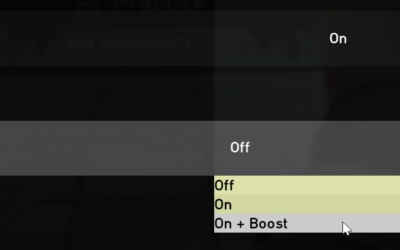
- Nvidia Reflex low latency on or off
The Bottom Line on Who Owns Nvidia
To sum up who owns Nvidia: it is a public company owned mostly by institutional investors like Vanguard and BlackRock, with Jensen Huang the largest individual shareholder at only a few percent, all under a one-share-one-vote structure that spreads control widely. Because the exact figures shift with every filing, treat the percentages here as approximate and check Nvidia’s official disclosures for current data. For more on the technology behind the company these shareholders own, explore our Nvidia GPU reviews and guides.
Frequently Asked Questions
Does one person or company own NVIDIA?
No. NVIDIA is a publicly traded corporation listed on the Nasdaq, so ownership is distributed across institutional investors, index funds, retail shareholders and insiders. There is no controlling shareholder, no dual-class share structure granting outsized voting power, and no parent company. Control rests with the board of directors, elected by shareholders on a one-share one-vote basis.
Who are the largest shareholders?
The biggest holders are the large asset managers that run index funds, principally Vanguard and BlackRock, each typically holding high single-digit percentages, followed by State Street, Fidelity and other institutional managers. Because most of that stock sits inside passive index products, those managers hold it on behalf of millions of underlying fund investors rather than owning it outright.
How much of NVIDIA does Jensen Huang own?
The co-founder and chief executive holds a low single-digit percentage of shares outstanding, a stake worth an enormous sum given the company’s market capitalisation but far from a controlling position. Exact figures change as he sells under pre-arranged trading plans and receives new equity awards, and current holdings are disclosed in the annual proxy statement.
How is stock ownership disclosed?
Institutional managers file quarterly 13F reports with the SEC listing US equity positions, while holders above five percent file 13D or 13G statements. Executives and directors report their own transactions on Form 4 within two business days. The annual proxy statement, filed as DEF 14A, consolidates beneficial ownership for insiders and major holders in a single table.
Do shareholders actually influence company decisions?
Indirectly. They elect directors and vote on executive compensation, auditor ratification and shareholder proposals at the annual meeting. Day-to-day strategy sits with management. Large passive holders vote their shares according to published stewardship policies rather than taking activist positions, which in practice gives the board considerable operational latitude between annual votes.







Write Your Review
No reviews yet. Be the first to share your experience!