
- Top Pick: GIGABYTE GeForce RTX 5070 Ti Gaming OC 16G Graphics Card, 16GB 256-bit GDDR7, PCIe 5.0, WINDFORCE Cooling System, GV-N507TGAMING OC-16GD Video Card
- Best Value: ASUS Prime GeForce RTX 5070 Ti 16GB GDDR7 Gaming Graphics Card
- Premium Choice: BAKLUCK msi Gaming RTX 5070 TI 16G Shadow 3X OC Graphics Card (16GB GDDR7, 256-bit, Extreme Performance: 2497 MHz, DisplayPort x3 2.1a, HDMI 2.1b, NVIDIA Blackwell Architecture)
Top Rtx 3080 5070 Which Gpu Picks for 2026
Here are our current top rtx 3080 5070 which gpu picks, compared on real Amazon owner reviews, price, and features. Live prices update below.
- Top Rtx 3080 5070 Which Gpu Picks for 2026
- RTX 3080 vs 5070 Ti: Quick Verdict and Core Specs
- Deep Dive Face-Off: Performance, Power, and Features
- Market Timing in 2026: Why GPU Prices Are Trending Up
- Final Verdict: Who Should Buy Which GPU?
- Conclusion
- Related Guides
- Frequently Asked Questions
- Related Articles


Prime
Editor's Pick
ASUS SFF-Ready Prime NVIDIA GeForce RTX 5070 Graphics Card (PCIe 5.0, 12GB GDDR7, HDMI/DP 2.1, 2.5-Slot, Axial-tech Fans, Dual BIOS), 3 Year Warranty
Dropped $2.52


Dropped $19.61

RTX 3080 vs 5070 Ti is one of the most practical GPU matchups you can research in 2026, because it pits a legendary used-market bargain against one of Nvidia’s strongest current mid-high-end cards. One launched in 2020 at $699 and still handles modern games surprisingly well; the other launched at $749 with GDDR7 memory, DLSS 4, and far better efficiency. The price gap between them on the secondhand and retail markets is real money, so the decision deserves real numbers. This comparison breaks down specs, gaming benchmarks, power requirements, and current market conditions so you can choose with confidence.
As an Amazon Associate we earn from qualifying purchases at no extra cost to you. Product prices and availability are accurate as of the date shown and are subject to change.


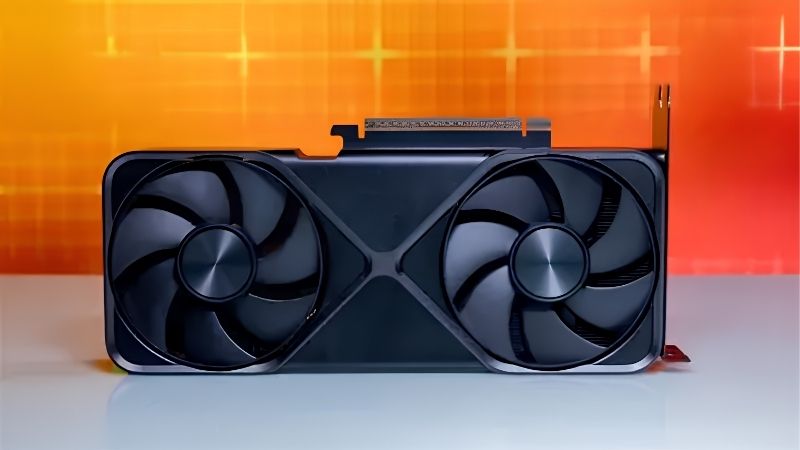
RTX 3080 vs 5070 Ti: Quick Verdict and Core Specs
Before the deep dive, here is the short version for anyone who just wants an answer. The two cards are separated by two full GPU generations (Ampere to Blackwell), and that gap shows up in memory capacity, bandwidth, feature support, and performance per watt.
The Quick Verdict for Busy Buyers
The RTX 5070 Ti wins this comparison outright. In raster performance it is typically 55 to 70 percent faster than the RTX 3080 at 1440p and 4K, and the gap widens further in ray-traced titles. With DLSS 4 Multi Frame Generation enabled, the effective frame-rate advantage can exceed 2x in supported games.
The RTX 3080 only makes sense as a used purchase at around $300 to $380. If you find one in that range with a clean history, it remains a capable 1440p card. But if you are buying new, the 5070 Ti is the obvious pick — check the current price on Amazon, because listings move quickly when stock dips.
Specification Comparison Table
The raw numbers explain most of the performance story. Pay particular attention to VRAM capacity and memory bandwidth, the two areas where the 3080 has aged the fastest.
| Specification | RTX 3080 (10GB) | RTX 5070 Ti |
|---|---|---|
| Architecture | Ampere (2020) | Blackwell (2025) |
| CUDA Cores | 8,704 | 8,960 |
| VRAM | 10GB GDDR6X | 16GB GDDR7 |
| Memory Bandwidth | 760 GB/s | 896 GB/s |
| Board Power | 320W | 300W |
| DLSS Support | DLSS 2 (Super Resolution) | DLSS 4 (Multi Frame Generation) |
| Launch Price | $699 | $749 |
Note that similar CUDA core counts mean little across architectures: Blackwell cores run at higher clocks (around 2.45 GHz boost versus roughly 1.71 GHz) and deliver far more work per cycle.
Pros and Cons of Each Card
Every honest RTX 3080 vs 5070 Ti analysis needs a clear strengths-and-weaknesses breakdown, because the right answer depends on your budget and your monitor.
RTX 3080 pros: very low used prices; still strong 1440p raster performance; mature drivers. Cons: 10GB of VRAM is now a genuine bottleneck at 4K and in texture-heavy titles like recent open-world releases; 320W draw with poor efficiency; no Frame Generation; used cards may have years of mining or heavy gaming wear.
RTX 5070 Ti pros: 16GB GDDR7 with headroom for 4K and creative work; DLSS 4 and full Blackwell feature set; better performance at 20W lower board power; new-card warranty. Cons: street prices frequently sit above the $749 MSRP; requires a 16-pin power connector; overkill if you only play esports titles at 1080p.
Deep Dive Face-Off: Performance, Power, and Features
Specs set expectations, but the details below are what you will actually live with daily. Here is how the two GPUs compare across the three criteria that matter most to gamers and creators.
Gaming Performance at 1440p and 4K
At 1440p, the RTX 3080 still averages around 90 to 110 fps in demanding AAA games at high settings, which is genuinely playable. The RTX 5070 Ti pushes the same titles to roughly 150 to 180 fps, turning a 144Hz or 165Hz monitor into a fully utilized asset rather than wasted potential.
At 4K the gap becomes decisive. The 3080’s 10GB buffer fills up in modern titles with high-resolution texture packs, causing stutter that average-fps charts hide. The 5070 Ti’s 16GB buffer and 896 GB/s of bandwidth keep frame times consistent, and it sustains 60+ fps at native 4K in most games — before any upscaling is applied.
Ray tracing widens the margin further. Blackwell’s fourth-generation RT cores handle path-traced lighting loads that drop the 3080 below 30 fps, while the 5070 Ti stays comfortably playable, especially with DLSS assistance.
Power Draw, Thermals, and System Compatibility
This is where practical buyers should pay attention. The RTX 3080 pulls 320W with transient spikes that can trip older 650W power supplies; a quality 750W unit is the realistic minimum. The 5070 Ti is rated at 300W, behaves more predictably under load, and pairs safely with a good 750W PSU as well.
Connector type matters too. Most 3080 cards use two or three 8-pin PCIe connectors, which any older PSU supports. The 5070 Ti uses the 12V-2×6 (16-pin) connector, so budget for an ATX 3.0/3.1 power supply or use the included adapter carefully, with no sharp bends near the plug.
Physically, many 5070 Ti models are large 2.5 to 3-slot cards around 300 to 330mm long. Measure your case clearance before ordering — it is the most common reason for returns on high-end GPUs.
DLSS 4, AI Features, and Future-Proofing
The experimental edge belongs entirely to the newer card. DLSS 4 Multi Frame Generation can generate up to three AI frames per rendered frame, and the new transformer-based Super Resolution model produces cleaner image quality than the older convolutional model the 3080 is limited to.
Blackwell also brings stronger AI compute for local LLMs, image generation, and video tools — workloads where the 3080’s 10GB of VRAM is often an immediate disqualifier. Add Nvidia Reflex 2 support and improved AV1 encoding, and the 5070 Ti is simply built for the software ecosystem Nvidia is investing in for the next five years.
Value per Frame: The Cost Math Behind This Matchup
Numbers settle arguments, so run the cost-per-frame calculation before you buy. Assume a used RTX 3080 at $360 delivering an average of 100 fps in a demanding 1440p test suite: that works out to $3.60 per frame. A new RTX 5070 Ti at $749 averaging 165 fps in the same suite costs about $4.54 per frame. On that metric alone, the used Ampere card looks like the rational pick by roughly 25 percent.
The picture changes once you amortize over ownership time. A used 3080 bought in 2026 realistically has two to three comfortable years left before its 10GB buffer and lack of Frame Generation force compromises. The 5070 Ti’s 16GB, GDDR7 bandwidth, and DLSS 4 support give it a credible five-year service window. Spread the purchase price across expected useful life and the gap inverts: roughly $120 to $180 per year for the 3080 versus $150 per year for the 5070 Ti — with the newer card also carrying warranty coverage and full resale value at the end.
Electricity tilts the math further. At 320W versus 300W under load, plus the 5070 Ti finishing the same frames faster and idling sooner, a four-hour-daily gamer saves a modest but real amount annually with Blackwell. None of these line items is decisive alone, but stacked together they explain why most analysts call the 5070 Ti the better total-cost purchase despite the higher sticker price. If your budget allows the upfront difference, the long-run numbers favor buying the newer card once — not the older card twice.
Market Timing in 2026: Why GPU Prices Are Trending Up
Hardware decisions are no longer made in a vacuum. Two recent developments directly affect what both of these cards will cost over the coming months, and they tilt the math toward buying sooner rather than later.
The Nvidia H200 China Approval and Consumer Supply
The United States has cleared Nvidia to sell the H200 — one of its most powerful AI accelerators — to China. That decision unlocks enormous data-center demand, and every H200 shipped consumes advanced memory and packaging capacity from the same supply chains that feed GeForce production.
Nvidia earns far higher margins on data-center silicon than on gaming cards. When AI demand surges, consumer GPU allocation historically tightens, and street prices drift above MSRP. We saw this dynamic during previous AI build-out waves, and the H200 approval restarts that pressure.
Rising Laptop and Component Prices
At the same time, laptop and PC component prices are trending upward across the board, driven by memory cost increases and sustained demand for anything with AI capability. GDDR7 and GDDR6X modules compete for the same fab output as the DRAM going into servers and laptops.
For the used market, this matters too: when new cards get more expensive, secondhand RTX 3080 prices firm up instead of falling. The traditional advice of “wait six months and it will be cheaper” is not reliable in the current cycle.
Should You Buy Now or Wait?
If you need a GPU within the next few months, the data favors buying now. The 5070 Ti at or near $749 is reasonable value that may not be available later in the year if supply tightens further.
Waiting only makes sense if you already own a serviceable card and are holding out for a next-generation refresh. For everyone else, locking in today’s price on Amazon is the lower-risk move — set a price alert and act when stock appears at MSRP.
Final Verdict: Who Should Buy Which GPU?
Both cards can be the right answer for the right buyer. Here is the recommendation broken down by user profile, plus a third option if neither fits your budget.
Who Should Buy the RTX 3080
Buy a used RTX 3080 if your total GPU budget is under $400, you game at 1440p or below, and you are comfortable evaluating secondhand hardware. It remains one of the best price-to-performance used cards ever made.
Just test thoroughly within any return window: run a stress test, watch temperatures, and confirm all video outputs work. Avoid 10GB models if you plan to keep the card past 2027.
Who Should Buy the RTX 5070 Ti
Buy the RTX 5070 Ti if you want high-refresh 1440p, genuine 4K capability, ray tracing, or AI workloads — and you value a warranty. Its 16GB of VRAM gives it a realistic five-year service life, which makes the higher upfront cost cheaper per year of use.
It is the recommendation for roughly 80 percent of readers comparing these two cards. If it fits your budget, check today’s price and availability on Amazon before the next supply squeeze.
The Alternative: RTX 5070
If the 5070 Ti stretches your budget but a used 3080 feels risky, the standard RTX 5070 at $549 MSRP splits the difference. You get DLSS 4, Blackwell efficiency, and a new-card warranty, with performance roughly 25 to 35 percent ahead of the RTX 3080.
Its 12GB of VRAM is less future-proof than 16GB, but for pure 1440p gaming it is a clean, sensible buy — and it is frequently in stock on Amazon at or near list price.
See More:
- Nvidia Reflex low latency
- RTX 4070 vs 5060 Ti
- Zephyr RTX 4070
- RTX 3080 Ti price
- Nvidia RTX 2060 Super
Conclusion
The RTX 3080 vs 5070 Ti question comes down to budget versus longevity. The used 3080 is a smart sub-$400 stopgap for 1440p gamers; the 5070 Ti is faster by 55 to 70 percent, carries 16GB of modern GDDR7, sips less power, and unlocks DLSS 4. With data-center demand from the H200 China approval and rising component prices squeezing supply, prices are unlikely to drop soon. Whichever side of the RTX 3080 vs 5070 Ti debate fits your build, compare current listings on Amazon now and lock in your price while stock lasts.
Frequently Asked Questions
What is the best rtx 3080 5070 ti in 2026?
The best rtx 3080 5070 ti depends on your budget and how you plan to use it. The options compared above are our top-rated picks based on real customer ratings, build quality, and overall value — start with the highest-rated model that fits your budget.
How much should I expect to spend on a rtx 3080 5070 ti?
Prices vary by brand and features. Budget options cover the essentials, while mid-range and premium models add durability, performance, and extra features. Compare the prices in the list above to find the best value for your needs.
What should I look for when buying a rtx 3080 5070 ti?
Focus on what matters most for your use case — build quality, compatibility, performance, warranty, and verified customer reviews. Every pick above is selected to balance these factors.
Are budget rtx 3080 5070 ti options worth it?
Yes. For most people a well-reviewed budget or mid-range rtx 3080 5070 ti delivers excellent value. You only need to spend more if you specifically require premium materials or top-tier performance.
How did we choose these rtx 3080 5070 ti picks?
We compare current Amazon ratings, review counts, key features, and price to surface the options with the best real-world value. The list is refreshed as ratings and availability change.










Write Your Review
No reviews yet. Be the first to share your experience!