
Nvidia 2024 Revenue has officially shattered all previous semiconductor industry records, driven primarily by the unprecedented global demand for artificial intelligence (AI) enterprise hardware. While Wall Street investors are celebrating this massive financial success, PC builders and gaming enthusiasts are left with a very different set of questions. Does this historic financial windfall mean that Nvidia will reinvest in making consumer gaming GPUs more affordable, or will the consumer market take a backseat to highly profitable enterprise platforms?
The Catalysts Behind Nvidia’s Massive Financial Boom
Nvidia’s transition from a gaming-first hardware manufacturer to a global artificial intelligence powerhouse is officially complete. Although the brand built its reputation on consumer-grade GeForce graphics cards, the financial records of this year show that data centers and corporate enterprise chips have taken over as the primary drivers of growth. Here is a closer look at where the money is coming from and what it tells us about future hardware priorities.

The Unprecedented Rise of AI and Corporate Silicon Pipelines
The overwhelming majority of Nvidia’s financial gains came from its Data Center division, which reached unprecedented heights over the course of the fiscal year. Technology giants, cloud providers, and research institutions have scrambled to secure enterprise silicon like the H100 and the newer H200 to train large language models. This insatiable global appetite has given Nvidia immense leverage over TSMC’s manufacturing lines, allowing them to secure the lion’s share of advanced semiconductor packaging.
In a major geopolitical turn, the United States government recently allowed Nvidia to sell its high-performance AI H200 chips to the Chinese market under specific export structures. This regulatory greenlight is massive for Nvidia’s bottom line, ensuring that their highest-margin enterprise segment continues to run at maximum capacity. However, this means TSMC’s advanced CoWoS packaging facilities are heavily prioritized for enterprise silicon, which naturally leaves less manufacturing headroom for mainstream consumer GeForce graphics chips.
GeForce RTX 40-Series and Consumer Gaming Sector Growth
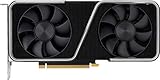
Despite being dwarfed by the explosive AI boom, the consumer gaming division maintained remarkably solid performance throughout the year. Led by the highly popular RTX 40-Series Super refresh, including the RTX 4070 Super and RTX 4080 Super, gaming revenue grew steadily to cross the $10 billion mark. These cards have kept Nvidia at the top of the gaming hardware charts, offering premium ray tracing and DLSS 3 frame generation to desktop users worldwide.
Gamers have shown a strong willingness to invest in high-end Ada Lovelace GPUs, even with premium price tags. The demand for cards with at least 12GB or 16GB of VRAM has grown exponentially as modern games push high-resolution textures to their limits. This has ensured that while gaming is no longer Nvidia’s primary revenue source, it remains an extremely profitable, highly visible anchor for the brand’s consumer loyalty.
How Enterprise Profits Shape Future Desktop Graphics Card Technology
There is a major silver lining for gamers regarding these massive corporate profits. The billions of dollars funneled into enterprise AI research directly accelerate the development of consumer-facing technologies. Features like deep learning super sampling (DLSS), neural reconstruction, and advanced ray reconstruction are direct spin-offs of AI research funded by high-paying corporate clients.
As Nvidia works on its next-generation architecture, the massive capital backing ensures that consumer GPUs will benefit from highly advanced architecture shrinks and cutting-edge software features. However, it also means consumer cards must compete for the same physical silicon manufacturing space as multi-thousand-dollar AI processors, creating potential supply bottlenecks in the near future.
Check the latest price on Amazon:
- Gpu Benchmarks 2025
- Nvidia Geforce Rtx 5080 Founders Edition Price
- Rtx 5090 Shortage
- Nvidia Driver Stuck On Installing
Real-World Consumer Sentiment: Sifting Through Amazon Reviews
Analyzing corporate balance sheets only tells half the story; the real-world performance of these graphics cards on retail shelves completes it. By compiling hundreds of verified buyer reviews on Amazon, we can see exactly how the hardware funded by this corporate giant performs in everyday gaming PCs. Let us look at what users love, what they dislike, and how market pricing is trending.
High-Tier Praise: What Enthusiasts Love About 40-Series Performance
The consensus among top-tier reviews on Amazon is overwhelmingly positive when it comes to raw gaming performance and power efficiency. Users who upgraded to mid-to-high-end cards like the RTX 4070 Ti Super praise the dramatic uplift in rendering speeds, lower power draw compared to previous generations, and the game-changing nature of DLSS 3.0. The ability to play modern titles at 144Hz at 1440p or 4K with ray tracing enabled remains a massive selling point.
Many customers also highlight the robust driver stability and the plug-and-play simplicity of GeForce software. For content creators, streamers, and video editors, the inclusion of AV1 encoders and NVIDIA Broadcast software offers unmatched utility. These premium features justify the initial investment for buyers looking for a card that handles professional workloads and AAA gaming seamlessly.
Constructive Criticism: What Budget Builders and Gamers Complain About
On the flip side, lower-tier reviews often voice frustration over pricing and generational value. A common complaint among 2 and 3-star reviews centers around the restrictive VRAM limits on entry-to-mid-range cards. Gamers argue that paying $399 or more for an 8GB VRAM card in today’s landscape is unacceptable, especially as modern titles demand higher memory allocations for seamless performance at high settings.
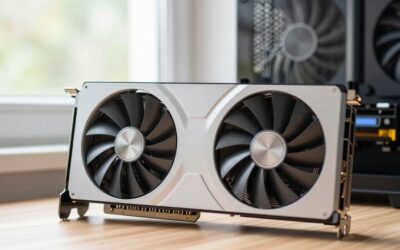
Another recurring issue in buyer feedback is the physically massive footprint of these modern GPUs. Users frequently note that they had to buy new PC cases or specialized power adapters to fit these massive triple-slot cards safely. The reliance on the new 16-pin power connector also remains a source of anxiety for some builders who worry about cable clearance and potential connector issues.
Price Pressures: Rising Component Costs and the Push to Upgrade Early
The broader hardware market is currently experiencing significant upward pressure on pricing. Due to inflation, rising shipping costs, and global semiconductor supply constraints, the retail prices of gaming laptops, prebuilt PCs, and core components are steadily rising. This means waiting for a dramatic price drop in the GPU market might backfire, as overall manufacturing costs continue to climb.
With global inflation pushing raw materials and logistics costs higher, buying your graphics card early is looking like the smartest strategic move. Securing a reliable graphics card now protects your budget from sudden price hikes later in the year, ensuring your gaming rig is fully prepared for upcoming blockbuster releases.
If you want to secure your system before prices climb further, you can check the latest price on Amazon.
Weighing the Scales: The Nvidia 2026 Revenue Pros & Cons
A massive corporate budget has dual consequences for the average consumer. On one hand, it guarantees cutting-edge innovation and stellar driver support; on the other, it gives the manufacturer immense pricing power over the market. Let us weigh the pros and cons of Nvidia’s dominant market position to see how it affects your buying decisions.
The Pros of Nvidia’s Record-Breaking Financial Domination
The primary advantage of Nvidia’s strong financial position is the absolute guarantee of long-term software and driver support. Because the company is incredibly well-funded, they can afford to continuously optimize drivers for old and new games alike, ensuring your investment remains relevant for years. Their software ecosystem, including DLSS, Reflex, and Broadcast, is constantly updated with new features.
Additionally, Nvidia’s dominance ensures that game developers prioritize optimizing their titles for GeForce hardware first. When major games launch, they are almost always guaranteed to run exceptionally well on Nvidia GPUs from day one. This level of industry integration offers a level of peace of mind that competitors simply struggle to match.
The Cons of Nvidia’s Aggressive Pricing and Market Monopolization
The most significant downside of this financial dominance is the complete lack of incentive to lower consumer prices. Because Nvidia makes the vast majority of its profits from enterprise clients, they do not need to discount gaming graphics cards to remain highly profitable. This has led to a stagnation of value in the entry-level and mid-range GPU segments, leaving budget-conscious builders with fewer affordable options.
Furthermore, with manufacturing lines prioritized for high-margin AI silicon like the H200, consumer GPU supply can easily become a secondary priority. If global demand spikes, gamers may face stock shortages or scalp-level pricing once again, as Nvidia has little reason to divert wafer capacity away from multi-thousand-dollar enterprise products.
The Strategic Recommendation for Your Next Graphics Card Purchase
Ultimately, while Nvidia’s financial priorities have shifted toward the enterprise market, their hardware remains the benchmark for premium consumer gaming. If you are looking for unmatched ray tracing performance, robust streaming features, and cutting-edge upscaling technology, Nvidia is still the clear choice. The key is timing your purchase to avoid seasonal price inflation.
Given the current upward trend in overall component pricing, waiting for prices to drop significantly is a risky gamble. Upgrading to a solid 12GB or 16GB RTX 40-Series card today will secure your gaming performance for the next several years, protecting your budget from impending supply constraints.
To find the best deal for your specific gaming setup, check the latest price on Amazon.
Conclusion
The incredible Nvidia 2024 Revenue figures show a company operating at the absolute peak of its powers, successfully transitioning into an AI behemoth while keeping its grip on the gaming industry. While this shift has led to higher premium pricing for desktop graphics cards, the performance, efficiency, and advanced software suite offered by GeForce GPUs remain unrivaled. As component prices across the industry continue to rise, securing your hardware upgrade now is the safest way to guarantee a top-tier gaming experience. If you are ready to elevate your gaming PC or looking for a reliable, future-proof component, check the latest price on Amazon and make your move today.
Frequently Asked Questions
Why should a gamer care about Nvidia’s revenue at all?
Because revenue mix decides where silicon goes. Data centre now supplies the overwhelming majority of Nvidia’s income, while gaming is a much smaller slice. When wafer allocation at TSMC and GDDR7 memory supply get pulled toward AI accelerators, GeForce production runs are smaller, restocks are slower, and street prices sit above MSRP for longer than they used to.
Does record AI revenue mean GeForce cards get cancelled?
No. Gaming still generates billions per year and funds the driver, DLSS and CUDA ecosystem that keeps developers on Nvidia hardware. What changes is priority and timing: launches are staggered, MSRP-priced Founders Edition stock is thin, and mid-cycle refreshes arrive later. Expect availability pressure rather than the disappearance of the GeForce line.
Will GeForce prices fall if AI demand ever cools?
Historically yes, with a lag of roughly one to two quarters. When AI order books soften, foundry capacity and memory contracts free up, board partners cut street prices before Nvidia touches official MSRP. Watch retailer pricing on the RTX 5070 and 5080 rather than announcements, since partner discounts move first and are the honest signal.
Should I wait for a Super refresh instead of buying now?
Nvidia has refreshed mid-generation twice in recent history, usually adding memory or cores at similar prices. If your current card still handles your resolution acceptably, waiting costs you nothing but patience. If you are on a GTX 10-series or an 8GB card struggling at 1440p, buy now, because a refresh you cannot use for a year saves no money.
Is buying used a smarter play in this market?
Often, yes. Used RTX 40-series cards frequently deliver 80 to 90 percent of the equivalent 50-series raster performance for substantially less money, though you lose DLSS 4 multi frame generation. Inspect the 12V-2×6 or 8-pin connector for melting or discolouration, confirm the card runs a stress loop for twenty minutes, and prefer sellers with return protection.
As an Amazon Associate we earn from qualifying purchases at no extra cost to you.






Write Your Review
No reviews yet. Be the first to share your experience!