
- Top Pick: Bushnell PowerView 10×50 Porro Prism Instafocus Binoculars Realtree AP Camo | InstaFocus System for Fast Focusing, BK-7 Multi-Coated Optics, Ideal for Hunting, Birding, Hiking & Outdoor Adventures
- Best Value: Occer 12×25 Compact Binoculars for Adults and Kids | High Powered, Easy Focus, Large Eyepiece for Bird Watching, Cruise Ship, Outdoor Hunting, Travel, Sightseeing
- Premium Choice: 10X42 Compact Binoculars for Adults – Long Distance, High Powered Binoculars with Travel Case – Extra Bright Light & Large Field of View – Lightweight, Water & Fog Proof, Hunting, Bird Watching
The best binoculars for whitetail hunting for most hunters are a 10×42 pair such as the Vortex Viper HD, Nikon Monarch M7 or Sig ZULU8 HDX, while hunters working thick timber or hardwood cover are usually better served by an 8×42 like the Vortex Viper HD 8×42 or Athlon Midas G2 UHD, and buyers on a tighter budget can look at the Vortex Crossfire HD, Diamondback HD or Copperhead HD. In short, 10×42 is the safe all-round choice, 8×42 is the close-cover choice, and the rest is a question of glass quality and budget tier.
As an Amazon Associate we earn from qualifying purchases at no extra cost to you.


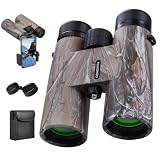
At a Glance: Whitetail Binoculars Reviewers Name
| Model | Configuration | Best for | Tier | Limit |
|---|---|---|---|---|
| Nikon Monarch M7 | 10×42 | Best overall per Hunters Field Guide | Mid-range | Costs more than entry models |
| Sig ZULU8 HDX | 10×42 | Best for most hunters per GunsAmerica | Mid-range | Check size and weight against a rival 8×42 |
| Vortex Viper HD | 10×42 and 8×42 | Strongest all-around pick per ProHuntingHacks; 8×42 for timber | Mid-range | Mid-range spend |
| Zeiss SFL | 10×40 | Premium compact pick per Hunters Field Guide | Premium | Highest cost |
| Vortex Triumph HD | 10×42 | Budget pick per Hunters Field Guide | Budget | Less refined glass than mid-range |
| Vortex Diamondback HD | 10×42 | Value pick for whitetail and turkey per ProHuntingHacks | Budget to mid-range | Entry-level class of glass |
| Vortex Crossfire HD | 10×42 | Best overall value in one roundup | Budget | Basic coatings in its class |
| Athlon Midas G2 UHD | 8×42 | Stands and blinds, wide field of view | Mid-range | Less reach than 10x |
| Leupold BX-4 Pro Guide HD | 10×50 | Low-light conditions | Mid-range to premium | Heavier and larger |
| Burris Droptine | 10×42 class | Solid budget whitetail pick per GunsAmerica | Budget | Entry-level class |
Prices change often, so this guide uses tiers rather than figures. Always confirm the exact specifications on the maker’s page for the model year you buy.
Magnification and Objective Size Explained
The first number is magnification and the second is the objective lens diameter in millimeters. A 10×42 pair makes a deer look ten times closer and has a 42 mm front lens that gathers light.
8×42
Reviewers describe 8×42 as the choice for thick cover. The field of view is wider, so you find a deer quicker, and the lower magnification is easier to hold steady without a tripod. It suits stand and blind hunting where shots are inside a few hundred yards.
10×42
Most 2026 roundups name 10×42 as the best all-around size for whitetail. For ag fields, mixed terrain and hardwood ridges where deer appear at 75 to 300 yards, it balances reach, weight and brightness.
12×50 and larger
One guide calls 12×50 overkill for eastern whitetail in timber. It is heavier, harder to hold steady and has a narrower field of view. It can make sense for open country if you add a tripod or rest.
Larger objectives
A 50 mm or 56 mm front lens, such as the Leupold BX-4 Pro Guide HD 10×50 or an 8×56, helps in the last minutes of legal light. The trade-off is size and weight around your neck all day.
What to Look for in Whitetail Binoculars
- Glass and coatings. Extra-low dispersion glass and fully multi-coated lenses help with color fringing and brightness at dawn and dusk. The mid-range models above advertise these features, but the maker’s page lists exactly which coatings each pair has.
- Field of view. Wider is easier in timber. Compare the stated feet at 1,000 yards between an 8x and a 10x model.
- Weight and harness. Weight matters over a long sit. A chest harness keeps the pair out of the way and quiet.
- Waterproof and fogproof. Makers state this on the product page. Nitrogen or argon purging is common in the better models.
- Eye relief. If you wear glasses, look for longer stated eye relief so you can see the full image.
- Warranty. Vortex is known for a transferable lifetime warranty, according to the maker, and other brands have their own terms. Read the terms before buying.
- Close focus and focus wheel. Useful for glassing from a stand and for spotting deer along a nearby field edge.
Pick X If… Decision Table
| If you hunt… | Pick | Why |
|---|---|---|
| Mixed terrain and field edges | Nikon Monarch M7 10×42 or Sig ZULU8 HDX 10×42 | Balanced 10x reach and weight |
| Thick timber, tree stands, blinds | Vortex Viper HD 8×42 or Athlon Midas G2 UHD 8×42 | Wide field and a steady hold |
| On a budget tier | Vortex Crossfire HD, Diamondback HD or Copperhead HD 10×42 | Entry-level pricing with HD features in their class |
| Dawn and dusk heavy | Leupold BX-4 Pro Guide HD 10×50 or an 8×56 | Larger objective for low light |
| Premium and compact | Zeiss SFL 10×40 | Premium optics in a compact frame |
| Texas and open ranches | 10×42, optionally with a tripod | Most Texas whitetail hunters are content with 10×42 if they buy only one pair |
Budget Tiers in Detail
Budget tier
The Vortex Copperhead HD 10×42 is called the best sub-entry-tier option in one roundup, with the Diamondback and Crossfire HD slightly above. The Burris Droptine and Vortex Triumph HD are also named as solid budget whitetail picks. Expect good performance in daylight and some falloff at dawn and dusk compared with more expensive glass.
Mid-range
This is where the Nikon Monarch M7, Vortex Viper HD, Sig ZULU8 HDX and Athlon Midas G2 UHD sit. The step up from the budget tier shows up most clearly in low light, edge sharpness and handling.
Premium
The Zeiss SFL 10×40 is Hunters Field Guide’s premium choice. Spending more gets you better low-light brightness, lighter weight and refined handling, but the gain over a good mid-range pair is smaller than the gain from budget to mid-range.
Alternatives and Extras
- Rangefinder binoculars. Combine optics and a laser rangefinder in one unit. They are heavier and cost more, so they suit hunters who always range their shot distance.
- Compact 8×32 or 10×32. Lighter on the neck for long hikes and mobile hunts, with less light gathering than 42 mm models.
- Tripod adapter. A simple way to hold a 12x pair steady or to glass a field for extended periods.
- Binocular harness and lens covers. Quiet, protective accessories that keep binoculars off your chest bounce and out of the weather.
Common Mistakes
- Buying 12x or 15x for timber hunting. Higher magnification does not help when most sightlines are short.
- Skipping the weight check. A bigger objective feels fine in a store and heavy after eight hours in a stand.
- Ignoring eye relief if you wear glasses.
- Choosing by name without checking whether the model is the current generation. Makers update lines such as Viper and Monarch, and a previous-generation model may have different specs.
- Spending the entire budget on binoculars and having little left for a harness or rangefinder.
Frequently Asked Questions
Is 8×42 or 10×42 better for deer hunting?
For most whitetail hunters, 10×42 is the safe all-around size, with good reach for field edges and ridges. An 8×42 gives a wider field and steadier hold, so it suits timber and stands. If you hunt both kinds of cover, choose the cover you spend more time in.
Do I need expensive binoculars to hunt whitetails?
No. Reviewers consistently describe the Vortex Crossfire HD, Diamondback HD and Copperhead HD as sensible budget tier choices. Higher tiers mainly improve low-light performance and comfort, which matters because deer are most active at dawn and dusk.
Are 12×50 binoculars too much for whitetail?
For eastern whitetail in timber, one guide calls them overkill because of weight, hand shake and narrow field of view. They can help in open country when used with a tripod or a solid rest.
What does the HD in a model name mean?
Makers use HD to describe extra-low dispersion glass or similar optical upgrades that reduce color fringing. The exact meaning varies by maker, so read the specification page for the model.
Can I use binoculars to judge a buck’s antlers?
Yes, that is a main use. A 10x pair gives more detail on antler points and body size, but only if the glass is sharp and you hold it steady. A tripod or a rest helps with long glassing sessions.
How should I care for hunting binoculars?
Use a soft brush and lens cloth made for coated optics, keep the covers on in the field and store them dry. Follow the maker’s manual and warranty terms, and contact the maker rather than opening the housing yourself.



Write Your Review
No reviews yet. Be the first to share your experience!