
Our Short List of 3
All 5 Picks at a Glance
| Product | Specs | Action |
|---|---|---|
 Stanley FATMAX 25-Foot Tape Measure (33-725) | Check price on Amazon | |
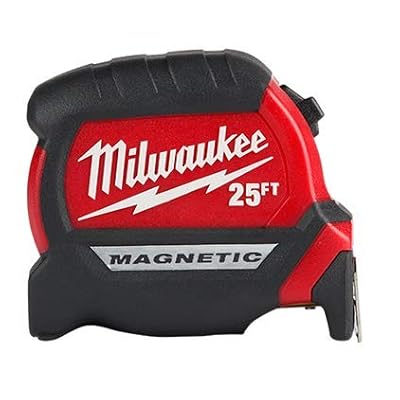 Milwaukee 48-22-0325 Compact Wide Blade Magnetic Tape Measure | Check price on Amazon | |
 Komelon SL2825 Self Lock 25-Foot Power Tape | Check price on Amazon | |
 CRAFTSMAN 25-Ft Tape Measure, Manual-Locking Blade (CMHT37443S) | Check price on Amazon | |
 Stanley PowerLock 25-Foot Tape Measure (33-425) | Check price on Amazon |
A tape measure is the tool you reach for on almost every home project, from hanging a shelf to framing a wall, and the difference between a good one and a frustrating one shows up fast. A blade that flops, a hook that slips, or markings that are hard to read can turn a simple measurement into a second trip across the room. The best tapes hold a long standout, lock firmly, and stay readable after months in a toolbox. This guide compares five 25-foot tapes for the most common jobs.
- Quick Answer
- How to Choose
- Stanley FATMAX 25-Foot Tape Measure (33-725)
- Milwaukee 48-22-0325 Compact Wide Blade Magnetic Tape Measure
- Komelon SL2825 Self Lock 25-Foot Power Tape
- CRAFTSMAN 25-Ft Tape Measure, Manual-Locking Blade (CMHT37443S)
- Stanley PowerLock 25-Foot Tape Measure (33-425)
- Who Should Skip It
- FAQ
- Final Verdict
- Product and ASIN Reference
As an Amazon Associate, we earn from qualifying purchases.
Quick Answer
For most people, the Stanley FATMAX 25-foot tape is the strongest all-around choice, with an 11-foot standout, a wide blade, and a tough case. If you work around steel studs or conduit, the magnetic Milwaukee is the better pick. Budget shoppers should look at the self-locking Komelon SL2825, the Craftsman suits readers who want large fractional markings, and the classic PowerLock suits anyone who wants a compact chrome-case tape.
How to Choose
Start with length. A 25-foot tape covers nearly every indoor job, from measuring a room to laying out a wall, and it is the standard size for home and workshop use. Shorter tapes are easier to carry but force extra steps on bigger spans, while longer tapes get heavy and are harder to control indoors.
Standout is how far the blade extends from the case before it bends, and it decides whether you can measure a ceiling span or a floor run alone. A long standout lets you reach across a room without the blade collapsing, while a short one means more trips and more chances for the blade to fold. Wide blades generally hold a longer standout than narrow ones, which is one reason jobsite tapes use blades over an inch wide.
Lock type and hook shape change how the tape feels in hand. A manual lock holds the blade where you set it and releases when you press the slide, giving you full control on careful layout work. A self-locking blade stays out until you press a button to retract it, which is faster for repeated measurements. A standard hook catches a board edge and slides slightly to keep inside and outside measurements accurate, while a magnetic hook grabs steel studs and conduit so you can anchor the blade and walk the measurement out alone.
Blade coating, markings, and case size decide how long the tape stays useful. A coated blade resists scratches and wear, and a protective layer near the hook guards the section that takes the most abuse. Fractional markings in alternating colors and heights are easier to read at a glance, and stud center markings at common spacings save you from counting ticks on every wall. A compact case rides comfortably on a belt, while a larger armored case survives drops on a jobsite, so choose the size that fits where the tape will live.
Stanley FATMAX 25-Foot Tape Measure (33-725)
The Stanley FATMAX 25-foot tape is the jobsite standard for a reason. Its headline feature is an 11-foot standout, so the blade stays rigid far beyond the reach of most household tapes and you can measure across a room or along a ceiling without a helper. The blade is a full one and one-quarter inches wide, and that width gives it the stiffness to hold a long span. A BladeArmor coating protects the blade near the hook, and a Mylar polyester film guards the markings against wear.
The hook is a multi-catch design that grips from the top, bottom, and side, so it stays put on a board edge from any angle. Stud center markings at 16-inch and 19.2-inch spacings speed up wall framing, because you can spot stud positions without counting. The top-forward blade lock sits where your thumb naturally rests, so you can lock and release the blade without shifting your grip. Its size is the main trade-off: the wide blade and armored case make it bulkier than a compact pocket tape.
Milwaukee 48-22-0325 Compact Wide Blade Magnetic Tape Measure
The Milwaukee 48-22-0325 is built for anyone who works around metal. Its magnetic hook grabs steel studs, conduit, ductwork, and anything else ferrous, holding the blade in place while you walk a measurement out alone. That changes how you work on metal framing and HVAC runs, where a standard hook has nothing to catch. The tape reaches up to 15 feet on its own, and the compact wide-blade design keeps the case smaller than many jobsite tapes while still holding a stiff blade.
The blade carries a nylon bond coating against scratches and wear, plus an anti-tear coating on the first six inches, the section that flexes and wears the most. A five-point reinforced frame strengthens the case at the corners and edges where drops hit hardest, and a finger stop near the hook guards your fingers when the blade retracts. The listed blade is one inch wide, narrower than the FATMAX, but the compact case and magnetic hook make it easier to carry and faster to use on steel work. The magnet is not for everyone: it picks up stray screws and metal filings on a messy jobsite.
Komelon SL2825 Self Lock 25-Foot Power Tape
The Komelon SL2825 is the budget pick that changes how a tape feels in use. Its blade locks automatically as it extends, so it stays out until you press a button to retract it. That self-locking action is faster than a manual lock for repeated measurements, because you never fumble for a slide switch, and it is handy when you are measuring alone and need the blade to hold its position while you mark a cut. The blade is nylon-coated high-carbon steel, giving it a good balance of stiffness and flexibility.
Stud markings every 16 inches help with wall layout and framing without a separate reference. The tape is a straightforward 25-foot tool with no extra features competing for your attention, and that simplicity is part of its appeal: there is little to learn and little to break. The trade-offs are modest. The listing gives no standout figure, so expect a shorter rigid reach than the wide-blade jobsite tapes, and the case is lighter duty than the armored models. It is a home and DIY tape rather than a framing tape.
CRAFTSMAN 25-Ft Tape Measure, Manual-Locking Blade (CMHT37443S)
The Craftsman CMHT37443S is the readability pick. Its fractions are printed in alternating colors and heights, so the numbers stand out at a glance and you spend less time squinting at fine ticks. That matters when you are measuring in dim light or reading the blade at arm’s length, where clear fractions prevent the small misread that ruins a cut. The tape is 25 feet long with a manual-locking blade, so you set the lock yourself and release it with a slide, giving you precise control on careful layout work.
Reach is a solid 13 feet, which covers most solo room measurements and lets you span a wall or a ceiling run without the blade folding. The manual lock is simple and predictable, with no self-locking mechanism to learn or accidentally trigger. The case is a mid-size design that balances pocketability with a comfortable grip, suiting a homeowner who measures often but does not need a full jobsite tape. The blade coating gets few details in the listing, so long-term wear resistance is less documented than on the coated jobsite tapes, and the manual lock is slower than a self-locking blade when you take many measurements in a row.
Stanley PowerLock 25-Foot Tape Measure (33-425)
The Stanley PowerLock 33-425 is the classic. It has been the default pocket tape for generations of homeowners and tradespeople, and its chrome case is the shape most people picture when they think of a tape measure. The case is chromed high-impact ABS, a hard shell that resists knocks and slides easily in and out of a pocket. At 25 feet, it covers the same jobs as the bigger tapes while staying compact enough to carry everywhere.
Standout is seven feet, shorter than the FATMAX but ample for household measuring, furniture layout, and single-room work. Stud markings at 16-inch and 19.2-inch spacings make wall layout just as quick as on the larger tapes. The blade lock is a simple slide that holds the blade firmly, and the tape comes in longer and shorter variants for specialized work. The PowerLock gives up the wide blade and long standout of the jobsite tapes, so it is not the best choice for long solo spans or heavy framing, but for a first tape, a spare tape, or a compact carry, the classic still earns its place.
Who Should Skip It
A 25-foot tape is the right size for most people, but not for everyone. If you measure long outdoor runs, lay out a deck, or survey a yard, a 25-foot blade will leave you short, and a longer open-reel tape or a laser distance measurer will serve you better. If you only measure small objects or do crafts, a compact 6-foot or 16-foot pocket tape is lighter and easier to handle. People with limited hand strength should also think carefully: wide-blade jobsite tapes are heavier and their springs are stronger, so a lighter compact tape with a gentle retraction may be more comfortable. Finally, if you need extreme precision for fine woodworking, a tape measure is the wrong tool, and a steel rule will give you the accuracy a tape cannot.
FAQ
What length tape measure do most homeowners need?
A 25-foot tape covers nearly every indoor job, from measuring a room to laying out a wall, and it is the standard recommendation for home and workshop use. Shorter tapes are easier to carry but force extra steps on bigger spans, while longer tapes get heavy and are harder to control indoors. If you buy one tape, make it a 25-foot model.
What does standout mean, and how much do I need?
Standout is how far the blade extends from the case before it bends under its own weight. A longer standout lets you measure a ceiling span or a floor run alone, without a helper holding the far end. For household work, seven feet is enough, while framing and remodeling benefit from a tape that holds ten feet or more.
Are magnetic hooks worth it?
A magnetic hook is worth it if you measure steel studs, conduit, ductwork, or any ferrous surface, because it anchors the blade while you walk the measurement out alone. If you mostly measure wood, drywall, and furniture, a standard hook does the same job and will not pick up stray screws and metal filings.
Self-locking or manual lock, which is better?
A self-locking blade stays out until you press a button, which is faster for repeated measurements and handy when you work alone. A manual lock gives you more control, because the blade only stays out when you set the lock. Neither is better in every case: self-locking suits fast repetitive measuring, while manual locking suits careful layout work.
Final Verdict
The Stanley FATMAX 25-foot tape is the best tape measure for most people, because its 11-foot standout, wide blade, and tough case handle framing, remodeling, and everyday measuring without compromise. If your work involves steel, the magnetic Milwaukee 48-22-0325 is the smarter buy. Budget shoppers should pick the Komelon SL2825, which delivers self-locking convenience and a solid blade, while readers who want the clearest fractions will prefer the Craftsman CMHT37443S. The classic Stanley PowerLock remains the best compact choice for a pocket or a drawer.
Product and ASIN Reference
| Product | ASIN |
|---|---|
| STANLEY FATMAX Tape Measure, 25-Foot (33-725) | B00002PV66 |
| Milwaukee 48-22-0325 Compact Wide Blade Magnetic Tape Measure | B082L6Q7WV |
| Komelon SL2825 Self Lock 25-Foot Power Tape | B000BQKXLE |
| CRAFTSMAN 25-Ft Tape Measure, Manual-Locking Blade (CMHT37443S) | B0BVXXLP3T |
| Stanley PowerLock 25-Foot Tape Measure (33-425) | B00002X2GQ |



Write Your Review
No reviews yet. Be the first to share your experience!