
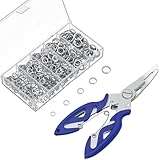
- Top Pick: Pawfly 250 Pcs Split Rings and Split Ring Pliers Kit for Fishing, Blue | 5 Sizes Fishing Split Rings & Fishing Pliers, Fishing Lure Connectors, Stainless Steel Split Rings for Saltwater & Freshwater
- Best Value: yeloumiss Fishing Split Rings and Split Ring Pliers Kit | 250 Pcs 5 Sizes Stainless Steel Split Rings with Pliers for Fishing Saltwater Freshwater Lure Connector
- Premium Choice: GREATFISHING 200PCS High Strength Heavy Stainless Steel Split Ring Lure Tackle Connector with Fishing Pliers 30lb to 120lb Test
If you want one tool that handles split rings, hooks and braid on a budget, a multifunction plier such as the Piscifun aluminum saltwater model is the usual reviewer pick; if you mostly swap rings and hooks on crankbaits and jerkbaits, a dedicated slim-beak split ring plier like the Rapala Mini is the sharper choice. Heavy saltwater users tend to look at Dr. Slick or Van Staal.
Anyone who has fought a stiff split ring with a thumbnail knows why this small tool exists. Factory hooks on lures are often tiny trebles on tight rings, and swapping to stronger hooks without a tool risks cut fingers and bent hardware. The choice comes down to jaw shape, size, corrosion resistance and how much else you want the pliers to do.
As an Amazon Associate we earn from qualifying purchases at no extra cost to you.


At a glance
| Pliers | Style | Best for | Limits |
|---|---|---|---|
| Piscifun aluminum saltwater pliers | Multifunction, split ring tip, replaceable carbide cutters | All-round use, kayak and shore anglers | Jack-of-all-trades; a dedicated ring tool is quicker for heavy lure swapping |
| Rapala Mini Split Ring Plier | Compact, narrow beak | Small and medium split rings on hard baits | Reviewers note short reach for deep hooks |
| Rapala Heavy Duty Split Ring Pliers | Offset head, larger spring-loaded handle | Larger rings and extended use | Bulkier in a small tackle bag |
| Dr. Slick tungsten carbide series | Premium, carbide-reinforced tips | Saltwater, braid cutting, durability | Premium tier; some users report the magnetic feature collects metal debris |
| Van Staal 6 inch and 7 inch | Titanium, channel-cut jaws | Anglers wanting top-end corrosion resistance | Premium tier and larger size |
| Berkley entry-level pliers | Basic multi-use | Budget spare for a tackle box | Reviewers describe limited reach and fewer features |
| Xuron 496 | Precision split ring tool | Small rings and fine work | Narrow specialist; not for heavy cutting |
How to choose split ring pliers
Jaw design is everything
The defining feature of a split ring plier is a thin, hooked or tapered tip that slides between the coils of the ring to pry it open. A plier whose tip is too blunt will slip, while one too thin can bend under heavy ring tension. Reviewers praise narrow beaks for small to medium rings and heavier offset heads for large rings on jerkbaits, swimbaits and saltwater plugs.
Size and reach
Small pliers fit a pocket or lanyard and give good control on tiny rings. Longer six-inch and seven-inch models offer leverage for stiff rings and better reach when removing hooks, but they are less comfortable for fine work. Match the plier to the ring size you handle most.
Materials and corrosion
Aluminum pliers are light and corrosion-resistant, which is why they are popular for kayaks and boats. Stainless steel is robust and common. Titanium, as used on the Van Staal models according to one reviewer, resists corrosion strongly but sits at the top price tier. If you fish salt water, rinse any plier with fresh water after use and let it dry regardless of material.
Cutters and extras
Many fishing pliers add braid cutters, crimpers, hook removers and a sheath. Replaceable carbide cutter blades, such as the Piscifun is reported to include, can extend a tool’s life. If you already carry cutters, a dedicated split ring plier is simpler and often faster.
Grip and handles
Spring-loaded handles help with repeated use. Textured or coated grips stay secure with wet hands. A lanyard hole is worth having so a dropped plier does not end up in the lake.
Which pliers suit which angler
| You are… | Pick | Reason |
|---|---|---|
| A budget-conscious generalist | Piscifun multifunction | Frequently named the best value, covers rings, cutting and hook removal |
| A crankbait and jerkbait tinkerer | Rapala Mini or Heavy Duty | Narrow or offset heads designed for ring work |
| A saltwater angler | Dr. Slick or Van Staal | Built for corrosion and tougher rings |
| A finesse lure modifier | Xuron 496 type precision tool | Reviewers call it the gold standard for smaller split rings |
| Someone who loses tools | Entry-level Berkley as a spare | Cheap replacement for the tackle box |
Common mistakes
- Buying huge pliers for small rings. Size 0 to 2 rings need a slim beak; chunky jaws mangle them.
- Prying too far open. Opening a ring much wider than needed permanently deforms it. Open only enough to slide the hook eye on.
- Skipping a ring upgrade. A strong hook on a weak ring is still a weak link, so match ring strength to the hook and target fish.
- Forgetting maintenance. Rinse, dry and lightly lubricate the pivot so the tips stay aligned.
- Using the tool on fine wire hooks as a hammer. Pliers are for opening rings, not for bending hooks.
Working safely
Treble hooks are the main hazard. Keep the hook point pointing away from fingers when opening a ring, and consider pliers with a tip that holds the ring so your other hand stays clear. If a hook becomes embedded in skin beyond what you can safely deal with, seek medical care. Cut hooks only in a controlled way and wear eye protection when cutting hard wire.
Alternatives
- Split ring tool or ring opener keychain style. A cheap pocket device that opens rings without a full plier body.
- Solid rings and hook hangers. Some anglers use heavy-duty rings or quick-change clips to cut swap time.
- Standard needle-nose pliers. Workable in a pinch for larger rings, though slower and harder on small ones.
- Fishing multi-tools. Better if you rarely swap rings and want one belt tool.
Budget tiers in plain terms
At the budget tier, entry-level Berkley pliers and similar basics cover occasional ring changes. The mid tier is where Piscifun and the Rapala split ring models sit in reviewer roundups, and it is the sensible range for most anglers who swap hooks every few trips. The premium tier, with Dr. Slick and Van Staal, mainly buys corrosion resistance, tougher tips and a better finish, which matters most if you fish salt water often. If you fish freshwater a few times a month, premium pliers are a nice-to-have rather than a need.
Whatever you buy, keep a spare ring or two in your tackle box. A ring that has been opened and closed several times can lose tension, and replacing it is cheaper than losing a fish to a weak link.
Frequently Asked Questions
What are the best split ring pliers for fishing lures?
Reviewers commonly name Piscifun for all-round value, Rapala for dedicated ring work, and Dr. Slick or Van Staal for premium durability. The best fit depends on ring size and whether you want extras like cutters.
Do I need split ring pliers if I use needle-nose pliers?
Needle-nose pliers can work on large rings, but they are slow on small ones. A purpose-made tip separates the coils cleanly, which saves time and protects fingers.
Are aluminum or stainless pliers better?
Aluminum is light and resists corrosion, which suits boats and kayaks. Stainless steel is strong and common. Whichever you choose, rinse and dry after salt exposure.
What size rings do most lure hooks use?
Ring size varies with lure and hook, and makers list it on hook and ring packaging. Match your plier’s tip to the smallest and largest rings you handle.
How do I avoid damaging a split ring?
Open it only far enough to slip the hook eye through, and slide the hook along the coil rather than pulling it. A ring spread too wide can lose its tension.





Write Your Review
No reviews yet. Be the first to share your experience!