
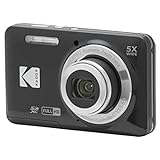
- Top Pick: KODAK PIXPRO FZ55 16MP Compact Digital Camera, 5X Optical Zoom, Black | 1080p Full HD Video, 28mm Wide Angle Lens, 2.7 Inch LCD, Point and Shoot, Vlogging Camera, Li-Ion Battery
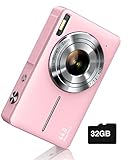
- Best Value: Camkory Digital Camera FHD 1080P with 32G Card 16X Zoom Easy for Kids Pink | Compact camera with anti-shake, Includes 2 batteries & charger. Perfect for parties, trips, birthdays gift from parents.
- Premium Choice: KODAK PIXPRO FZ45 16MP Compact Digital Camera, 4X Optical Zoom, AA, Black | 1080p Full HD Video, 27mm Wide Angle Lens, 2.7 Inch LCD, Point and Shoot, Digicam, Travel and Family Photos
For most people who want a small camera that beats a phone, a one-inch-sensor compact such as the Sony RX100 series, Canon PowerShot G7 X Mark III or Sony ZV-1 suits general travel and vlogging, while a large-sensor pocket camera such as the Ricoh GR III or GR IIIx suits street photographers who want the best image quality in the smallest body. Models in this class change often, so confirm what is currently sold.
- Small Camera Options at a Glance
- Sony RX100 Series: The Pocket All-Rounder
- Canon G7 X Mark III and Sony ZV-1: Video-First Compacts
- Ricoh GR III and GR IIIx: Big Sensor, Tiny Body
- Fujifilm X100 Series: Larger but Stylish
- How to Choose a Small Digital Camera
- Pick X If
- Budget Tiers
- Do You Need a Dedicated Camera?
- Alternatives
- Common Mistakes
- Frequently Asked Questions
As an Amazon Associate we earn from qualifying purchases at no extra cost to you.


Small Camera Options at a Glance
| Camera | Best for | Key stated traits | Limits |
|---|---|---|---|
| Sony RX100 series | Travel, all-round pocket use | One-inch sensor, zoom lens, pop-up viewfinder on later models | Several generations on sale; menus can be dense |
| Canon PowerShot G7 X Mark III | Vlogging and streaming | One-inch sensor, flip-up screen, the maker lists live streaming support | No viewfinder; battery life is modest |
| Sony ZV-1 and ZV-1 II | Vloggers and creators | One-inch sensor, flip-out screen, vlogging features per the maker | Lens range and low-light reach differ by version |
| Ricoh GR III / GR IIIx | Street and documentary photography | Large APS-C sensor in a pocket body; fixed lens | No zoom, no built-in viewfinder, limited video |
| Fujifilm X100 series | Style and image quality | APS-C sensor, fixed lens, hybrid viewfinder | Larger and heavier than pocket compacts; demand can exceed supply |
| Canon PowerShot V1 | Compact vlogging with a wide lens | The maker positions it as a compact vlog camera | Check lens and sensor details on the maker page |
Sony RX100 Series: The Pocket All-Rounder
The RX100 line has defined the premium compact category for years. Sony has kept multiple generations in the lineup, so a newer model with a longer zoom and a pop-up viewfinder may sit alongside an older, cheaper one. Reviewers at outlets such as DPReview and Digital Camera World generally praise the image quality and portability, while noting that the menu system takes some learning. If you want one camera for family photos, travel and occasional video, it is a good starting point.
Canon G7 X Mark III and Sony ZV-1: Video-First Compacts
If your main goal is video, such as streaming, YouTube or gaming content, look at the Canon G7 X Mark III and the Sony ZV-1 family. Both use one-inch sensors with a flip-out or flip-up screen and are designed to be held at arm’s length. The maker pages list features aimed at creators, including microphone support and, on the Canon, live streaming. Reviewers commonly note that battery life and overheating can limit long recordings, so read the specs if you plan to record for extended periods.
Ricoh GR III and GR IIIx: Big Sensor, Tiny Body
The GR series places an APS-C sensor in a body that fits in a jacket pocket. The GR III uses a wide lens, and the GR IIIx a slightly tighter field of view, which reviewers describe as suited to street and documentary styles. The trade-off is that there is no zoom and no built-in viewfinder, and video features are basic. It is a camera for photographers who prefer to walk closer instead of zooming.
Fujifilm X100 Series: Larger but Stylish
The X100 line is technically a compact camera with a fixed lens, but it is larger than a pocket model. It offers an APS-C sensor and a hybrid viewfinder and has a retro design that many photographers like. Reviewers note that popular models can be hard to find at times. It suits photographers who want image quality and a tactile experience, not strict pocketability.
How to Choose a Small Digital Camera
- Sensor size. Larger sensors usually give cleaner low-light images, but the body and lens grow in size.
- Zoom or fixed lens. Zoom compacts are flexible; fixed-lens cameras are smaller and often sharper in their focal length.
- Screen and viewfinder. A flip screen helps with selfies and vlogging; a viewfinder helps in bright sun.
- Video features. If you plan to record, look at maximum resolution, frame rates, microphone input and overheating notes from the maker.
- Battery and charging. Many compacts have small batteries; USB charging and spare batteries help on trips.
- Current availability. Some compacts are discontinued or in short supply, so look at the maker’s website for the active lineup.
Pick X If
| Pick this | If you |
|---|---|
| Sony RX100 series | Want a flexible travel camera with a zoom lens |
| Canon G7 X Mark III | Create video content or stream |
| Sony ZV-1 family | Vlog and want creator features |
| Ricoh GR III / IIIx | Shoot street photography and want the smallest APS-C body |
| Fujifilm X100 series | Value style and image quality over pocketability |
Budget Tiers
At the budget tier, you can find older one-inch compacts, previous-generation models, or simple point-and-shoot cameras. They are usually a step up from a basic phone camera, but check that the model is still supported. Mid-range gets you current one-inch cameras with better video and screens. The premium tier is large-sensor compacts like the GR series and X100 line, where the cost goes toward image quality and build.
Do You Need a Dedicated Camera?
Modern phones take excellent photos in good light. A small dedicated camera mainly improves optical zoom, low-light handling, manual control and ergonomics. If you mostly share images on social media, a phone may be enough. If you want better quality, a physical shutter, or a camera for streaming, a compact is worth considering.
Alternatives
- Action cameras for sport and rugged use.
- Small mirrorless cameras with a kit lens, for interchangeable lenses and better quality at a larger size.
- Used compacts, which can be a good value if bought from a reputable seller with a return option.
- Phone lens accessories, if you want to extend a phone you already own.
Common Mistakes
- Buying an old model without checking whether it is still sold or supported.
- Ignoring battery life and buying no spare.
- Expecting a fixed-lens camera to zoom.
- Choosing a camera for vlogging without checking screen and microphone options.
- Forgetting memory cards and a case.
Frequently Asked Questions
Is a compact camera better than a phone?
It can be. Compacts offer optical zoom, larger sensors and manual controls, which help in low light and with distant subjects. In good light, a modern phone is often close.
Which compact is best for vlogging?
The Sony ZV-1 family and Canon G7 X Mark III are widely cited vlogging compacts. Look at the flip screen, microphone input and recording-time limits.
What is the best small camera for travel?
The Sony RX100 series is a common choice for its zoom lens and pocket size. The Ricoh GR line is a good option if you prefer a fixed wide lens and larger sensor.
Do small cameras have good low-light performance?
Models with larger sensors, such as APS-C compacts, generally do better than one-inch models. Lens aperture also matters.
Are compact cameras still being made?
Yes, but the market is smaller than before and some models are discontinued or in short supply. Check the maker’s website for the current lineup.
Can I stream games with a compact camera?
Some, such as the Canon G7 X Mark III and Sony ZV-1, support webcam or streaming modes according to the maker. Check the model’s documentation and your streaming software.







Write Your Review
No reviews yet. Be the first to share your experience!