
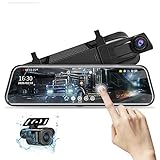
- Top Pick: WOLFBOX G840S 12" 4K Mirror Dash Cam Backup Camera with 32GB Card and GPS | 5.8GHz WiFi Smart Rearview Mirror for Cars & Trucks, Front and Rear View Dual Cameras, Night Vision, Parking Assistance
- Best Value: PixelMan Backup Camera,AHD 1080P Metal 170 Degree Wide Angle Rearview Reversing Camera,PMD2A-S Clear Night Vision IP69 Waterproof Reverse Rear View Camera for Car Vehicle SUV RV
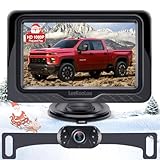
- Premium Choice: HD 1080P Backup Camera Plug & Play: Fast 60FPS Smooth Real-Time Clear View | 25-Minute Easy to Install, Monitor Easy Setup, Bright and Clear Night Vision, Dustproof & Weatherproof for Cars Trucks SUVs
A wired backup camera with a dedicated monitor or a licence-plate-mounted camera from a known maker such as Garmin, Rydeen or Yada suits most drivers, while a wireless digital kit is the easier install for trucks, RVs and trailers. The right pick depends on whether your vehicle already has a screen, how far the cable has to run and how much night visibility matters. This guide covers the camera types, key specs makers list and the installation points that decide whether a camera works well.
As an Amazon Associate we earn from qualifying purchases at no extra cost to you.


Backup Camera Types at a Glance
| Type | Best for | Notes | Limit |
|---|---|---|---|
| Wired camera with separate monitor | Cars, SUVs, pickups with no built-in screen | Most reliable signal | Wire routing takes time |
| Wired camera for an existing head unit | Vehicles with an aftermarket or factory display that accepts video input | Clean look | Needs a compatible input |
| Digital wireless kit | Trucks, RVs, trailers, long vehicles | Avoids running a long cable | Needs power at the camera; possible interference |
| Licence plate frame camera | Quick installs, rental or lease vehicles | Easier mounting | Fixed viewing angle |
| Mirror-mounted display kit | Drivers who want a screen in the mirror | Familiar location | Display quality varies |
Key Specs to Compare
Resolution and image quality
Makers commonly list resolutions from standard definition to high definition. Higher resolution helps with detail, but the sensor, lens and low-light behaviour matter as much. Reviewers who test backup cameras often mention glare from headlights and sun as a bigger issue than pixel count.
Field of view
Wide-angle lenses, often listed between roughly one hundred and seventy degrees and wider, show more of the area behind the vehicle but can distort edges. A very wide angle makes objects look farther than they are, so use the parking guide lines carefully.
Night vision and low light
Look for infrared LEDs or a sensor marketed for low light. Cameras without assistance can be hard to read in a dark driveway.
Weather rating
An IP rating such as IP67 or IP68 indicates dust and water resistance as listed by the maker. For vehicles driven in rain or snow, it is worth looking for.
Display size and brightness
A larger display is easier to read, but a bright, anti-glare screen is more useful than size alone. Mirror displays are common in cars; stand-alone monitors suit trucks and RVs.
Wired or Wireless
| Factor | Wired | Wireless |
|---|---|---|
| Signal reliability | Very stable | Good on digital kits; can suffer from interference |
| Install effort | Higher, cable routing | Lower, but still needs a power source |
| Best vehicle | Cars, SUVs, pickups | RVs, trailers, long truck beds |
| Delay | Minimal | May have slight lag on cheaper kits |
Wireless backup cameras still need power, typically tapped from the reverse light or a battery source, so they are not completely wire-free. If a cable run is awkward, a digital wireless kit with a strong signal rating is a practical solution.
Brands Buyers Commonly See
Garmin sells the BC 40 wireless backup camera, which clips to a licence plate and transmits to a compatible Garmin navigation device, according to the maker. Rydeen, Yada, Auto-Vox, Furrion and Voxx (Rear View Safety) make complete camera and monitor kits, and Furrion and Rydeen are commonly named for RVs. Always confirm the specifications on the current product page, since models are updated frequently.
Who Each Option Suits
| Pick this if you… | Choose | Reason |
|---|---|---|
| Drive a car with no screen | A wired kit with a mirror or small monitor | Reliable and affordable |
| Own an RV or trailer | A digital wireless kit built for long distances | Avoids long wire runs |
| Rent or lease a vehicle | A licence plate camera | Easy to remove |
| Already have a compatible Garmin device | A camera designed for it | Simple pairing |
| Have an aftermarket head unit | A wired camera with a matching video input | Clean integration |
Budget Tiers
Budget
Basic wired cameras with a small monitor. They work well in daylight but often have weaker low-light performance.
Mid-range
Stronger sensors, brighter monitors, better weatherproofing and some digital wireless kits.
Premium
Brand-matched systems for trucks and RVs, multiple camera inputs and high-definition displays.
Installation Notes
- Mount the camera high enough to see the bumper and the area behind it, centred on the vehicle.
- Route cables away from moving parts and sharp edges, and seal any grommets against water.
- Tap power from the reverse light so the camera switches on when you shift into reverse.
- Use proper fuses and connectors. If you are not comfortable with vehicle wiring, ask a qualified installer, since faulty wiring can cause electrical faults or fire risk.
- Follow your vehicle manual, because some modern vehicles have sensitive electronic systems.
Alternatives
- Parking sensors: Audible warnings that work alongside or instead of a camera.
- Surround view systems: Multi-camera kits that stitch a top-down view, more costly and complex.
- Dash cams with a rear camera: Provide recording but are not always suited for live reversing views.
Common Mistakes
- Buying without checking whether your head unit has a video input.
- Choosing a very wide lens and misjudging distance.
- Mounting the camera where the lens sits in dirt or road spray.
- Relying on the camera alone and not checking mirrors and surroundings.
- Ignoring the weather rating on a vehicle driven in all seasons.
Frequently Asked Questions
Is a wireless backup camera as good as a wired one?
Digital wireless kits can be reliable, but wired cameras generally have the most stable signal. Wireless is mainly chosen for convenience on long vehicles.
Do backup cameras need professional installation?
Many kits are designed for DIY installation, but wiring into the reverse light needs care. If you are unsure, use a qualified installer or follow the manufacturer’s manual.
Will a backup camera work at night?
It depends on the sensor and any infrared assistance. Look for low-light features and test in a dark driveway before relying on it.
Where should I mount the camera?
Mount it centrally near the rear bumper or licence plate, angled to show the bumper edge and the ground behind. The manufacturer’s instructions give the recommended height.
Are backup cameras legally required?
In the United States, rules require most new light vehicles to have rear visibility technology, but aftermarket cameras for older vehicles are optional. Check your local rules if you have questions about specific requirements.
Why is my camera image blurry?
Dirt on the lens, condensation or a loose connection are common causes. Clean the lens, inspect seals and connectors, and contact the maker if the problem continues.







Write Your Review
No reviews yet. Be the first to share your experience!