
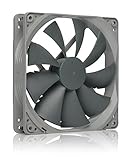
- Top Pick: be quiet! Pure Wings 3 140mm Silent PWM Computer Case Fan, Maximum Airflow | High Top-End Speed with Low Minimum RPM, Gaming PC Air Fan, 4-Pin, Rifle Bearing, Extraordinary Air Pressure,
- Best Value: Noctua NF-P14s redux-1500 PWM, Quiet Fan 140mm | High Airflow, Low Noise, 25mm Thick Fan for PC and Electronics Cooling Streamlined Package 1500rpm 4-Pin PWM
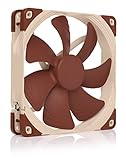
- Premium Choice: Noctua NF-A14 PWM, High-Performance Quiet Fan 140mm | High Airflow, Low Noise, 25mm Thick Fan, for Ventilation and Electronics Cooling, Rich Accessory Kit, 1500rpm 4-Pin PWM
A 140mm fan moves more air per revolution than a 120mm fan, which means it can spin slower for the same airflow, and slower fans are quieter fans. That simple fact is why 140mm models dominate quiet builds. The catch is that the word quiet appears on nearly every fan listing, so the real decision behind this keyword is telling apart fans built for low noise at low speed from fans that are quiet only until the motherboard asks for more airflow.
This guide is for people building or tuning a PC that sits close to a desk or a bed, especially systems with a hot RTX card that still need steady airflow. It compares six 140mm PWM fans using what the titles state about speeds, thickness, bearings, motors, and pack sizes, with no noise figures invented. For 2026 builds, front mesh panels and radiator mounts keep favoring 140mm fan positions, so a quiet fan that also holds up against restriction is the target to look for.
Quick Picks
As an Amazon Associate we earn from qualifying purchases at no extra cost to you.



| Product | Best for | Key spec from the title |
|---|---|---|
| be quiet! Pure Wings 3 140mm Silent PWM | A single quiet replacement | 4-pin, high top-end speed, low minimum RPM |
| Noctua NF-P14s redux-1500 PWM | Low-noise airflow | 1500rpm, 25mm thick, 4-pin PWM |
| Noctua NF-A14 PWM | Performance with quiet operation | 25mm thick, high-performance, rich accessory bundle |
| Thermalright TL-C14 | Budget-minded quiet builds | S-FDB bearing, PWM, 1500RPM |
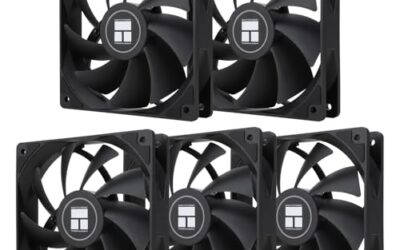
| be quiet! Pure Wings 3 Triple Pack (Black) | Refitting a full case | 3 fans, closed loop motor, high top-end speed |
| be quiet! Silent Wings Pro 4 140mm | High-speed headroom | Up to 2400 RPM, 6-pole motor, non-RGB, 12V |
How to Choose
Look at the speed range, not just the maximum
Quiet behavior depends on how low the fan can run. A fan with a 1500 RPM ceiling is easier to keep quiet because the motherboard never asks for much, while a fan that reaches 2400 RPM gives headroom for a radiator or a dense dust filter, though it will be loud at the top. Look for a stated low minimum RPM too, because idle noise is what you hear most of the day. The PWM connector matters: a four-pin fan lets the board adjust speed in small steps, so build a gentle fan curve instead of running at full blast.
Bearings, motors, and thickness
Quiet over years comes from bearing and motor design. Titles here mention S-FDB bearings, a closed loop motor, and a six-pole motor, each aimed at reducing wobble and friction. These are design hints, not guarantees, so check the warranty on the listing. Standard thickness is 25mm, and a few fans are thicker or thinner. A thin radiator and a thick fan together may not fit under a shroud, so add up the stack before ordering. Rubber pads at the corners also reduce vibration through the case panel.
Airflow versus static pressure
A fan that moves air in open space is not the same as one that pushes air through a mesh, a filter, or a radiator. For case front panels and radiators, static pressure counts. Noctua’s listings label some models as high-performance, and be quiet! describes high top-end speed for airflow, but neither title gives a pressure figure. If the fan will sit behind a dense filter, prefer a model with a wider speed range that can push when needed and settle when idle. For open exhaust positions, a slow, quiet fan is enough.
What to ignore, and where budget fans cut corners
Ignore claims about decibel levels unless the listing shows how they were measured, since a spec taken in a lab does not match a real case. Budget fans may save on blade finish, vibration pads, and cable sleeving, and the hum can grow as the bearing wears. Mid-range and premium fans tend to add accessories such as rubber pads, extension cables, and adapters. Also decide on lighting: the quietest options here are non-RGB, so they avoid the extra cabling and controller noise. A practical test for any fan on this list is how the case sounds at a low, steady speed, since a fan that is silent at 600 RPM but whines at 1200 will still annoy over a long evening. Anyone who games with headphones can tolerate more noise than someone who works in a quiet room.
The 6 Best Options
be quiet! Pure Wings 3 140mm Silent PWM Fan
This single 140mm fan is described as silent, with maximum airflow, a high top-end speed, a low minimum RPM, and a four-pin PWM connector. It is aimed at gaming PCs that want quiet idle behavior without giving up the ability to ramp up under load, and it works as a simple like-for-like replacement for a worn or noisy fan in a front or rear position.
- Strength: a low minimum RPM supports quiet idle operation at the desk.
- Strength: the four-pin PWM connector allows fine speed control from the motherboard.
- Trade-off: the title gives no exact RPM figures or thickness, so check the listing for them.
Skip it if you need several fans, since the triple pack from the same line is built for that. Builders who need a precise speed number before planning a radiator stack should read the listing first.
Noctua NF-P14s redux-1500 PWM
The NF-P14s redux is described as a quiet 140mm fan with high airflow and low noise, 25mm thick, 1500rpm, and a four-pin connection. It arrives in a streamlined package, so it suits buyers who want a plain, low-noise fan without extra accessories, and the 1500rpm ceiling fits a calm fan curve for a system that sits close to the user.
- Strength: the 1500rpm ceiling is stated and favors quiet operation.
- Strength: the streamlined package points to a simple, no-frills fan at a moderate cost.
- Trade-off: the plain packaging likely means fewer accessories than the full-retail version.
Skip it if you want RGB lighting or a bundle of adapters, or if you need a higher top speed for a thick radiator. Check the listing to see exactly what is included in the box before ordering several.
Noctua NF-A14 PWM
The NF-A14 PWM is called a high-performance quiet 140mm fan, 25mm thick, with a rich accessory bundle named in the title. It is meant for ventilation and electronics cooling as well as PC builds, and the accessory pack is the notable difference from the redux version, making it handy for builders who want extension cables, adapters, and mounting parts in one box.
- Strength: the title promises a rich accessory bundle, which helps with mounting and cabling.
- Strength: it is described as both high-performance and quiet in the same line.
- Trade-off: the visible title gives no RPM figure, so compare the speed on the listing.
Skip it if you want the simplest, most direct package, or an RGB look. Buyers who plan to run many fans should compare the accessory content per fan, since most builders only need a few of the extras in each box.
Thermalright TL-C14 140mm Fan
The TL-C14 has an S-FDB bearing, PWM control, and a 1500RPM ceiling, and the title describes quiet operation with balanced performance. It is a budget-minded fan for builders who want the same quiet-oriented spec sheet as the pricier brands, and the matching 1500RPM ceiling puts it in direct comparison with the Noctua redux model.
- Strength: an S-FDB bearing and PWM control are both named in the title.
- Strength: the 1500RPM ceiling suits low-noise fan curves in a mid-tower.
- Trade-off: the listing is brief on accessories and on details beyond the main specs.
Skip it if you want a branded accessory pack or a high-speed option for a radiator. Check the thickness on the listing before stacking it with a radiator or a dense filter, and read the warranty terms.
be quiet! Pure Wings 3 140mm PWM Black Triple Pack
This black triple pack describes a speed-regulating closed loop motor, a high top-end speed, and a low minimum RPM. Three fans cover a front intake or a radiator in one order, and the black finish suits unlit builds where the goal is a calm, uniform look rather than a lighting show.
- Strength: three fans in one order handle a full front intake row.
- Strength: a low minimum RPM and a high top end give a wide speed range.
- Trade-off: the title does not state exact speeds, so check the listing for the numbers.
Skip it if you only need one fan, or if you prefer lighting. Count your mounting positions first, and remember that a triple pack only saves effort if all three fans have a place to go in the case.
be quiet! Silent Wings Pro 4 140mm PWM
The Silent Wings Pro 4 is a high-speed 140mm fan that reaches 2400 RPM, with a six-pole motor, a non-RGB 12V design, and low-noise cooling named in the title. It is the headroom option for radiators and heavy filters, built for systems where airflow must still be available when a hot GPU pushes the case temperature up.
- Strength: the 2400 RPM top speed gives room for restrictive setups.
- Strength: a six-pole motor is named alongside low-noise cooling.
- Trade-off: the top speed will be audible, so a gentle fan curve is needed to keep it quiet.
Skip it if you only want a basic quiet fan with a low maximum speed, since the extra headroom would go unused. Check the listing for the bearing type and thickness, which the visible title does not state.
Which One Fits Your Situation
You want the quietest desk build
The Noctua NF-P14s redux-1500 and the Thermalright TL-C14 both cap at 1500 rpm, which keeps noise down. Pair either with a low fan curve and the system should stay calm at idle, which is what matters most in a bedroom or a small office.
You are refitting a whole case
The be quiet! Pure Wings 3 triple pack covers a front intake row in a single order, in black. It is a tidy way to make an old case look consistent, as long as all three positions are 140mm mounts.
You run a radiator or heavy filter
The Silent Wings Pro 4 reaches 2400 RPM, giving headroom while still being described as low-noise at lower speeds. A radiator-heavy build with a power-hungry card is where that headroom gets used.
You want accessories and flexibility
The Noctua NF-A14 PWM includes a rich accessory bundle named in the title. That helps in a case where cable lengths, mounting hardware, or adapters have been a recurring headache.
Common Mistakes
- Choosing a fan by maximum speed and ignoring its minimum.
- Skipping a fan curve and leaving the board on default settings.
- Forgetting that thickness changes how the fan fits behind a radiator.
- Mounting fans with the airflow direction reversed.
- Buying a triple pack without counting the mounting positions.
Related guides
- Low Profile Nvidia Graphics Cards For Small Form Factor Pcs
- Why Is My Gpu Benchmark Score Lower Than Others
- Travel Backpack With Laptop Compartment
Frequently Asked Questions
Are 140mm fans always quieter than 120mm fans?
Not always, but they move more air at a given speed, so they can run slower for similar airflow.
Do all 140mm positions accept a 120mm fan?
Many cases offer combined mounts, but check the case manual and mounting hole spacing.
What is a PWM fan?
A fan with a four-pin connector that lets the board vary its speed in small steps for better noise control.
How can fan noise be kept low?
Set a gentle fan curve, mount with rubber pads, and keep filters clean.




Write Your Review
No reviews yet. Be the first to share your experience!