
- Top Pick: Tusk EMEX T-35® Soft/Intermediate Terrain Dirt Bike Front and Rear Tire Set – Front 80/100×21 & Rear 100/100×18 – Deep Tread Off-Road Trail – Tube Type Motocross Motorcycle Tires
- Best Value: Tusk EMEX T-35 Front/Rear Tire Set – 70/100×19, 90/100×16 | Soft/Intermediate Terrain, Dirt Bike; Deep Tread Off-Road Trail, Tube Type Motocross Motorcycle Tires
- Premium Choice: Tusk EMEX T-45 Rear Tire – 100/90×19, Intermediate/Hard Terrain Knobby | Dirt Bike; Motocross, Trail, Enduro, Off-Road Use
The best motocross tire is the one matched to your track’s soil: soft or intermediate-terrain designs such as the Dunlop Geomax MX34 and Michelin Starcross 6 cover most loamy tracks, hard-pack riders look at the hard-terrain variants of the same families, and sand riders need a dedicated paddle-style rear. Matching terrain first, then size and bike class, matters more than chasing a famous name.
As an Amazon Associate we earn from qualifying purchases at no extra cost to you.
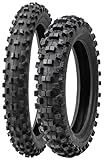

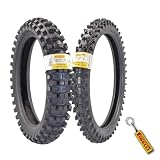
Quick comparison of widely used MX tire families
| Tire family | Maker | Terrain focus | Good fit for | Limit |
|---|---|---|---|---|
| Geomax MX34 | Dunlop | Soft to intermediate, with a hard-terrain version in the range | Riders wanting a broad all-rounder for race and practice | Not a sand specialist |
| Starcross 6 | Michelin | Range split into soft, medium, medium-hard, hard and sand variants | Riders who want to choose precisely by soil | More variants means more homework before buying |
| Scorpion MX32 | Pirelli | Mid-soft, mid-hard and hard-terrain versions | Racers seeking a firm side-knob feel | Compound choice matters on wet clay |
| Maxxcross range | Maxxis | Variants from soft through hard | Riders comparing alternatives to the big two | Check which variant suits your soil |
| Battlecross range | Bridgestone | Soft, intermediate and hard-terrain options | Riders who like a well-known Japanese alternative | Availability varies by region |
Each maker refreshes its range periodically and publishes terrain charts on its own site. Treat the names here as the families to compare, then confirm the exact variant for your bike and soil with the maker’s chart or a dealer.
Step one: read your track
Soft and loamy
Deep, moist soil needs taller, more widely spaced knobs that bite and clear mud. Soft-terrain fronts also help the bike turn in without washing out.
Intermediate and mixed
This is the broadest category and where tires such as the MX34 and the Starcross 6 medium variants live. Knobs are shorter and closer together, balancing traction with a stable feel on firmer sections.
Hard-pack and rocky
Short, dense knobs with a stiffer carcass give support on dry, compact ground. Soft-terrain tires wear quickly and feel squirmy on these surfaces, so riders often step up in firmness.
Sand
Sand rears use scooped or paddle-like knob patterns that propel the bike on loose material. Michelin lists a dedicated sand version in the Starcross 6 range, and several makers offer similar specialist rears for dunes and deep sand tracks.
Step two: get the size right
Motocross tire sizes show width, aspect ratio and rim diameter, for example 80/100-21 at the front or 110/90-19 at the rear on many full-size bikes. Smaller bikes and youth models use smaller rims such as 14, 16 or 17 inches. Check your owner’s manual for approved sizes. Fitting a different size can alter handling and clearance, and makers state recommended rim widths for each tire.
| Bike class | Common rim sizes | Note |
|---|---|---|
| Mini and youth | Front 12 to 19 inches, rear 10 to 16 inches (varies by model) | Follow the bike maker’s sizes exactly |
| Full-size 125 to 250 two-stroke or 250F | 21-inch front, 19-inch rear typical | Rear width options vary |
| 450F and larger | 21-inch front, 19-inch rear typical | Heavier bikes may benefit from sturdier carcasses |
Compound, carcass and wear
Softer rubber grips better but wears faster; harder rubber lasts longer on abrasive soil. Many racers fit a fresh rear more often than a front, because the rear carries driving load. Carcass stiffness affects how the tire deflects over braking bumps and jumps, and makers sometimes market reinforced or “heavy duty” versions for harder riding. Reviewers in motocross outlets such as Dirt Rider and Vital MX regularly discuss these trade-offs, noting that individual feel varies with weight, speed and pressure.
Pressure and mousse choices
Low pressure improves traction but risks pinch flats and rim damage; high pressure resists damage but chatters. Track-day practice is to start from the maker’s stated range and adjust by small steps. Foam inserts (mousses) remove flat risk but change feel and heat management, and are common in endurance and hard-enduro riding. Always use rim locks if the tire is run at low pressure, and tighten them correctly.
Pick X if you ride…
| If you ride | Look at | Reason |
|---|---|---|
| Mostly loamy club tracks | Dunlop Geomax MX34 soft or intermediate, Michelin Starcross 6 soft or medium | Terrain-matched knob height and spacing |
| Dry, hard-packed tracks | Hard-terrain variants of Starcross 6, MX32 or Geomax | Shorter, denser knobs and stiffer support |
| Sand tracks | Dedicated sand rear tires from Michelin and others | Paddle pattern for loose ground |
| Everything, every weekend | Intermediate options from any major maker | Compromise that suits changing conditions |
| On a tight budget | Entry-level lines from Maxxis, Bridgestone, Kenda and similar | Lower cost; accept a shorter life or less refined feel |
Budget tiers in plain terms
- Budget: simpler compounds and carcasses from value-focused lines. Fine for practice and young riders, with more compromise in grip consistency.
- Mid-range: the intermediate-terrain flagship from each major maker, the usual choice for club racing.
- Premium: specialist or race-focused versions, sometimes with softer or stiffer carcasses for specific conditions.
Common mistakes
- Buying a soft-terrain tire for a hard, dry track, which burns through rubber.
- Ignoring tire age; rubber hardens over years even when unused.
- Skipping rim-lock checks, a safety issue at low pressure.
- Fitting an oversized rear without checking swingarm and chain clearance.
- Copying a pro’s setup without matching soil and bike weight.
Alternatives
Riders who split time between track and trail can consider off-road trail tires with a DOT marking, which sacrifice some peak grip for road legality and longevity. Hard-enduro riders look at specialist tires with tougher sidewalls. Check the maker’s description, since motocross tires are generally not road legal.
Reading wear and knowing when to change
Look at the side knobs and the leading edges of the centre knobs. When the edges round off, the tire stops biting on braking and drive, even if plenty of tread height remains. Tears or chunking in knobs suggest a compound that is too soft for the track. Cracks in the sidewall or a hardened, shiny surface point to age rather than use. Rotating habits matter too: a new front paired with a worn rear can upset balance, so many riders replace both within a short window. Store spare tires in a cool, dark place away from electric motors and solvents.
Frequently Asked Questions
How often should I replace motocross tires?
There is no set number of hours. Replace when knobs are visibly rounded, torn or worn, or when grip falls off. Many racers swap the rear sooner than the front.
Can I run the same tire front and rear?
No. Front and rear tires are built differently for steering and driving, and sizes differ. Always fit a front-designated tire on the front wheel.
What pressure should I run?
Start from the maker’s or bike manufacturer’s guidance and adjust in small steps for track conditions. Lower pressure raises traction but increases flat and rim-damage risk, so use rim locks and check pressure with a reliable gauge.
Are motocross tires street legal?
Typically not. They are made for closed-course or off-road use. If you need a road-legal option, look for tires explicitly marked for that purpose by the maker.
Do I need a heavy-duty tube?
Many riders choose heavy-duty tubes to reduce pinch flats at low pressure. It adds weight, so it is a balance between durability and feel.
Is the most expensive tire always best?
Not necessarily. A mid-range tire matched to your soil usually beats a premium tire made for the wrong terrain.







Write Your Review
No reviews yet. Be the first to share your experience!