
- Top Pick: Night Cat Backpacking Tent 2 Persons with Aluminium Pole Double Layers Camping Tent Adults Rainproof Lightweight Easy Setup Two Doors Hiking Mountaineering 2.2×1.4m
- Best Value: BISINNA 2/4 Person Camping Tent Lightweight Waterproof Backpacking Tent | Easy Setup Windproof Two Doors Double Layer with Rainfly Aluminum Pole Compact Outdoor Tent for Family Camping Hunting Hiking
- Premium Choice: Naturehike Cloud up Base Backpacking Tent, Waterproof Lightweight 2 Person Tent for Camping, Double Layer Two Person Tent with Footprint
For a lightweight two-person tent, a double-wall freestanding model such as the Big Agnes Copper Spur HV UL2 or NEMO Hornet OSMO 2P suits most backpackers, while trekking-pole shelters like the Durston X-Mid 2 and the Zpacks Duplex suit weight-focused hikers who accept a bit more setup skill. The right choice depends on how much weather you expect, whether you carry poles, and how much you tolerate condensation.
As an Amazon Associate we earn from qualifying purchases at no extra cost to you.

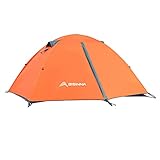


What counts as lightweight
Makers publish two weights: minimum (tent body, fly and poles) and packed (including stakes, guylines and stuff sacks). Compare the same figure across tents. Ultralight two-person tents generally sit well below two kilograms on the minimum figure, while roomier double-wall designs run a little heavier. Weight per person is the useful way to think about it, since two people can split the load.
Models to shortlist
| Tent | Design | Best for | Trade-off |
|---|---|---|---|
| Big Agnes Copper Spur HV UL2 | Freestanding double-wall, two doors | Comfort-minded backpackers wanting headroom | Fabric is thin; use a footprint on rough ground |
| NEMO Hornet OSMO 2P | Freestanding double-wall, OSMO fabric | Weight-conscious two-person trips | Narrower interior than some rivals |
| MSR Hubba Hubba NX 2 | Freestanding double-wall, two doors | All-round three-season use | Heavier than the ultralight set |
| Durston X-Mid 2 | Trekking-pole, double-wall pyramid | Hikers who already carry poles | Needs good stake-out; not freestanding |
| Zpacks Duplex | Trekking-pole, single-wall Dyneema | Long-distance, weight-first hikers | Single-wall condensation, premium tier |
| Sea to Summit Telos TR2 | Freestanding with convertible fly | Buyers wanting ventilation options | More features add some weight |
Models are updated often. Check the maker’s current spec page for the version you are buying, since fabrics and weights change between revisions.
How to choose
Freestanding or trekking-pole
Freestanding tents stand without stakes, which helps on rock slabs, platforms and sand. Trekking-pole tents drop the dedicated pole set and save weight, but they depend on your poles being the right length and on solid staking. If you hike without poles, a freestanding model is the simpler path.
Double-wall or single-wall
Double-wall tents have a mesh inner and a separate fly, which manages condensation better and lets you pitch the inner alone in warm, dry weather. Single-wall tents save weight but can collect moisture inside in humid or cold conditions. Reviewers at outlets such as Outdoor Gear Lab and Switchback Travel consistently note this trade-off.
Livable space
Floor area and peak height decide whether two adults can sit up and change comfortably. Two doors and two vestibules prevent crawling over your partner and keep boots out of the sleeping area. Check the stated vestibule area as well as the floor, because packs and wet gear need somewhere to go.
Fabric and waterproofing
Look at the fly and floor ratings the maker states (often given in millimeters of hydrostatic head) and whether seams are taped. Silnylon, silpoly, nylon ripstop and Dyneema composite each have trade-offs in stretch, cost and durability. Fabric that is lighter wears faster, so a footprint or ground sheet is wise on abrasive terrain.
Tier guide
| Tier | What you get | Examples |
|---|---|---|
| Budget | Heavier fabrics, simpler poles, solid weather protection | Entry two-person models from major outdoor brands |
| Mid-range | Lighter fabrics, two doors, better ventilation | MSR Hubba Hubba NX 2, Sea to Summit Telos TR2 |
| Premium | Lowest weights, advanced fabrics | Big Agnes Copper Spur HV UL2, NEMO Hornet OSMO 2P, Zpacks Duplex |
Pick X if…
| If you… | Pick |
|---|---|
| Want the easiest pitch and the most headroom | Copper Spur HV UL2 |
| Want a lighter freestanding option and can live with a snugger interior | Hornet OSMO 2P |
| Camp in mixed three-season weather and want proven design | Hubba Hubba NX 2 |
| Hike with poles and want weight savings without single-wall drawbacks | Durston X-Mid 2 |
| Cover long distances and accept extra setup care | Zpacks Duplex |
Common mistakes
- Comparing a minimum weight on one tent to a packed weight on another.
- Buying a trekking-pole tent without checking that your pole length fits the maker’s range.
- Skipping the footprint on rough ground and shortening the floor’s life.
- Choosing a single-wall in damp, cold climates without planning for condensation.
- Ignoring the two-person label: many are snug for two tall adults and wide pads.
Care and setup notes
Pitch the tent at home first so you know how it goes together. Keep stakes and guylines tidy, dry the fabric before long-term storage, and avoid stuffing a damp tent for weeks. Cooking inside a tent is dangerous because of fire and carbon monoxide; follow the maker’s instructions and cook in the open or the vestibule only where the manual allows it.
Alternatives
- One-person tents plus a tarp: Two solo shelters can be lighter overall for people who sleep separately.
- Tarp and bivy: Very light, but demands skill and offers less bug and storm protection.
- Three-person tents used by two: More room and storage, at a clear weight penalty.
Frequently Asked Questions
How much should a lightweight two-person tent weigh?
Ultralight models generally land under about two kilograms on the maker’s minimum weight, while roomier double-wall tents come in a bit above that. Compare minimum weight to minimum weight, and divide by two if you will share the load.
Is a freestanding tent better than a trekking-pole tent?
Neither is better outright. Freestanding tents are easier to pitch on any surface, while trekking-pole tents save weight if you already carry poles and know how to stake them.
Do I need a footprint?
It is wise on rough or abrasive ground because thin floor fabric wears faster. Many makers sell a fitted footprint, and a simple polyethylene sheet cut to size also protects the floor.
Why does my tent get wet inside?
Condensation forms when warm, moist breath meets cold fabric. Open vents, pitch away from standing water, and choose a double-wall design if you camp in humid or cold conditions.
Can a two-person tent fit two large people?
It can, but space is usually tight with standard-width pads. Check the stated floor dimensions and consider a larger floor model if you are tall or use wide pads.
What season rating do I need?
Most lightweight two-person tents are three-season shelters for spring through fall. Heavy snow and strong winter winds call for a four-season design, which is notably heavier.







Write Your Review
No reviews yet. Be the first to share your experience!