
For hunting coins, an entry-level or mid-range detector with strong target ID and discrimination, such as a Garrett Ace series model, a Minelab Vanquish, or a Fisher F-series unit, is the sensible starting point, with a multi-frequency or advanced model suited to people who want deeper searching and more control. Coin hunting favours machines that tell a coin from a pull tab on the display, run easily in parks and lawns, and weigh little enough for long sessions. Model lines are refreshed often, so use the maker’s page for the current version of any machine named here.
As an Amazon Associate we earn from qualifying purchases at no extra cost to you.
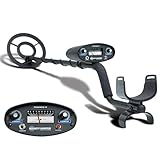

At a glance: coin-hunting detector options
| Line | Maker | Best for | Limits |
|---|---|---|---|
| Ace series | Garrett | Beginners who want simple controls and good coin ID | Fewer advanced tuning options |
| Vanquish series | Minelab | Multi-frequency use and an easy step up for new users | Higher up-front spend than basic single-frequency |
| F-series (such as F22 and F44) | Fisher | Lightweight machines with straightforward operation | Entry-level depth and features |
| Simplex series | Nokta | Waterproof, wireless use for park and beach coin hunts | Different menu style takes some learning |
These lines are examples and not a full list. The maker lists differing coil sizes, frequencies and features between sub-models, so read the specification sheet for the exact one you want.
What coin hunting asks of a detector
Coins are mid-conductivity targets. Detectors show a number or icon for the likely target type, and a good coin machine separates coins from iron nails and from aluminium pull tabs as well as possible. No detector does this perfectly, which is why experienced hunters learn their machine’s sounds. Reviewers who cover detectors stress that practice and local hunting spots matter as much as the model.
Key features to compare
Target ID and discrimination
A numeric target display helps judge the target before digging. Discrimination lets you reject iron and, with care, other junk. Heavy discrimination can also hide good targets, so many hunters keep it low.
Operating frequency
Single-frequency machines are simpler. Multi-frequency models, which the maker describes as covering a range at once, tend to handle varied soil better. Higher frequencies often favour smaller targets, and lower ones favour deeper, larger ones.
Coil size and type
Bigger coils reach deeper and cover more ground, smaller ones cope better with trash and tight spots. Many machines ship with a mid-size coil, and some makers sell optional coils.
Ground balance
Mineralised soil can cause false signals. Automatic or tracking ground balance makes setup easier for newcomers.
Weight and ergonomics
Detecting is a long, repetitive swing. Lighter machines and adjustable shafts reduce fatigue, a point reviewers raise often.
Waterproofing and wireless
If you hunt shallow water or wet grass, check the maker’s stated waterproof rating, and note whether wireless headphones are included or sold separately.
Budget tiers
| Tier | What to expect | Trade-off |
|---|---|---|
| Budget | Simple single-frequency machines with basic target ID | Less depth and fewer settings, but easy to learn |
| Mid-range | Multi-frequency or feature-rich machines with better ground handling | Best match for most coin hunters |
| Premium | Advanced detectors with detailed tuning and sound options | Learning curve and higher spend than casual use needs |
Pick X if …
| If you … | Pick | Why |
|---|---|---|
| Are brand new and want simple setup | Garrett Ace series or Fisher F-series | Easy operation and clear target ID |
| Want a step up with multi-frequency detection | Minelab Vanquish series | Wider soil and target handling |
| Hunt wet sand or shallow water | Waterproof-rated model such as Nokta Simplex | Maker lists water use |
| Hunt trashy parks | A model with good discrimination and a smaller coil option | Helps separate targets in cluttered ground |
Gear and etiquette
- Headphones help hear faint signals, especially in noisy places.
- A pinpointer speeds up recovery of the target once a hole is dug.
- Carry a small digging tool and fill every hole you make.
- Always get permission on private land, and check the rules for public parks and historic sites before detecting. Rules vary by location.
Alternatives to consider
- Used detector from a reputable maker. Can stretch a budget, but make sure it works and ask about warranty.
- Pinpointer and basic accessories first. Useful if you borrow a detector before committing.
- Joining a local detecting club. Members often share advice on soil and productive sites.
Common mistakes
- Over-discriminating and missing deeper coins.
- Swinging too fast, which misses signals.
- Never reading the manual, which hides useful settings.
- Buying a heavy machine and getting tired quickly.
- Detecting where it is not allowed.
Where coin hunters usually search
Parks, school grounds, old picnic areas, and the edges of sports fields are common starting points, since people drop coins there over many years. Beaches are productive for jewellery and coins but add wet-sand and saltwater challenges. Always confirm that detecting is allowed, because many parks, heritage sites and nature reserves restrict or ban it.
Research helps more than hardware. Old maps and local histories show where gatherings or homes once stood. Hunting after soil is soft from rain makes digging easier and leaves less visible damage when you fill the hole.
Learning your machine
Spend time swinging over known test targets, such as a few coins buried at set depths, to learn how your detector responds. Note which tones and numbers different coins produce, and pay attention to how signals change when you swing from a different angle. Updating firmware or settings, when the maker provides it, can also change performance, so check the maker’s guidance in the manual.
Frequently Asked Questions
What is the best type of metal detector for finding coins?
A beginner-friendly machine with reliable target ID suits most people. Multi-frequency models can help in difficult soil, but they are not required to find coins.
How deep can a coin detector find coins?
Depth depends on the coin, soil, coil and settings. Makers list depth claims, but reviewers note that real results are usually less than lab figures.
Does discrimination hide good coins?
It can, especially at high settings, because some valuable targets sit close to junk on the scale. Lower discrimination plus careful digging is a common approach.
Can I use a coin detector at the beach?
Only a waterproof-rated model should go in water, and salt wet sand can confuse ordinary machines. Read the maker’s notes on beach and saltwater use.
Do I need a license to metal detect?
Rules vary by country, region and land type. Ask the landowner or the local authority before you detect, particularly in parks or historic areas.





Write Your Review
No reviews yet. Be the first to share your experience!