
- Top Pick: DNA MOTORING 2 Ton Low Profile Hydraulic Floor Jack, 4000 lbs Capacity | 5.1"-13" Lift Rang, Fast Lift, Heavy-Duty Steel Trolley Service Car Jack, For Home Garage Shop, With Carrying Storage Case
- Best Value: DNA MOTORING 2 Ton Low Profile Hydraulic Floor Jack, 4000lbs Capacity, Blue | 5.1"-13" Lift Rang, Fast Lift, Heavy-Duty Steel Trolley Service Car Jack, For Home Garage Shop, With Carrying Storage Case
- Premium Choice: VEVOR 2.5 Ton Low Profile Heavy-Duty Steel Racing Floor Jack | with Single Piston Lift Pump, for Family Cars, Trucks, SUVS, etc, Lifting Range 3.35"-14.96", Conform to CE, UKCA, ASME
For most cars, a 2 to 3 ton low-profile hydraulic floor jack from a maker such as Arcan, Torin (Big Red), Daytona or OTC is the right choice, while bottle jacks suit taller vehicles and tight storage. Whichever you choose, a jack only lifts the car, so a matched pair of jack stands is required before you go under it.
As an Amazon Associate we earn from qualifying purchases at no extra cost to you.
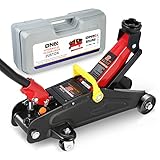


Types of hydraulic jack
| Type | Best for | Strengths | Limits |
|---|---|---|---|
| Low-profile floor jack | Sedans, coupes, sports cars | Fits under low sills, rolls on wheels, stable base | Heavy and bulky |
| Standard floor jack | SUVs, crossovers, light trucks | Higher max lift height, still stable | May not slide under low cars |
| Bottle jack | Trucks and vans, trunk kit | Compact and strong for its size | Narrow base, high minimum height |
| Aluminium racing jack | Lighter weight garage work, track days | Easy to carry and move, quick lift | Premium tier and can be less tolerant of rough use |
| Scissor jack | Emergency use | Small and light | Not for regular garage work |
What to look at when choosing
Capacity
Jacks are rated in tons. A 2 ton jack is common for small cars, a 3 ton jack covers most sedans and crossovers, and larger SUVs and trucks often need 3.5 tons or more. Makers state the capacity on the product, and the rated load must exceed the portion of the vehicle you lift, not just the curb weight. Choose a margin above the figure in your owner manual.
Minimum height and lift range
Minimum saddle height decides whether the jack fits under your car. Many low-profile models from Arcan and Torin list a minimum height of around three to four inches, according to their makers. Maximum lift height decides whether a tall vehicle can reach a safe stand height.
Lift speed and pump design
Dual-piston pumps raise the saddle faster at the start. Racing jacks market quick lifts that need fewer strokes, which is helpful if you rotate tyres often.
Build and stability
Steel jacks are heavy but durable and typically cheaper. Aluminium models are lighter. Look for a wide base, quality casters and a saddle that grips the lift point. The ASME PASE standard covers automotive lifting devices, and some makers say their jacks are built to it, so look for such a statement.
Safety features
Overload valves, bypass valves and handle locks are common safety features. Read the maker’s description of each, and do not rely on any feature as a replacement for stands.
Picks by buyer type
Torin Big Red floor jacks
Torin’s Big Red range is widely seen in home garages and is positioned at the budget to mid-range tier. Models come in 2 ton, 3 ton and larger capacities, including low-profile versions.
Arcan floor jacks
Arcan offers steel and aluminium floor jacks aimed at home users and pros. Reviewers often mention its lightweight aluminium jacks as a strong option for people who move a jack often.
Daytona and similar racing jacks
Daytona-style aluminium racing jacks are mid-range to premium, with quick-lift pumps suited to frequent use or track days.
OTC and Hein-Werner professional jacks
These makers target workshops, with heavier duty construction and rebuild support. They sit in the premium tier and suit those who want something to last.
Bottle jacks
Bottle jacks from various makers are strong and compact. They suit trucks and vans, and they are easy to keep in a toolbox, but are less stable on soft ground.
Pick X if…
| If you… | Pick | Why |
|---|---|---|
| Drive a low sports car or sedan | Low-profile floor jack, 2 to 3 ton | Low saddle height fits tight clearance |
| Own an SUV or truck | Standard or high-lift floor jack, 3 ton and up | Greater lift range and capacity |
| Move the jack often | Aluminium floor jack | Lighter weight |
| Work in a pro shop | OTC or Hein-Werner | Built for daily use and repair |
| Want a trunk-friendly tool | Bottle jack with stands | Compact size |
Using a jack safely
- Work on level, firm ground, such as concrete. Avoid asphalt in heat and soft soil.
- Use the lift points shown in the owner manual.
- Chock the wheels that stay on the ground and apply the parking brake.
- Raise the vehicle, then place jack stands rated for the load and lower the vehicle onto them.
- Never get under a vehicle supported only by a jack.
- Use the jack only for lifting, as the maker states, not for holding a load over time.
- Follow the manufacturer’s manual for maintenance, including oil levels and bleeding air.
Common mistakes
- Buying a jack that cannot fit under the car, due to minimum height.
- Skipping jack stands.
- Lifting on the wrong point, such as a suspension arm or plastic panel.
- Letting a jack sit under load for days.
- Storing a jack on its side, which may allow air into the hydraulic system.
Maintenance
Store the jack with the ram fully lowered and the handle in the upright position as the maker advises. Wipe off dirt, keep wheels moving freely and check for leaks. If the jack feels spongy, the maker’s manual normally describes how to release trapped air by opening the release valve and pumping the handle. Replace it if you see bent frames or cracked welds.
Alternatives
- Ramps: good for oil changes, but they do not lift wheels off the ground.
- Two-post or portable lifts: for dedicated garages with budget and space.
- Scissor jack: only for roadside emergencies.
Budget tiers
Budget steel floor jacks from makers like Torin cover occasional tyre and brake work for most owners. Mid-range models add faster pumps, better casters and aluminium options from Arcan or Daytona. Premium and professional jacks from OTC and Hein-Werner emphasise durability, serviceability and repeated daily use. If you only lift the car a few times a year, the budget tier with a matching pair of rated jack stands is usually sufficient.
Frequently Asked Questions
What size jack do I need for a car?
Most cars suit a 2 to 3 ton floor jack. Larger SUVs and trucks often need 3.5 tons or more. Check your owner manual for vehicle weight and lift points.
Is a floor jack better than a bottle jack?
For car work in a garage, a floor jack is more stable and easier to position. A bottle jack is smaller and stronger for its size, which makes it popular for trucks and trunk kits.
Do I need jack stands?
Yes. Hydraulic jacks are lifting devices, not supports. Use stands rated for the vehicle and lower the car onto them before going underneath.
What does low-profile mean?
It means the saddle starts very low, so the jack can slide under cars with minimal clearance. Makers list the minimum saddle height for each model.
Why does my jack not hold?
Air in the hydraulic system or low fluid is a common cause, and the maker’s manual explains how to bleed or refill it. If the problem continues, stop using the jack and replace it or have a technician service it.
Is aluminium worth it?
Aluminium jacks are lighter and often faster to lift. They sit at a higher price tier, so they are best for people who move a jack often.





Write Your Review
No reviews yet. Be the first to share your experience!