
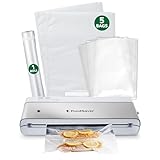
- Top Pick: FoodSaver Compact Vacuum Sealer Machine with Airtight Bags and Roll – Ideal for Sous Vide and Airtight Food Storage, White
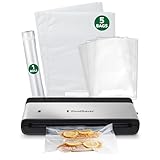
- Best Value: FoodSaver Vacuum Sealer Machine, Automatic Bag Detection, Sous Vide Friendly, with sealer bags, roll, handheld vacuum sealer, black
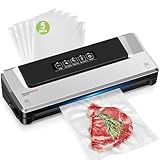
- Premium Choice: FoodSaver PowerVac Compact Vacuum Sealing Machine Stainless Steel & Black Vertical Storage VS0150 | Preserves freshness reduces bag waste for both dry and wet food
Freezer burn is the most expensive mistake in home cooking. A bag of chicken that costs five dollars at the store becomes inedible after three months in a standard zip-lock, and the loss quietly accumulates across dozens of items every month. The best food saver machines solve this by removing air and creating a true seal, but not all of them do it equally well — and the price range spans from under thirty dollars to over two hundred.
What separates a genuinely useful vacuum sealer from one that frustrates you within a week comes down to three things: suction strength on wet items, seal reliability across different bag thicknesses, and whether the machine’s physical footprint fits your counter without becoming a permanent obstacle. We compared published specs, current pricing, and aggregated owner feedback across eight models to identify which machines handle those tasks well and which ones leave gaps.
As an Amazon Associate we earn from qualifying purchases at no extra cost to you.



Quick Picks
| Product | Best for | Price |
|---|---|---|
| FoodSaver Compact Vacuum Sealer | Sous vide beginners on a budget | under $70 |
| FoodSaver Automatic Bag Detection | Versatility and bag flexibility | $179 |
| FoodSaver PowerVac Compact | Wet and dry food preservation | under $100 |
| FoodSaver V4400 2-in-1 | Premium all-around performance | under $250 |
| Beelicious Pro Vacuum Sealer | Meal prep with multiple modes | under $150 |
| Food Vacuum Sealer with Storage & Cutter | Best value for casual users | under $50 |
| MEGAWISE Compact Vacuum Sealer | Ultra-budget entry point | under $30 |
| Bonsenkitchen Vacuum Sealer | Compact kitchen with limited counter space | under $40 |
How We Picked
We evaluated these machines on four criteria that consistently determine long-term satisfaction: suction quality on moist foods (where cheaper models fail first), seal durability across repeated freeze-thaw cycles, physical size and storage convenience, and included accessories that reduce the need for additional purchases. Owner feedback was weighted heavily for reliability complaints — a machine that seals well for ten bags but fails by the twenty-fifth is not a bargain regardless of its sticker price.
The 8 Best Food Saver Machines in 2026
FoodSaver Compact Vacuum Sealer Machine with Airtight Bags and Roll
This is the entry point most reviewers recommend for someone trying vacuum sealing for the first time, particularly those already cooking sous vide. It’s small enough to store in a drawer and simple enough to operate without consulting instructions. Owner feedback consistently praises its quiet operation and the included starter bags that eliminate the initial guesswork of bag sizing.
- Pro: Compact footprint that disappears into a drawer between uses.
- Pro: Includes both pre-cut bags and a roll, so you can size custom bags immediately.
- Con: Suction power struggles with very wet items like raw fish fillets, often leaving moisture in the chamber that compromises the seal.
Skip this one if your primary use case involves high-moisture proteins or large-volume weekly meal prep — you’ll outgrow it within months.
FoodSaver Vacuum Sealer Machine, Automatic Bag Detection
The automatic bag detection feature is the headline here, and owner reports confirm it genuinely works — you insert a bag and the machine adjusts without you fumbling with settings. Combined with the included handheld sealer for mason jars and wine bottles, this covers nearly every preservation task a home cook encounters. The black finish resists counter grime better than white alternatives.
- Pro: True automatic detection reduces user error with bag placement and sizing.
- Pro: Handheld sealer included expands functionality to jars and containers.
- Con: At $179, it costs more than most competitors with similar suction specs, and the premium is for convenience rather than raw performance.
Skip this if you’re strictly sealing bags and don’t care about jar preservation — you can get comparable sealing quality from a FoodSaver model that costs eighty dollars less.
FoodSaver PowerVac Compact Vacuum Sealing Machine Vertical Storage
This model addresses the single biggest complaint owners have about compact sealers: they don’t store well because they’re awkwardly shaped. The vertical orientation means it fits in a cabinet like a small appliance tray rather than lying flat across a shelf. The stainless steel exterior also wipes clean easily, which matters when you’re working with raw meats and produce.
- Pro: Vertical storage design makes it genuinely easy to keep accessible without dedicating counter space.
- Pro: Handles both dry and wet foods effectively, a dual-mode performance that many budget models fake but don’t deliver.
- Con: The sealing strip is narrower than full-size models, limiting you to smaller bags unless you cut rolls precisely.
Skip this if you regularly seal gallon-size bags for bulk meats — the narrower strip will frustrate you with alignment issues.
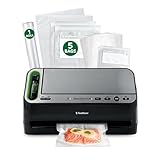
FoodSaver V4400 2-in-1 Vacuum Sealer Machine with Automatic Detection and Starter Kit
This is the most capable machine on the list for someone who wants to do everything without upgrading again. The 2-in-1 design combines a full-size chamber sealer with a handheld unit, and the starter kit includes enough accessories to begin immediately. Owner feedback highlights the double-seal function for thick bags as a differentiator — it catches failures that other models miss.
- Pro: Double-seal mode provides redundancy on expensive proteins where a failed seal means real money lost.
- Pro: Automatic moisture detection adjusts suction for wet items without manual intervention.
- Con: For under $250, it’s the most expensive option here and represents a significant investment for a home cook sealing fewer than twenty bags weekly.
Skip this if your sealing volume is modest and your budget is under $150 — the FoodSaver Compact or PowerVac will handle light-to-moderate use at a fraction of the cost.
Beelicious Pro Vacuum Sealer Machine, Multiple Modes
The Beelicious Pro has built a reputation on Amazon as the machine that punches above its price. Multiple modes cover dry, moist, gentle, and standard sealing, and owner reports suggest the moist mode genuinely works rather than being a marketing label. The build quality feels sturdier than its under $150 price implies.
- Pro: Four distinct modes handle the full range of food textures without guesswork.
- Pro: Owner feedback consistently rates seal reliability higher than similarly priced FoodSaver models.
- Con: Slightly wider than true compact models, so measure your storage space if counter or drawer real estate is tight.
Skip this if you want a branded accessory ecosystem — FoodSaver proprietary bags and attachments won’t be as easy to source for this machine.
Food Vacuum Sealer Machine with Storage & Built-in Cutter
For under $50, this machine packs in features that FoodSaver reserves for its $100-plus models: a built-in cutter for roll bags and dedicated internal storage for rolls and accessories. The practical benefit is that everything stays together — you won’t hunt through a junk drawer for scissors when you want to size a bag.
- Pro: Built-in cutter and storage mean the machine is self-contained; nothing else to buy or find.
- Pro: Price is roughly half of comparable FoodSaver models with similar feature sets.
- Con: Seal width is thinner than premium models, and some owners report occasional incomplete seals on very thick bags.
Skip this if you’re sealing large-format bags for a chest freezer or commercial use — you need a wider, more robust sealing element.
MEGAWISE Compact Vacuum Sealer with Starter Kit
The lowest-priced option on this list for under $30, the MEGAWISE includes ten vacuum bags and a built-in cutter — an unusually generous starter kit for a machine under thirty dollars. Owner feedback describes it as “surprisingly capable” for the price, with the dry mode working well and the moist mode functioning but requiring more care. The compact grey design blends into modern kitchens without drawing attention.
- Pro: Under $30 with a starter kit of ten bags — the cheapest way to try vacuum sealing with zero commitment risk.
- Pro: Built-in cutter saves you from sourcing separate scissors.
- Con: Suction power and seal durability don’t match any FoodSaver model; expect a shorter lifespan with heavy weekly use.
Skip this if you plan to seal more than a few bags per week or if you need reliable performance on moist items like soups or raw fish.
Bonsenkitchen Vacuum Sealer Machine, Multiple Modes
For under $40, the Bonsenkitchen occupies the same ultra-budget tier as the MEGAWISE but adds multiple modes that the cheaper models sometimes lack. The silver finish gives it a slightly more premium appearance on a counter, and its slim profile makes it the most compact option here. Owner feedback positions it as a solid “I just want to try this” machine.
- Pro: Multiple modes for under $35 is uncommon — most budget sealers offer only a single seal setting.
- Pro: Slim form factor makes it the easiest machine here to store in a shallow drawer or narrow cabinet.
- Con: No included bags or starter kit, so the effective price rises once you factor in your first bag purchase.
Skip this if you need a machine with an included cutter or storage bay — the Food Vacuum Sealer with Storage for under $50 adds those features for only seventeen dollars more.
Buying Guide
Suction Power and Moisture Handling
The defining weakness of budget vacuum sealers is their treatment of wet foods. A machine that pulls air cleanly from a dry piece of cheese will often suck liquid into the chamber when sealing a marinated chicken breast, which either weakens the seal or creates a mess that degrades the vacuum over time. Look for models with a dedicated moist or gentle mode, and read owner reports specifically about that mode’s reliability — a labeled feature means nothing if users report it failing after a handful of uses. Machines in the $70+ range from established brands generally handle moisture better than sub-$40 options.
Seal Width, Double-Seal, and Bag Compatibility
A wider sealing strip means you can seal larger bags without worrying about alignment, and a double-seal feature (where the machine runs the seal element twice) provides insurance against a single incomplete pass. If you plan to seal anything wider than a quart-size bag, the strip width matters as much as suction. Also check whether the machine works with generic bags or locks you into a proprietary brand — the latter can quietly add ongoing cost that erases a machine’s initial price advantage.
Physical Size and Storage Reality
A machine that stays on the counter gets used; a machine that goes back in the drawer gets used less. The best vacuum sealers balance capability against footprint. Vertical storage designs, built-in roll cutters, and internal accessory bays all reduce the friction of regular use. If your kitchen has limited counter space, prioritize compact models with integrated storage over larger machines with more features you’ll rarely touch.
Our Verdict
Top pick: The FoodSaver V4400 2-in-1 is the most complete package for anyone who uses a vacuum sealer weekly and values redundancy on expensive proteins. Its double-seal function and automatic moisture detection address the two failure modes that cause most owner complaints on lesser machines.
Budget pick: The FoodSaver PowerVac Compact for under $100 delivers wet/dry performance, easy vertical storage, and brand reliability without the premium price tag — the best balance of capability and cost for most households.
Another wins if: Your sealing volume is very low (under five bags monthly) and you just want to eliminate freezer burn on a handful of items. The Food Vacuum Sealer with Storage & Built-in Cutter for under $50 covers that use case without over-investing.
FAQ
Can I use any plastic bag in a vacuum sealer?
No. Standard thin plastic bags collapse and seal unevenly, creating weak vacuum points. You need textured or embossed bags designed for vacuum sealers, which create tiny channels that allow air to escape while the machine pulls vacuum. Most machines sold with a starter bag kit are pre-matched to compatible bags.
How long does vacuum-sealed food last compared to regular storage?
Vacuum sealing extends frozen food life roughly three to five times longer than standard freezer storage. Raw meat that typically lasts three months in a freezer bag can last over a year when properly vacuum-sealed, because the absence of air prevents the oxidation and ice crystal formation that cause freezer burn.
Do vacuum sealers work for sous vide cooking?
Yes, and many owners buy these machines specifically for sous vide. The key requirement is a seal that holds under prolonged warm water immersion without leaking or opening. Double-seal features and wider strip designs from the higher-end models on this list provide the most confidence for long sous vide cooks.
Are FoodSaver bags worth the premium over generic brands?
For most home users, FoodSaver bags and rolls deliver consistent thickness and texture that generic alternatives sometimes miss, which matters for seal reliability. However, several owner reports confirm that reputable generic brands work fine in FoodSaver machines, potentially saving meaningful ongoing cost if you seal at high volume.




Write Your Review
No reviews yet. Be the first to share your experience!