
- Top Pick: Cutipol GOA Black/silver Series Home Dinner Flatware Cutlery Set of 3 Pcs, Spoon, Fork, Knife, Professional Cutlery Brand
- Best Value: Cutipol Moon Matte silver Series Home Dinner Flatware Cutlery Set of 3 Pcs, Spoon, Fork, Knife, Professional Cutlery Brand
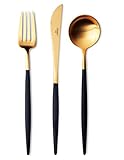
- Premium Choice: Cutipol GOA Black/Gold Series Home Dinner Flatware Cutlery Set of 3 Pcs, Spoon, Fork, Knife, Professional Cutlery Brand
For most home cooks, Wüsthof and Zwilling are the safest German-style cutlery brands, Victorinox is the sensible budget choice, and Shun, Global and MAC are the names to look at if you want lighter, sharper Japanese-style knives. Here “cutlery” is read mainly as kitchen knives, with a short flatware section at the end.
Review sites in 2026 broadly agree on this split, though most are affiliate-style publishers, not independent laboratories. Use their rankings as a guide to what each brand is known for, and judge the final choice by how a knife feels in your hand.
As an Amazon Associate we earn from qualifying purchases at no extra cost to you.



Brand snapshot
| Brand | Style | Known for (per reviewers) | Watch out for |
|---|---|---|---|
| Wüsthof | German forged | Durability, balance, frequent “best overall” pick; Classic line is the usual reference | Heavier, premium tier |
| Zwilling | German forged | Strong forged lines such as Professional S; solid mid-range option | Often ranked a step below Wüsthof |
| Victorinox | Swiss stamped | Fibrox Pro is the usual budget standout | Plainer handle and finish |
| Shun | Japanese | Very sharp, light blades; lifetime sharpening service reported by one source | Needs careful hand-washing and drying |
| Global | Japanese | Lightweight, all-steel design; G-2 chef’s knife is popular | Handle style is not for everyone |
| MAC | Japanese | Good performance for the money; Professional line often cited | Thinner, lighter feel takes adjusting |
German brands: Wüsthof and Zwilling
German knives are generally heavier, with thicker blades and a softer steel that tolerates rougher treatment. Reviewers describe Wüsthof as the most frequent “best overall” name, and the maker’s Classic range is the typical benchmark. One knife retailer’s brand comparison cites a well-known test kitchen as rating a Wüsthof chef’s knife highly for durability and edge retention.
Zwilling sits close behind. Its forged Professional S line appears in several lists as a top German option, and its mid-range lines are frequently described as good value. If you cannot decide between the two, hold them both: handle shape and bolster design differ enough that comfort often settles it.
Budget standout: Victorinox
Victorinox’s Fibrox Pro line shows up constantly as the value pick. The blades are stamped rather than forged, which usually means lighter weight and a lower price, and the textured handle is built for wet hands. Professional kitchens are often cited as users, according to review sites. If you are starting a kitchen from scratch, a single Fibrox chef’s knife plus a paring knife covers most tasks.
Japanese brands: Shun, Global and MAC
Japanese-style blades tend to be thinner and harder, taking a keener edge but chipping more easily if misused. One review site says Shun suits cooks who want a light, razor-sharp knife and who will hand-wash and dry it. Global is noted for an all-stainless, hollow-handle design that is light and easy to clean, with a hardness one sharpening source lists at 56 to 58 HRC. MAC earns praise for performance per cost, with the Professional chef’s knife named by a retailer’s comparison as a top overall choice.
Because ratings vary by site, treat them as directional. The same MAC line gets a very high score on one list and a middle score on another.
How to choose
- Weight and balance. German knives feel substantial; Japanese knives feel nimble. Neither is better, so pick by preference.
- Blade length. An 8-inch chef’s knife is the common starting point; smaller hands may prefer 6 or 7 inches.
- Steel and care. Harder steel keeps an edge longer but needs gentler handling. Avoid dishwashers for any good knife unless the maker explicitly allows it.
- Handle comfort. Grip the handle in a pinch grip if you can. Rough edges or hot spots show up quickly.
- Warranty and sharpening. Check what the maker’s warranty covers and whether sharpening services are offered.
Pick X if…
| You want… | Pick | Reason |
|---|---|---|
| One tough all-rounder | Wüsthof Classic | Widely named top German knife |
| Forged quality at mid-range | Zwilling Professional S | Often ranked best forged German option |
| Lowest-cost reliable knife | Victorinox Fibrox Pro | Budget favourite |
| Light, very sharp blade | Shun | Japanese precision, care required |
| Lightweight stainless build | Global G-2 | Easy to clean, distinctive handle |
| Strong performance for the money | MAC Professional | Frequently cited value in Japanese style |
Flatware brands in brief
If you meant table cutlery, the forks, spoons and dinner knives, look at the steel grade rather than the brand name first. Marking such as 18/10 indicates the chromium and nickel content of stainless steel, and higher nickel content is generally associated with better corrosion resistance. Brands such as Oneida, WMF and Zwilling make flatware sets; compare weight, finish and dishwasher guidance on the maker’s page.
Common mistakes
- Buying a big block set full of rarely used blades instead of two or three good knives.
- Ignoring sharpening. Even the best brand needs a honing steel and occasional sharpening.
- Putting premium knives in the dishwasher or leaving them in a wet sink.
- Judging only by brand reputation without holding the knife.
Care and storage
A knife block, magnetic strip or blade guard keeps edges from knocking against other metal. Use a wooden or plastic board rather than glass or stone, which dull blades quickly. Dry the blade straight after washing, since even stainless steel can spot if left wet. Honing with a steel before use realigns the edge, while sharpening on a stone or with a service removes metal and restores it. Makers publish care sheets, and following them usually protects the warranty. Keep fingers curled when cutting, and never test sharpness with a thumb.
Alternatives
Other names that regularly appear in 2026 knife lists include Miyabi, Tojiro, Mercer and Henckels. For flatware, local restaurant-supply style sets are often durable and plain. A good small whetstone or pull-through sharpener often matters more than moving up a brand tier.
Frequently Asked Questions
Which cutlery brand is best overall?
Reviewers most often name Wüsthof for German-style knives, though the answer depends on whether you prefer a heavy or a light knife. Victorinox usually wins on value.
Are German or Japanese knives better?
Neither is universally better. German knives are heavier and more forgiving, while Japanese knives are lighter and sharper but need more careful use.
Can I put good knives in the dishwasher?
Most makers advise hand-washing because detergent, heat and knocking against other items can dull or damage blades and handles. Follow the care sheet that comes with your knife.
How many knives do I really need?
A chef’s knife, a paring knife and a serrated bread knife cover most home cooking. Add others only when you notice a repeated gap.
What does 18/10 mean on flatware?
It describes the chromium and nickel proportions in stainless steel. Higher nickel content is generally linked with better rust resistance and shine.
How often should I sharpen a kitchen knife?
It depends on use. Hone regularly and sharpen when the knife starts crushing tomatoes instead of slicing them, or take it to a professional sharpener.







Write Your Review
No reviews yet. Be the first to share your experience!