
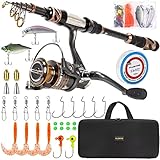
- Top Pick: PLUSINNO Fishing Rod and Reel Combos -24 Ton Carbon Fiber Telescopic Fishing Pole – Spinning Reel 12 +1 Shielded Bearings Stainless Steel BB-Free Carrier Bag Case, Travel Saltwater Freshwater Fishing
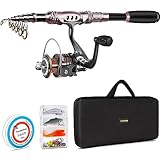
- Best Value: PLUSINNO Fishing Rod and Reel Combos Carbon Fiber Telescopic Fishing Pole with Reel Combo Sea Saltwater Freshwater Kit Fishing Rod Kit (Gold 5.91FT Ambidextrous)
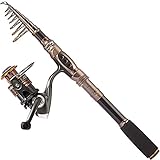
- Premium Choice: PLUSINNO Fishing Rod and Reel Combos Carbon Fiber Telescopic Fishing Rod with Reel Combo Sea Saltwater Freshwater Kit Fishing Rod Kit (Gold 5.91FT Ambidextrous)
Pick a multi-piece travel spinning rod from a mainstream maker such as Ugly Stik, Okuma or St. Croix if you want a pack-and-go setup that behaves like a normal rod, and choose a telescopic rod only when a tiny packed length matters more than casting feel. For a gamer who fishes on weekend trips or between LAN events, the real question is how small the rod folds, how much weight it carries into a backpack, and which fish you plan to chase.
As an Amazon Associate we earn from qualifying purchases at no extra cost to you.

Quick answer by angler type
Most buyers fall into one of three groups. Backpackers and flyers want the shortest packed length. Casual shore anglers want a rod that casts well and survives a car trunk. Kids and first-timers want forgiveness and low fuss. Each group maps to a different rod style, and the table below summarises the main options without quoting prices.
| Style | Best for | Typical stated traits | Limits |
|---|---|---|---|
| Multi-piece travel spinning (Ugly Stik, Okuma Voyager, St. Croix families) | Flights, road trips, general freshwater and light inshore | Makers list rods that break into several sections with a carry tube or case; action and power vary by model | Packed length still longer than telescopic; more joints to line up |
| Telescopic spinning (Goture, Sougayilang and similar generic brands) | Backpacks, emergency kits, kids | Sections slide inside each other; packed length is often under a metre | Heavier tip, less sensitivity, line can snag between sections |
| Compact baitcasting travel rods | Bass and lure anglers who already own baitcasters | Multi-piece blanks, often fast action | Learning curve; backlash for beginners |
| Ultralight multi-piece trout rods | Streams, small lakes, panfish | Short, light blanks for light line and small lures | Too light for heavy cover or large fish |
| Combo kits (rod, reel, line in a bag) | Complete beginners and gifts | Pre-spooled reel, case included | Reel quality varies; often the weakest part |
How to choose a compact rod
Packed length versus fishing length
Compare two numbers on the maker listing: the length when assembled and the length when stowed. A rod that is seven feet long and breaks into four pieces fits in a carry-on suitcase or a duffel with room to spare. Telescopic rods can reach similar fishing lengths while packing to a fraction of that, which is why they dominate searches for compact rods, but the extra ferrules add weight and stiffness at the tip.
Power and action
Power describes how much load the rod handles, from ultralight to heavy. Action describes where it bends, from slow to extra fast. A light or medium-light power with a fast action suits trout, panfish and small bass. A medium power covers bass, catfish from the bank, and light saltwater use. Match the lure weight range printed on the blank with what you actually throw. Makers publish these ranges; stay inside them.
Material
Fibreglass blanks are tough and forgiving, which is why budget travel rods lean on them. Graphite blanks are lighter and more sensitive but can break if closed in a car door or hit while the rod is under tension. Composite blanks blend both. Telescopic carbon rods look attractive on paper, yet reviewers frequently note that the thin top sections need careful handling, so read the care instructions before relying on one for big fish.
Guides and reel seat
Look for sturdy guides that line up when the sections are joined, and a reel seat that locks without wobble. On telescopic rods the guides sit on the outside of each section, so a bent guide can ruin the whole rod. Spares are rarely sold, which matters for long-term value.
Mainstream options worth shortlisting
Ugly Stik travel spinning
Ugly Stik has long been associated with durable composite blanks, and the brand offers travel-oriented spinning models that break into multiple pieces and come with a case. Buyers who want a rod that tolerates rough handling often start here. The trade-off, according to the maker’s own positioning, is weight and a more rugged feel rather than the lightest, most sensitive build.
Okuma Voyager travel series
Okuma markets the Voyager line as multi-piece rods designed for travel, available in spinning and casting formats and a range of powers. It is a practical middle-ground option for anglers who want one rod to cover freshwater and light inshore trips. Always check the model’s listed line and lure ratings rather than assuming all Voyager rods are alike.
St. Croix travel and packable rods
St. Croix builds graphite rods in the United States and has historically offered multi-piece travel series aimed at anglers who care about sensitivity. These sit in the premium tier. They suit travelling anglers who fish often and want a rod that feels like a full-size performance model once assembled.
Telescopic combos from generic brands
Brands such as Goture and Sougayilang sell telescopic rod-and-reel kits that pack small. Treat them as convenience tools: good for a kit bag, a kid’s first trip, or a spare. Reviewers across fishing outlets commonly caution that durability and reel smoothness vary between production batches, so keep expectations modest and avoid horsepower fish.
Decision table: pick X if
| Pick this | If you |
|---|---|
| Multi-piece spinning from Ugly Stik or Okuma | Want one reliable rod for varied freshwater trips and occasional flights |
| Premium multi-piece graphite (St. Croix class) | Fish often, value sensitivity, and accept a higher budget tier |
| Telescopic combo | Need the smallest possible packed size for a bag or glovebox |
| Ultralight multi-piece | Mostly chase trout and panfish with light line |
| Short baitcasting travel rod | Already use baitcasters and fish lures for bass |
Common mistakes
- Buying on packed length alone and ignoring tip strength and guide quality.
- Pairing a heavy reel with an ultralight blank, which unbalances the setup and stresses the joint.
- Exceeding the lure or line rating printed on the rod.
- Skipping the carry tube. Most travel rod damage happens in transit, not on the water.
- Forgetting local licences and rules about rod length, tackle and baits, which vary by region and water body.
Care tips for travel rods
Wipe sections dry after each trip, especially after salt water, and rinse reels per the manufacturer’s instructions. Seat each joint fully before casting; a loose joint can twist or snap under load. For telescopic models, collapse from the tip end toward the butt slowly, so line is not caught between sections. Store them in the supplied tube or sleeve instead of loose in a boot.
Alternatives to consider
If a rod that fits in a backpack is not essential, a standard two-piece rod often performs better at the same budget tier because it has fewer joints and a smoother taper. For kids, a short spincast combo with a push-button reel is simpler than a spinning kit. Anglers who fish from kayaks may also look at short two-piece models that fit in rod holders. A hand line or pocket-size emergency kit is another option for survival bags, though it is not a substitute for a real rod.
Frequently Asked Questions
Are telescopic fishing rods any good?
They are good at one thing, which is packing small. Reviewers generally find that the tip is less sensitive and the guides more fragile than on a standard rod. They suit casual trips and kits but are a poor choice for large or powerful fish.
Can I bring a compact rod on a plane?
Many airlines allow rods as carry-on or checked luggage, and a multi-piece rod in a tube fits more easily than a one-piece model. Rules differ by airline and country, so read the carrier’s policy and the security agency’s guidance before travelling. Hooks and sharp tackle often must go in checked luggage.
What length is best for a compact rod?
Six to seven feet assembled is a common sweet spot for general freshwater use because it balances casting distance with control. Shorter rods suit tight streams and kayaks, while longer ones help shore casting. Always check the maker’s listed lure weight range.
Is a multi-piece rod weaker than a one-piece?
Joints add small stiffness changes and a potential failure point, but modern multi-piece rods are widely used by serious anglers. Seat the sections fully and keep the joints clean to avoid problems.
Should a beginner buy a combo or separate rod and reel?
A combo is convenient and already balanced, which helps a first-timer. Buying separately usually lets you upgrade the reel, which is often where budget combos fall short. Either path works if you stay inside the listed line ratings.
Do I need a licence to fish?
Most regions require a fishing licence for adults, and some require one for younger anglers on certain waters. Check the local wildlife or fisheries agency before you go.







Write Your Review
No reviews yet. Be the first to share your experience!