
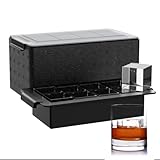
- Top Pick: True Cubes Crystal Clear Ice Cube Maker, 4 Large 2"x2"x2" Ice Cubes for Cocktails and Drinks, Silicone Mold for Pure, Bartender-Quality Ice – Great for Hosting and Entertaining, Whiskey Gifts for Men
- Best Value: Clear Ice Cube Tray for Whiskey: FDDBI 2Inch Clear Ice Cube Maker – Silicone Large Ice Cube Tray – Square Ice Tray for Bourbon Old Fashioned Whisky
- Premium Choice: Clear Ice Cube Maker, 2.5" Stainless Large Round Ice Ball Mold for Whiskey | Space-Saving & Easy-Release Round Ice Cube Molds, Ice Ball Makers with Ice Box & Tong, Whiskey Gifts for Men, 2 Pack
The best clear ice cube maker for most people is an insulated directional-freezing mold that sits in a normal freezer, because it costs the least and needs no plumbing; a countertop clear ice machine suits anyone who wants a steady supply for a bar cart or a streaming desk, and a hand-cut block setup suits the person who enjoys the process. This guide sorts the options by how they work, who each suits, and what to check before buying, so a gamer who likes a proper drink during a long session can pick without guesswork.
- How clear ice actually forms
- At a glance: the main types
- Option 1: insulated molds for a standard freezer
- Option 2: silicone clear ice trays
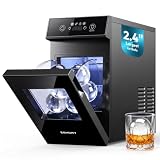
- Option 3: countertop clear ice machines
- Option 4: hand-cut block ice
- Pick this if you are…
- What to check before you buy
- Common mistakes
- Alternatives worth considering
- Frequently Asked Questions
As an Amazon Associate we earn from qualifying purchases at no extra cost to you.


How clear ice actually forms
Ice turns cloudy when dissolved air and minerals get trapped as water freezes from all sides at once. Clear ice products fix this by freezing water in one direction, usually from the top down, so air and impurities are pushed into the water that is still liquid. Insulated molds do this passively inside a regular freezer. Countertop machines do it with a cooled plate and circulating water. Both approaches leave a cloudy layer at one end, which is either trimmed off or sits in a small reservoir.
Starting water matters as well. Makers and food writers commonly note that filtered or low-mineral water helps, and some mold makers suggest boiling water once and letting it cool before filling. Treat that as an optional step; results vary by tap water and freezer.
At a glance: the main types
| Type | Best for | How it works | Main limits |
|---|---|---|---|
| Insulated directional-freezing mold (for example Wintersmiths Phantom style, Tovolo clear ice molds) | Occasional drinks, small budget, no extra counter space | Insulated outer box slows freezing so ice grows top to bottom inside a regular freezer | Slow batches, manual trimming of the cloudy part, takes freezer space |
| Silicone clear ice tray (W&P Peak style) | Quick rinse-and-reuse, large cubes or spheres | Insulating tray body plus a cloudy-water reservoir that is discarded | Small output per batch, cubes may need a short rest before release |
| Countertop clear ice machine | Frequent use, entertaining, a dedicated drink corner | Cooled plate freezes layers of circulating water, then drops finished cubes | Needs counter space and power, noise, regular cleaning, higher budget tier |
| Block freezing and hand cutting | Hobbyists who want custom shapes | Insulated cooler freezes a large block that is trimmed with a knife or saw | Needs tools, care and a lot of time; sharp-tool safety applies |
Specific models change from year to year, and sizes and capacities differ between versions. Read the maker’s own product page for current dimensions, cube size and batch times before ordering, rather than relying on a roundup alone.
Option 1: insulated molds for a standard freezer
Insulated molds are the entry point and the most widely reviewed category. Brands such as Wintersmiths and Tovolo sell insulated carriers that hold a tray or internal cavity, and food and cocktail outlets regularly list them in their clear ice round-ups. The usual process is to fill the mold with water, set it in the freezer with the lid on, wait a day or so, then take it out before it freezes solid so the cloudy bottom layer can be trimmed or released.
Pay attention to three things. First, freezer fit: measure the shelf height and depth, because a tall mold will not suit a crowded drawer. Second, cube shape: two-inch cubes look striking in a rocks glass but will not suit a narrow tumbler. Third, the number of cubes per batch, since a four-cube mold covers a couple of drinks while a larger version covers a small group.
Who it suits: someone who drinks whisky, sparkling water or cold brew a few times a week and does not mind planning ahead.
Option 2: silicone clear ice trays
Silicone trays with an insulating base and a drain or reservoir for the cloudy water, such as the W&P Peak line, trade capacity for convenience. The silicone releases cubes easily, cleans in a sink, and stores flat. Reviewers who cover bar tools often like these for tidy, large cubes, though the amount of ice per batch is small and results depend on how cold and how still the freezer is.
Check that the material is stated as food-grade silicone, and follow the maker’s cleaning guidance, since some trays are rated for the dishwasher and others for hand washing only.
Option 3: countertop clear ice machines
If a mold feels like too much waiting, a countertop machine makes clear cubes on demand. Several appliance makers sell units that freeze water on a chilled plate and release finished cubes into a basket. These units differ in output per day, cube size, reservoir size and whether they need a drain, so the spec sheet is the deciding document. Look for the stated hourly or daily ice output, the water tank capacity, whether the ice is clear on all faces or has a cloudy bottom, and the noise level the maker lists.
Because these are mains-powered appliances, place them on a stable surface with the ventilation space the manual requires, plug them directly into a wall outlet rather than a daisy-chained strip, and keep water away from the plug. If something smells of burning or the cord is damaged, stop using it and contact the maker or a qualified electrician. Descale and clean on the schedule given in the manual, because mineral buildup can both cloud ice and shorten the unit’s life.
Who it suits: a household that uses ice every day, a home bar, or someone who wants clear ice without thinking about it. Expect to be in the mid-range or premium budget tier.
Option 4: hand-cut block ice
Some enthusiasts freeze a block in a small insulated cooler and cut it to shape. It produces the clearest and largest pieces, but it requires a serrated knife, an ice pick or a saw and patience. Cutting ice is a cut and slip risk: use a stable board, a cut-resistant glove if you have one, and keep the work area dry. This route is for people who enjoy the craft; most buyers will find a mold simpler.
Pick this if you are…
| If your situation is… | Pick | Reason |
|---|---|---|
| Tight budget, drinks a few times a week | Insulated mold | Lowest cost of entry, works in any freezer |
| Small apartment, limited freezer shelf | Flat silicone tray | Slim, easy to store |
| Hosting often or daily iced drinks | Countertop machine | Continuous supply |
| Want sculpted, oversized pieces | Block and cut | Full control of shape |
| Wants minimal effort | Countertop machine | No trimming or timing |
What to check before you buy
- Cube size versus glass size. A two-inch cube needs a wide rocks glass, while one-inch cubes fit highball glasses.
- Freezer clearance. Measure height, width and depth, and check whether the mold must sit flat.
- Materials. Look for food-grade silicone or BPA-free plastic stated by the maker, and check cleaning instructions.
- Batch yield. Count how many cubes you realistically need per session.
- Noise and heat. Countertop machines make compressor and pump sounds, and they vent warm air.
- Cleaning access. Wide openings are easier to descale and sanitize.
Common mistakes
- Pulling the mold out too late. If the block freezes solid, the cloudy layer merges with the clear part and trimming becomes harder.
- Using a very cold or frost-forming freezer shelf, which can crack large cubes. Letting a cube rest briefly at room temperature before pouring usually reduces cracking.
- Skipping filtered water if your tap water is hard.
- Choosing a machine without checking where the drain or overflow goes.
- Storing clear ice loose in an open bin where it picks up freezer odors; use a covered container.
Alternatives worth considering
- A standard silicone sphere or large-cube tray. It will not be fully clear, but slow-melting large cubes are still a step up from small fridge ice.
- A nugget or pellet ice maker. Better if you want soft chewable ice for soda and energy drinks rather than a showpiece cube.
- A fridge with a built-in clear ice feature. A few premium refrigerators advertise this; check the maker’s documentation for the details of the feature.
Frequently Asked Questions
Is clear ice better or just nicer to look at?
Clear ice is denser and has fewer trapped bubbles, so it tends to melt more slowly and crack less in a glass. Whether that matters depends on the drink, but bartenders often prefer it for spirits served over a large cube.
Do I need distilled water?
No special water is required, though filtered or low-mineral water usually gives better clarity. Distilled water can work, but results vary with the mold and freezer, so follow your mold maker’s instructions first.
How long does a mold take to make clear ice?
Makers generally describe a freeze time of many hours, often around a day, depending on mold size and freezer temperature. Follow the instructions supplied with the mold, because removal timing affects how much of the block is clear.
Why is there a cloudy layer at the bottom of my cube?
That layer is where air and impurities collect as the water freezes downward. It is normal for directional-freezing molds, and you either trim it off or let it release into the reservoir the design provides.
Are countertop clear ice machines worth it?
They are worth it when you use ice often and want it without waiting. If you only want a few clear cubes a week, an insulated mold is simpler and costs far less.
Can I use these molds for anything besides cocktails?
Yes. Clear cubes work in cold brew, iced tea, sparkling water and soft drinks, and they dilute slowly. Just wash the mold between uses so flavors do not carry over.







Write Your Review
No reviews yet. Be the first to share your experience!