
- Top Pick: MSI Thin 15.6 inch FHD 144Hz Gaming Laptop Intel Core i5-13420H NVIDIA GeForce RTX 4060-16GB DDR4 512GB SSD Gray (2025)
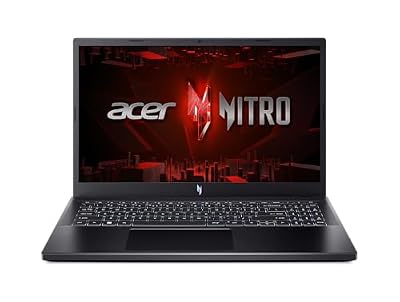
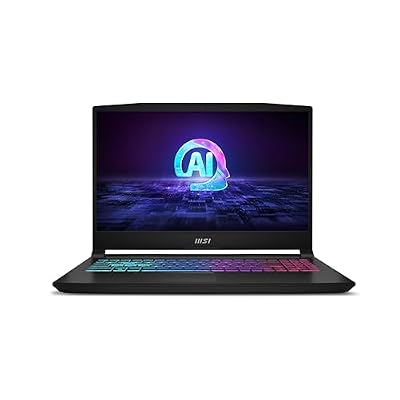
- Best Value: msi Katana A15 AI Gaming Laptop 15.6” QHD 165Hz – Ryzen 9-8945HS, RTX 4070, 32GB DDR5, 1TB SSD, Cooler Boost 5, Windows 11: Black B8VG-450US
- Premium Choice: ASUS ROG Strix G16 Gaming Laptop, 165Hz Display, NVIDIA® GeForce RTX™ 4060, Intel Core i7-13650HX, 16GB DDR5, 1TB PCIe Gen4 SSD, Wi-Fi 6E, Windows 11, G614JV-AS74


rtx 4060 vs 4070 laptop is the most common step-up question in gaming laptops, because these two chips define the gap between strong 1080p play and confident 1440p gaming. The short answer is that the 4070 is the better performer and the more future-proof buy, but the 4060 remains the smarter value for pure 1080p players. This comparison breaks down the real frame difference, the resolution that justifies each, and how today’s pricing should shape whether the upgrade is worth it.
As an Amazon Associate we earn from qualifying purchases at no extra cost to you.


The Quick Verdict on RTX 4060 vs 4070 Laptop
If you only read one section, read this. The 4070 wins on raw frames, 1440p capability, and longevity, while the 4060 wins on price and efficiency. The deciding factor is your screen: if you game at 1080p the 4060 is plenty, but if you want 1440p the 4070 is the chip built for it.
Who Wins on Performance
The 4070 is the clear performance winner. At matched wattage it typically delivers a meaningful lead over the 4060, frequently in the region of 15 to 25 percent, and that gap widens at higher resolutions where the extra power and memory bandwidth matter most.
At 1080p both chips are strong and the difference shrinks, since neither is fully stressed. At 1440p the gap opens up, with the 4070 holding high settings comfortably while the 4060 leans more heavily on upscaling to keep frames smooth in demanding titles.
That resolution-dependent gap is the single most useful thing to understand here, because it explains why the same two chips can feel nearly identical to one buyer and worlds apart to another, depending entirely on the screen they are paired with.
Who Wins on Value
Value depends entirely on your resolution. For a 1080p player, the 4060 is the better buy, because much of the 4070’s advantage goes unused and the savings are real. Paying the premium for frames you will not see is poor value at that resolution.
For a 1440p player, the 4070 flips the equation, delivering performance the 4060 cannot match without heavy compromise. The honest rule is to match the chip to the panel: a 4060 behind a 1080p screen and a 4070 behind a 1440p screen are both excellent value, while the wrong pairing wastes money on either side.
Before you shop, decide your resolution honestly rather than aspirationally. Buying a 4070 for a 1080p screen you have no real plans to upgrade is a common and expensive mismatch, just as pairing a 4060 with a new 1440p panel quietly leaves performance on the table.
Quick Comparison Table
The table distills the trade-offs so you can decide in seconds before reading the deeper analysis below.
| Factor | RTX 4060 laptop | RTX 4070 laptop |
|---|---|---|
| Best resolution | 1080p high-refresh | 1440p high-refresh |
| Typical TGP | 75–140 W | 90–140 W |
| Relative frames | Baseline | +15% to +25% |
| Memory headroom | Adequate | More comfortable |
| Longevity | Good | Better |
| Best for | 1080p value | 1440p and future-proofing |
If you already know which resolution you are buying for, you can compare live prices and configurations for both chips through the links in this article before stock and deals shift again.
Deep Dive Face-Off Between the Two Chips
Headline frames hide the detail. To compare the 4060 vs 4070 laptop honestly, you have to look at how each performs across resolutions, how wattage and cooling shape sustained output, and the real trade-offs that come with stepping up.
Performance Across 1080p and 1440p
At 1080p, both chips push high frame rates, and a high-TGP 4060 can feel nearly as fast as a 4070 in lighter titles. This is why 1080p buyers rarely need to spend up, since the 4070’s headroom largely sits idle at that resolution.
At 1440p, the picture changes. The 4070 sustains high settings where the 4060 starts to strain, and DLSS plus frame generation, while helpful on both, give the 4070 more comfortable margins in the heaviest games. For 1440p ambitions, the upgrade pays off clearly.
It is worth noting how upscaling shifts this balance over time. As more titles adopt frame generation, both chips gain, but the 4070’s higher base means it converts those gains into smoother 1440p play, widening rather than closing the practical gap in the heaviest modern games.
TGP, Thermals, and Sustained Frames
Both chips scale heavily with TGP, so a high-wattage 4060 can close on a low-wattage 4070, and a low-wattage 4070 can disappoint. Reading the wattage is essential, because a poorly configured 4070 can lose its advantage entirely against a strong 4060.
The 4070 runs a little warmer and demands better cooling to hold its lead, especially in thin chassis. A vapor chamber and capable fans, plus a cooling pad for long sessions, let it sustain the frames that justify its price over the cooler, more forgiving 4060.
In practical terms, never buy a 4070 purely on the name expecting a guaranteed leap. A low-wattage 4070 in a thin shell can land close to a high-wattage 4060, so confirm the TGP and the cooling design before deciding the upgrade is real for the specific laptop you want.
Pros and Cons of Each Chip
A clean trade-off list makes the upgrade decision concrete.
RTX 4060 pros: lower price, cooler and quieter, excellent 1080p value. 4060 cons: limited 1440p headroom and tighter memory for the heaviest future titles. RTX 4070 pros: strong 1440p frames, more headroom, better longevity. 4070 cons: higher price, warmer, and overkill for pure 1080p.
The pattern is clear: the 4060 is the value pick for 1080p, the 4070 the performance pick for 1440p and the years beyond.
What Market News Means for 4060 vs 4070 Buyers
Hardware timing in 2026 is not made in a vacuum. Two developments are shaping the price and availability of both chips at once, and understanding them helps you judge whether to buy now or hold.
Rising Prices Raise the Cost of Stepping Up
Laptop and component prices have been trending upward, driven largely by memory costs feeding into finished machines. Because both chips live in sealed laptops, neither lets you offset increases by reusing parts, so a rising market lifts the price of the 4070 upgrade along with everything else.
The practical effect is that the premium for stepping up to a 4070 can feel steeper in a high-priced market, which makes it more important than ever to be sure your resolution justifies the jump before paying it. For a committed 1440p buyer it still does; for a 1080p buyer it rarely will.
One way to manage this is to price both chips as complete laptops rather than as GPUs in isolation, since the rest of the machine moves with the market too. If the 4070 build’s total premium stays modest for your needs, it remains worth it; if it has ballooned, the 4060 looks stronger.
AI Demand Sets the Supply Priority
The United States has cleared Nvidia to sell the H200, one of its most powerful AI accelerators, to China, a reminder that AI demand now sets the priority for advanced memory and packaging capacity. When that capacity is pulled toward high-margin AI parts, consumer GPUs compete for what is left.
For a buyer weighing the 4060 against the 4070, the signal is to temper hopes of aggressive consumer price cuts in the near term, since the most valuable supply is being routed elsewhere. Buying the right chip for your needs now is wiser than waiting on a discount that may not come.
This is not a reason to panic-buy, but it is a reason to be realistic. The forces shaping consumer GPU supply increasingly favor AI workloads, so planning around stable-to-firm prices, rather than an imminent crash, leads to better timing for either the 4060 or the 4070.
Why Waiting Rarely Pays Off
There is genuine good news, but it is weak and distant. Prices have stopped climbing as steeply as in late 2025, and the chain has logged a stretch of relative stability, though vendors still warn of volatility rather than a clear decline ahead.
New supply is opening up too, but Micron’s two Idaho plants and added DDR5 capacity are not expected to come online until 2027 to 2028. In short, prices have flattened, not fallen, so the practical move is to buy the chip that matches your resolution now rather than gambling on relief that is years away.
The Alternative and Final Recommendation
Not every buyer sits cleanly on one side. If the 4070 feels like a stretch or the 4060 feels like a compromise, there is an alternative worth weighing before you decide.
A Sensible Alternative to Consider
If 1440p tempts you but the 4070 is out of budget, a high-TGP 4060 paired with aggressive use of DLSS can bridge much of the gap in many titles. If money is no object, a 4080 laptop steps up to maxed 1440p, though at steeply diminishing returns for most players.
For the majority, though, the 4060 and 4070 cover the mainstream perfectly, and the alternative only makes sense at the edges of your budget or ambition. Weigh it only if your situation is unusual; otherwise the core matchup decides it.
For the small group with very specific needs, such as creators who lean on the GPU for rendering, stepping outside this pair can pay off, since the extra memory and power of a higher tier do real work. For everyone else, the 4060 and 4070 remain the sensible bookends of the decision.
Who Should Choose the RTX 4060
Choose the 4060 if you game at 1080p, want the best value, and prefer a cooler, quieter, more affordable laptop. For most mainstream players, it delivers everything they actually use without paying for idle headroom.
It is the rational stopping point for 1080p gaming and stays relevant for years thanks to modern upscaling. You can check current 4060 laptop deals through the links here.
Who Should Choose the RTX 4070
Choose the 4070 if you want 1440p gaming, longer future-proofing, and more headroom for demanding titles. It is the chip built for the resolution above 1080p, and a high-TGP model in a well-cooled chassis is one of the best value laptops available.
For players investing in a machine to last several years at higher settings, the upgrade is worth it. You can compare current high-TGP 4070 laptops through the links here.
See More:
- best gpu for stable diffusion
- best gpu for deep learning
- best gpu for ai training
- best gpu for ai
- best gpu for machine learning
Final Verdict
In the end, the rtx 4060 vs 4070 laptop decision is settled by your screen and your timeline. The 4060 is the smarter value for 1080p, while the 4070 is the better performer and the future-proof choice for 1440p. With prices flat and AI demand absorbing the best supply, the right move is to match the chip to your resolution and buy at a fair price now rather than waiting on relief that is still years away. Use the links in this guide to compare current 4060 and 4070 laptops before the market shifts again.
Frequently Asked Questions
How much faster is the higher tier chip?
Expect roughly fifteen to twenty five percent more frames at matched wattage, widening in ray traced and memory bandwidth heavy titles. The gap shrinks if the higher tier laptop is configured at low power and the lower tier one runs at maximum, which is why checking the wattage matters as much as the model.
Do both have the same VRAM?
Yes, both carry eight gigabytes on a 128-bit bus, which surprises many buyers who expect the higher tier to bring more memory. That means the step up buys you core performance and bandwidth, not headroom for larger texture packs, and both cards hit the same memory wall in the most demanding titles.
Is the price difference worth paying?
If the premium is small, yes, particularly for 1440p panels where the extra performance keeps you above sixty frames without dropping to aggressive upscaling. If the premium is large, put the money toward more system memory, a larger SSD or a better display instead, since neither chip transforms your resolution ceiling.
Which is better for a 1440p or 1600p screen?
The higher tier chip, clearly. Modern gaming laptops ship high resolution panels even on midrange configurations, and the lower tier part increasingly needs performance mode upscaling to keep pace. The seventy class gives you enough margin to run quality mode upscaling and still hold high refresh rates.
Does either offer better battery life?
The lower tier chip is the more efficient of the two at light loads and in laptops with a lower configured wattage, so it generally yields slightly longer unplugged runtime and quieter fans. Neither will game meaningfully on battery though, since both are heavily power limited away from the mains adapter.





Write Your Review
No reviews yet. Be the first to share your experience!