
- Top Pick: Carfidant Scratch & Swirl Remover with Ceramic Sealer – Car Scratch Repair Kit with Applicator Pad – Removes Light Scratches, Swirls, Scuffs & Water Spots – Safe for All Paint Colors – 8.4 fl oz
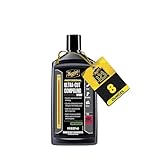
- Best Value: Meguiar's Professional M105 Ultra Cut Compound, 8oz | Car Rubbing Compound , Removes Scratches & Heavy Swirls , Adds Shine, Safe & Effective on All Glossy Car Paint & Clear Coats
- Premium Choice: Car Scratch Remover, Scratch Repair & Swirl Remover Kit for Vehicles 10floz | Scratch Eraser Restorer & Polishing with Pad and Nano Sparkle Cloth for Light Scratches, Oxidation, Water Spots
Fine swirls and light surface scratches respond to a fine polish such as Meguiar’s Ultimate Polish or Chemical Guys VSS, deeper marks that are still in the clear coat need a cutting compound such as Meguiar’s Ultimate Compound or Griot’s Garage compounds, and anything you can catch with a fingernail has usually gone past what polish can fix. The right product depends on scratch depth, whether you will use a machine or your hand, and how much paint you are willing to remove.
As an Amazon Associate we earn from qualifying purchases at no extra cost to you.



First, judge the scratch
Modern car paint is layered: primer, colour, then a clear coat that is typically a very thin layer. Polishes work by abrading a tiny amount of clear coat to level the surface around a scratch. They cannot fill or refill missing paint in any lasting way.
- Swirl marks and light hazing: shallow clear-coat marks, usually fixed with a fine polish.
- Light scratches you can see but not feel: try a polish first, then a mild compound if it remains.
- Scratch your fingernail catches in: likely through most of the clear coat; compound may reduce it, but touch-up paint or a body shop may be needed.
- Colour visible or bare metal or primer: polish will not fix it; seal the area to prevent rust and see a bodyshop or use touch-up paint.
A quick wet-surface test helps: if the scratch disappears when the panel is wet, it is probably shallow and a good candidate for polishing.
At a glance: polish and compound types
| Product type | Examples | Best for | Limits |
|---|---|---|---|
| Fine finishing polish | Meguiar’s Ultimate Polish, Chemical Guys VSS | Light swirls, restoring gloss after compounding | Little cutting power on real scratches |
| Cutting compound | Meguiar’s Ultimate Compound, Griot’s Garage compounds | Moderate scratches, oxidation, dull paint | Removes more clear coat; follow with polish |
| All-in-one scratch and swirl remover | 3M Scratch and Swirl Remover, Turtle Wax scratch repair products | Beginners, quick hand repairs | Compromise between cut and finish |
| Machine-oriented compound and polish pairs | Meguiar’s M105 and M205, Griot’s Garage 3-inch and 6-inch line | Dual-action polisher users | Need a polisher and pads |
| Touch-up paint pen | Colour-matched maker pens | Stone chips and scratches through to colour | Does not level; careful application needed |
How to choose
Hand or machine
Hand application is fine for small spots and light marks. For a whole panel, reviewers generally point to a dual-action polisher, which is considered safer for beginners than a rotary machine. Several makers sell polishers and pad kits designed to work with their compounds, so matching products avoids guesswork.
Cut level
Compounds are graded by aggressiveness. Start with the least aggressive product that might work and step up only if needed. Taking off too much clear coat is permanent and may expose colour coat.
Abrasive technology
Modern products often use diminishing abrasives that break down as you work, which makes a hand job more forgiving. The maker’s label will state whether a product uses this approach.
Paint compatibility
Most products are meant for clear-coated paint. Single-stage paint on older vehicles, matte finishes and vinyl wraps behave differently; matte paint in particular should never be polished, since polish creates shiny spots.
Budget tiers
| Tier | What suits it | Trade-off |
|---|---|---|
| Budget | Turtle Wax or 3M scratch removers, applied by hand | Convenient, slower and less finishing quality |
| Mid-range | Meguiar’s Ultimate line, Chemical Guys | Better results; may need pads and a polisher to shine |
| Premium | Griot’s Garage systems, professional-leaning compounds | Best results with a machine, steeper learning curve |
Pick this if you…
| If you… | Pick |
|---|---|
| Have light swirls from automatic washing | Fine polish, then a sealant or wax |
| Have a few moderate scratches and no machine | Hand-friendly compound with diminishing abrasives |
| Own a dual-action polisher | Matched compound and polish pairing from one maker |
| Want a fast spot job on a door scuff | All-in-one scratch and swirl remover |
| Have deep scratches through to primer | Touch-up paint or body shop, not polish |
Step-by-step approach
- Wash and dry the car; any grit left on the panel will cause fresh scratches.
- Clay bar or use a decontamination step if the paint feels rough.
- Tape off trim and rubber edges, since compounds can stain plastic.
- Apply a small amount of product to a clean foam applicator or pad and work a small area at a time.
- Wipe residue with a clean microfibre and inspect in good light.
- Repeat only as needed, then finish with polish and protect with wax or sealant.
Common mistakes
- Skipping the wash and grinding dirt into the paint.
- Working in direct sun or on a hot panel, which makes products dry out quickly.
- Using aggressive compound first rather than escalating gradually.
- Polishing edges, body lines and sharp creases where clear coat is thinnest.
- Forgetting to apply wax or sealant after polishing, leaving bare paint exposed.
- Expecting polish to remove a scratch that has gone through the clear coat.
Alternatives to consider
- Professional paint correction: useful for high-value cars or large areas of damage.
- Ceramic coating: protects paint after correction but does not repair existing scratches.
- Paint protection film: best on new cars to avoid scratches in the first place.
- Touch-up paint kits: for chips and deeper scratches that polish cannot reach.
Tools and pads that go with the polish
The product is only half of the result. Foam pads come in cutting, polishing and finishing grades, and makers such as Meguiar’s and Griot’s Garage sell pads matched to their compounds. A cutting pad with compound removes defects, a polishing pad with polish refines the surface, and a soft finishing pad adds gloss. Using the wrong combination, such as an aggressive pad with fine polish, wastes effort or leaves hazing.
Lighting also matters. Work under bright, angled light or a handheld inspection lamp so you can see whether a scratch is truly gone. Keep a stack of clean microfibre towels; a towel contaminated with dried compound can add new marks. For hand work, use a firm foam applicator, apply moderate pressure and work in overlapping straight passes or small circles over an area about the size of a dinner plate. If a scratch is unchanged after two or three careful passes, stop and reassess rather than pressing harder, because the scratch is probably deeper than the product can handle.
Frequently Asked Questions
Can polish remove a deep scratch?
Not if it has penetrated the clear coat. Polish may soften the edges and make it less visible, but the missing paint needs touch-up or a bodyshop repair.
Is a compound the same as a polish?
No. A compound is more abrasive and removes more material to level scratches, while a polish is finer and refines the finish. Many repairs use compound first, then polish.
Can I polish by hand and get decent results?
For small spots and light marks, yes. Large panels are tiring and uneven by hand, so a dual-action polisher is the usual step up.
How often can I polish my car?
Because polishing removes clear coat, keep it occasional and only when needed. Regular washing and a protective wax or sealant reduce how often you need to correct paint.
Will polish work on a matte or wrapped car?
No, and it can damage the finish. Follow the maker’s care guidance for matte paint or vinyl wraps.
Do I need to wax after polishing?
Yes, polishing leaves the paint bare. Apply a wax, sealant or coating so the freshly corrected surface stays protected.





Write Your Review
No reviews yet. Be the first to share your experience!