
- Top Pick: FingerLakes 3.5mm Microphone Assembly Mic for Car Vehicle Head Unit Bluetooth Enabled Stereo Radio GPS DVD
- Best Value: Bluetooth Karaoke Microphone, Portable Car Karaoke Microphone with Duet Mode, Dynamic Lights, Built-in Speaker, Vocal Remover, Music Recording, Gift for Adults & Kids, Wireless Karaoke Mic for Home
- Premium Choice: Car Microphone 3.5mm, Car Radio Mic for Pioneer, Kenwood Vehicle Head Unit | Enabled Stereo Audio GPS DVD Mic – External Hands Free Assembly Mike for Boss, JVC, Sony, Jensen and Alpine
For most drivers, a visor-mounted Bluetooth speakerphone with a built-in noise-cancelling microphone is the best car Bluetooth microphone, while an AUX or FM adapter with a dual-mic array suits anyone who wants calls to play through the existing car speakers. A plug-in unit is the better fit if your car has no hands-free system at all, and a hard-wired module is the better fit if you want the factory buttons to answer calls. Gamers who spend long hours in voice chat or take squad calls on the road will care about the same two things as everyone else: how clean the voice pickup is and how little fiddling the unit needs.
As an Amazon Associate we earn from qualifying purchases at no extra cost to you.
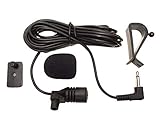

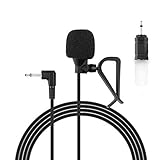

Three types of car Bluetooth microphone
The phrase “car Bluetooth microphone” covers three different product families, and picking the wrong family matters more than picking the wrong brand.
- Visor speakerphones. A small unit clips to the sun visor, close to your mouth, and has its own speaker and microphone. It pairs with your phone and needs no connection to the car at all.
- AUX or FM adapters with a microphone. These plug into the lighter socket or USB port and send audio to the car stereo through the 3.5 mm input or an FM frequency. The microphone sits on the unit or on a short cable.
- Wired or head-unit microphones. These replace or supplement a microphone for an aftermarket stereo, or integrate with the factory radio. They give the cleanest result but need installation and compatibility with your head unit.
At a glance: models roundups mention in 2026
The table below uses details that the makers or recent roundups list. Treat the specifications as stated claims and confirm them against the product manual before you buy.
| Model | Type | Stated features | Best for | Limits |
|---|---|---|---|---|
| Avantree CK11 | Visor speakerphone | Bluetooth 5.0, 3W speaker, noise reduction (as listed by reviewers) | Call clarity without any wiring | Speaker volume is limited on a loud highway |
| Besign BK06 | Visor speakerphone | Dual 2W speakers, per a roundup | Louder output in noisy cabins | Clip placement affects voice pickup |
| Avantree Roadtrip | Speakerphone plus FM transmitter | Works as a hands-free speaker or sends audio over FM | Drivers who want both modes | FM can pick up interference in cities |
| Nulaxy KM18 | FM/AUX adapter | Included in a 2026 adapter guide | Cars with a lighter socket and FM radio | Audio quality depends on a free FM channel |
| UGREEN Bluetooth 5.4 adapter | AUX adapter | Bluetooth 5.4, per the maker’s name for the line | Cars with a 3.5 mm input | Needs an AUX port |
| GROM BT3 | Wired interface | Connects to the factory stereo; operated from factory buttons | Keeping a stock look | Installation and vehicle compatibility |
| JOYROOM JR-CB3 | FM/AUX adapter | Dual-microphone array with CVC 8.0 noise cancellation | Noisy cars where the caller needs to hear you clearly | Relies on the car stereo for playback |
Review sites that cover this category are mostly affiliate-style roundups rather than lab studies, so the useful signal is the pattern: visor speakerphones lead for ease, and adapters with dual microphones lead for car-speaker playback.
How to choose: the specs that matter
Noise cancellation: CVC and dual microphones
CVC (Clear Voice Capture) is a noise-suppression technology for the microphone signal, and version numbers such as 8.0 appear in the specs of several adapters. Two microphones let the unit compare ambient noise with your voice and filter out the difference. For a car, where road, wind and air-conditioning noise are constant, a dual-mic design is the feature most worth paying for. A single bare microphone on a long cable is the weaker option.
Microphone position
Distance from your mouth beats almost every spec. A visor unit sits roughly an arm’s length away and points at your face. A microphone built into a cigarette-lighter adapter sits low and far, so voice pickup suffers unless the unit has a good noise-cancelling array. If the listener on the other end keeps asking you to repeat yourself, position is usually the cause before hardware is.
Bluetooth version and multipoint
Bluetooth 5.0 and later improve range and stability, which helps when a phone sits in a bag or pocket. Multipoint pairing, where two phones stay connected, is useful if you carry a work phone and a personal phone. Not every model lists it, so look for it on the maker’s page if you need it.
Battery or power source
Visor units are battery powered, and makers list talk times in the tens of hours; roundups cite figures such as 22 hours for one model and 35 hours for another. Adapters draw power from the car, so there is nothing to charge but the unit switches off with the ignition. Decide whether you would rather recharge a visor unit now and then or have an adapter that is always ready.
Voice assistant and call answering
Some visor speakerphones answer calls by voice or with a single large button, and some trigger your phone’s assistant. This matters for safety: a big button within reach of the steering wheel is better than hunting for a small one.
Pick the right type if…
| Pick this type if… | Why | Watch out for |
|---|---|---|
| Your car has no Bluetooth and you want zero installation | A visor speakerphone works in any vehicle and moves between cars | A battery to recharge |
| You want calls and music through the car speakers | An AUX or FM adapter routes both | FM interference, AUX port needed |
| You want the cleanest voice and a stock look | A wired interface uses the factory controls | Compatibility and installation time |
| You drive a noisy older car or truck | A dual-mic design with CVC noise cancellation, ideally with a louder speaker | Cheap units often exaggerate their noise-cancelling claims |
| You mostly take work calls | Multipoint and a clear call button | Not every model lists multipoint |
Budget, mid-range and premium tiers
Budget. Basic visor clips and simple FM transmitters cover occasional calls. Expect a single microphone and a modest speaker. They are fine for quiet cars and short calls.
Mid-range. This tier is where the most useful features arrive together: Bluetooth 5.x, dual speakers or a 3W speaker, noise reduction, and longer battery life. Most of the visor models named above sit here.
Premium. Wired or head-unit interfaces and well-known audio brands sit at the top. You pay for installation quality and reliable pickup rather than extra features.
Alternatives worth considering
- A wireless headset. A mono Bluetooth earpiece keeps the microphone next to your mouth, which is better for voice quality than any dash unit. Check local rules on wearing earpieces while driving.
- Your phone’s built-in car mode. Wireless CarPlay or Android Auto in newer cars uses the car’s own microphone, so no extra purchase is needed.
- A new head unit. If you plan to upgrade the stereo anyway, many aftermarket units accept an external microphone designed for that model.
Common mistakes
- Buying an FM transmitter in a city where every frequency is busy, then blaming the microphone for static.
- Clipping a visor unit too far from your mouth or behind the visor flap.
- Assuming a bigger speaker means better voice pickup. Pickup depends on the microphone, not the speaker.
- Leaving a lithium battery unit in a closed hot car all summer. Follow the maker’s temperature guidance.
- Ignoring legal requirements: hands-free rules differ by region, and a unit that needs button presses may still count as handling your phone.
Frequently Asked Questions
What is the best type of car Bluetooth microphone for clear calls?
A visor speakerphone with a noise-cancelling microphone is the most common recommendation because the microphone sits close to your mouth. An adapter with dual microphones and CVC noise cancellation is the alternative when you want audio through the car speakers.
Can I use a Bluetooth microphone with an older car that has no Bluetooth?
Yes. A visor speakerphone needs nothing from the car, and an adapter needs only a lighter socket plus either an AUX input or a working FM radio. Cars without either connection can still use a visor unit.
Why do people say I sound distant or echoey on calls?
The usual causes are microphone distance, road noise, and the speaker volume feeding back into the microphone. Move the unit closer to your face, lower the speaker volume a notch, and choose a model with echo cancellation.
Does Bluetooth version matter for call quality?
Newer versions improve connection stability and range, but call quality depends mostly on the microphone array and the noise-cancelling processing. A Bluetooth 5.0 unit with good noise reduction can outperform a newer version with a single poor microphone.
Is it legal to use a Bluetooth microphone while driving?
Rules vary by region. Many places allow hands-free calls but ban holding or manipulating a phone. Read your local traffic rules, and choose a unit you can operate without looking down.
How long does the battery last on a visor speakerphone?
Makers list talk times from roughly twenty hours upward, with some listings citing figures in the thirties. Real life varies with volume and temperature, so treat the stated number as a ceiling and charge before long trips.







Write Your Review
No reviews yet. Be the first to share your experience!