
- Top Pick: COVACURE Camping Blanket, Packable Down Alternative Outdoor Blanket 57X78'' | Waterproof & Lightweight Blanket with Snap Buttons, Wearable Warm Puffy Quilt Blocks Wet. For Camping, Hiking, Backpack-Green
- Best Value: iClimb 3M Thinsulate Insulation Warm Blanket (Dark Grey, 1 lb) | Ultralight Compact, for Camping Backpacking Hiking
- Premium Choice: Wise Owl Outfitters Camping Blanket, Packable Puffy Quilt for Backpacking | Woobie-Style Poncho, Cozy Warmth, Water Resistant, Compact Travel, Unfolds 6.5×4.5ft, Quick-Snap Clasps & Tie-Down Loops
For most backpackers who want a packable blanket for camp and cold nights, a synthetic insulated blanket such as the Rumpl Nanoloft or Original Puffy is the easiest all-round pick; ultralight hikers who care about grams are better served by a down camp quilt like the Sea to Summit Ember or a cottage-brand quilt from Enlightened Equipment; and anyone who only needs a ground layer or windbreak at camp can use a pocket blanket like Matador’s. The right choice comes down to weight, packed size, how damp your climate is, and whether you want a blanket for camp, a sleep layer, or both.
As an Amazon Associate we earn from qualifying purchases at no extra cost to you.


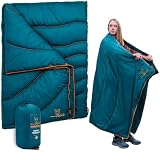

At a Glance: Blanket Types Compared
| Type | Example makers | Best for | Limits |
|---|---|---|---|
| Synthetic puffy blanket | Rumpl Original Puffy, Nanoloft | Camp chairs, car camping, light backpacking | Bulkier than down for the warmth |
| Down camp blanket or quilt | Sea to Summit Ember, Enlightened Equipment, Hammock Gear | Light weight and small pack size | Loses loft when soaked; needs careful care |
| Hybrid quilt | Therm-a-Rest Corus, Nemo | Backpackers who use it as a sleep system | Needs matching pad and strapping |
| Fleece blanket | Various makers | Budget camp lounging | Heavy and bulky for its warmth |
| Pocket or ground blanket | Matador Pocket Blanket | Picnic, ground cover, wind shield | Not insulating |
What a Backpacking Blanket Should Do
A blanket for a pack has to earn its space. Makers describe the useful ones as lightweight, compressible, and either water-resistant or quick to dry. Because backpackers often sleep in a tent or hammock, a quilt style with a footbox or cinch cord can replace a sleeping bag in mild weather. Reviewers at outlets such as Outdoor Gear Lab, Switchback Travel, and Backpacker magazine often recommend picking by temperature range and packed volume rather than looks.
Main Options Explained
Synthetic puffy blankets
Rumpl built its brand on puffy blankets that use synthetic insulation and a ripstop shell. The maker lists them as water-resistant and machine washable, with corner pockets and a compression sack. The Nanoloft line is marketed as lighter and more compact. They suit camp use and short trips, but they are heavier and bulkier than a quilt from an ultralight maker.
Down quilts and camp blankets
Down offers the best warmth for its weight. Sea to Summit’s Ember line, Enlightened Equipment’s quilts, and Hammock Gear’s quilts are examples of this approach. Makers rate them by temperature or fill weight and offer different lengths and widths. Down loses insulation if soaked, so a hydrophobic treatment and a dry bag are worth considering. Look at the maker’s fill-power and fill-weight figures, and keep in mind that temperature ratings are guidelines, not guarantees.
Hybrid or strap-on quilts
Therm-a-Rest and Nemo offer quilts designed to attach to a sleeping pad, which reduces cold spots underneath. They suit backpackers who already own a pad and want a lighter alternative to a mummy bag.
Pocket blankets
Pocket blankets fold to the size of a fist and offer a clean spot to sit or a wind barrier. They provide little warmth, so they complement a real insulating layer instead of replacing it.
How to Choose
- Weight and pack size: Compare the maker’s stated weight and stuffed dimensions. Ultralight hikers will find big differences between down and synthetic.
- Insulation type: Down is lighter; synthetic handles damp conditions better.
- Shell fabric: Ripstop nylon or polyester with a water-resistant finish resists campsite wear.
- Size: Choose a length that covers your shoulders to feet, and check the width if you are broad-shouldered or like to move around.
- Attachments: Straps, snaps, and cinch cords make a blanket work as a quilt in a tent or hammock.
- Care: Check wash and dry instructions from the maker, especially for down.
- Temperature rating: Rated figures vary by maker and test method, so pair with clothing layers and a good pad.
Pick X If Decision Table
| If you … | Pick |
|---|---|
| Camp mostly by car or short trails | Rumpl puffy blanket |
| Count every gram | Down quilt from Enlightened Equipment or Sea to Summit |
| Hike in wet climates | Synthetic insulation |
| Already own a sleeping pad | Strap-on hybrid quilt such as Therm-a-Rest Corus |
| Only need a seat or windbreak | Pocket blanket |
| Sleep in a hammock | Quilt made for hammock use, often called an underquilt or top quilt |
Budget Tiers
Budget options include fleece throws and basic synthetic camp blankets, which are comfortable but heavy. Mid-range covers branded synthetic puffy blankets and entry-level quilts. Premium covers high-fill-power down quilts made for ultralight users. Most casual backpackers do fine in the mid-range, while thru-hikers often justify premium down.
Safety Notes
A blanket is not a substitute for proper sleep gear in cold conditions. Hypothermia is a real risk when temperatures drop, so check forecasts, carry layers, and follow the guidance of land managers and your gear makers. Keep blankets away from campfires and stoves, since many shell fabrics melt or ignite, and avoid heating them near open flame.
Common Mistakes
- Choosing by looks instead of the maker’s temperature range and weight.
- Leaving down wet in a stuff sack for days.
- Buying a blanket too short or narrow and getting drafts.
- Skipping a sleeping pad and relying on the blanket alone, which loses heat to the ground.
- Storing the blanket compressed for long periods, which can reduce loft.
Care Tips
Store blankets loosely in a large cotton bag at home, wash only as the maker describes, use a gentle detergent for down, and dry completely with low heat. Air out the blanket after each trip to reduce odors and moisture buildup.
Frequently Asked Questions
Can a blanket replace a sleeping bag?
In mild weather, a quilt or well-insulated blanket with a sleeping pad can work. In cold conditions, a bag with a hood and draft control is usually safer.
Is down or synthetic better for backpacking?
Down is lighter and packs smaller, while synthetic tolerates moisture better. Choose based on your climate and how much you value weight savings.
How warm is a Rumpl blanket?
The maker markets it as a camp and travel blanket and publishes its own comfort guidance. Reviewers describe it as suited to camp lounging and mild nights, not winter sleep.
Are pocket blankets worth carrying?
They are very light, and some hikers carry one as a ground sheet or windbreak. They do not provide insulation.
How should I wash a camping blanket?
Follow the maker’s care label, since down and synthetic fills differ. Use a mild detergent and dry fully on low heat.
What size should I buy?
Choose a length that covers you head to toe and a width that lets you turn without gaps. Check the maker’s stated dimensions and compare them with your height and sleeping style.





Write Your Review
No reviews yet. Be the first to share your experience!