
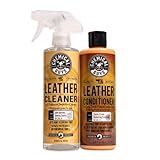
- Top Pick: Chemical Guys, Leather Cleaner & Conditioner Kit for Cars & Home, 2 x 16 oz | Two-step kit cleans then conditions seats, furniture, bags and boots, pH-balanced for natural and sealed leather
- Best Value: Armor All Car Leather Cleaner Spray with Beeswax, 16 Fl Oz | Cleans, Conditions, Protects, Beeswax Leather Care Spray for Cars, Trucks, Motorcycles, Furniture, Shoes
- Premium Choice: Chemical Guys, Total Interior Cleaner & Protectant, Leather & Vinyl, 16 oz | Cleans dashboards, seats, door panels, trim and glass in one step, leaving a fresh, streak-free, factory-style look
For most car interiors, a pH-balanced, dedicated leather cleaner used with a soft brush and a microfibre towel is the right choice, and the product class matters more than the label. Lexol, Chemical Guys, Leather Honey, Meguiar’s Gold Class and Colourlock all make leather cleaners aimed at automotive seats. Choose a gentle cleaner for lightly soiled coated leather, a stronger deep cleaner for dye transfer and body oils, and a cleaner paired with a conditioner if your seats are older and dry.
As an Amazon Associate we earn from qualifying purchases at no extra cost to you.


Know your seat before you choose a cleaner
Most modern cars use pigmented, coated leather. A protective polymer layer sits on top of the hide, which is why a damp cloth removes most everyday dirt. Older cars, some performance models and premium trims may use semi-aniline or aniline leather with little surface protection, and these absorb liquids and stain easily. Many seats described as leather are blends of leather and vinyl, or leatherette, and should be treated gently.
A simple check, which car-care writers commonly suggest, is to look in the owner’s manual for the cleaning section. The vehicle maker often names what is safe and what to avoid. If the manual says to use only water or a mild leather cleaner, follow it. If you are unsure, test a small hidden area first, such as the underside of a seat flap, and wait for it to dry before treating the whole seat.
At a glance: leather cleaner types
| Type or product line | Best for | Form | What the maker emphasizes | Limits |
|---|---|---|---|---|
| Lexol Leather Cleaner (budget to mid-range) | Routine cleaning of coated seats | Liquid, spray bottle or refill | A cleaner sold alongside a separate conditioner | Does not condition by itself |
| Chemical Guys leather cleaner line (mid-range) | Detailers who like ready-to-use sprays and a matching conditioner | Spray or liquid | Matte, natural finish and a paired care routine | Needs a brush on textured grain |
| Leather Honey Leather Cleaner (mid-range) | Heavier grime and older leather | Concentrate and ready bottles | Lifts dirt before using its conditioner | Concentrate must be used as directed |
| Meguiar’s Gold Class Leather and Vinyl (budget to mid-range) | Quick cleaning plus light conditioning in one pass | Foam or spray | Cleans and conditions in a single step | Less thorough on heavy soil |
| Colourlock cleaner (premium) | Cleaning prior to colour restoration or protection | Liquid | Part of a multi-step system with a coating | More steps and effort |
| Dedicated leather wipes (budget) | Spot cleaning in the car | Pre-moistened wipes | Convenience | Not for deep clean |
Product line names above are established leather-care brands. Specific formulations are updated by the makers, so read the label on the bottle you buy for ingredients, dilution and which leather types it covers.
What matters when choosing
pH and ingredient approach
Leather care brands commonly describe their cleaners as pH-balanced or pH-neutral for leather. Strongly alkaline household cleaners can strip the top coat and dry the hide, so makers advise against using all-purpose degreasers on seats. Select a product that clearly says it is made for automotive leather.
Cleaner only or cleaner plus conditioner
A separate cleaner and conditioner gives more control. A combined product saves time and suits light maintenance. On coated leather, the conditioner matters less than on aniline hides, because the coating limits absorption. Detailing writers often advise a conditioner a few times a year rather than after every wash.
Finish
Some cleaners leave a slick, shiny surface, and others leave a matte feel closer to factory. Glossy leather is slippery in turns and attracts dust. Look for descriptions such as matte, satin or non-greasy if you want a natural result.
Form and application
Sprays are convenient, foams cling to vertical bolsters, and concentrates are economical for large jobs. Whichever you pick, apply the product to a brush or towel rather than flooding the seat, because moisture seeping into stitching and perforations can cause trouble.
Perforated and heated seats
Perforated leather can trap liquid and cleaner. Use a light application and blot dry. Some seats contain heating elements and airbags in the seat sides, so avoid soaking and follow the vehicle manual. Electrical and safety systems are a reason to keep moisture low and to consult a dealer if you are unsure.
A simple cleaning routine
- Vacuum the seat, including seams, with a soft brush attachment to remove grit that scratches.
- Spray the cleaner onto a soft leather brush or towel, not directly onto the seat.
- Agitate gently in small sections, working along the grain pattern.
- Wipe off residue with a clean, slightly damp microfibre towel.
- Dry with a second towel and let the seat air dry out of direct sun.
- Apply conditioner or protectant only if your leather type calls for it, following the label.
Decision table: pick X if
| Pick this | If your situation is |
|---|---|
| Lexol-style cleaner and separate conditioner | you want a straightforward two-step routine for coated seats |
| Chemical Guys leather system | you prefer sprays and a matte, natural result |
| Leather Honey cleaner | seats have heavy body oil or older, dried leather |
| Meguiar’s Gold Class foam | you want quick upkeep that cleans and lightly conditions |
| Colourlock system | you plan to restore or protect colour and accept extra steps |
| Leather wipes | you only need to remove fresh spills and fingerprints |
Fit and compatibility notes
- Light-coloured leather shows dye transfer from jeans, and a stronger cleaner or a dedicated dye-transfer product may be needed.
- Suede, Alcantara and microsuede trim need different products and should not get a standard leather cleaner.
- Vinyl and leatherette often tolerate the same cleaners, but check the label.
- Perforated seats need low moisture and good drying.
- Seats with airbags, heaters or ventilation: follow the vehicle manual and avoid saturating the seat.
Alternatives to consider
Water and a microfibre cloth
For light dust on coated leather, a barely damp microfibre towel often removes the surface film. It is the lowest-risk option and a sensible first step before a product.
Professional detailing
If leather is cracked, heavily stained or colour-worn, a professional can assess whether cleaning, recolouring or repair is the right move. Poor DIY attempts on damaged hides can make repair harder.
Leather protectant or ceramic coating
Protectants add a barrier against UV and dye transfer after cleaning. They are an add-on, not a substitute for cleaning, and should match your leather type.
Common mistakes
- Using an all-purpose cleaner or household degreaser that dries the top coat.
- Scrubbing with a stiff brush on soft leather, causing scuffs.
- Over-applying conditioner and leaving seats greasy.
- Skipping the hidden-spot test before a new product.
- Leaving the seat wet in a closed car, which invites odour and moisture problems.
Frequently Asked Questions
How often should I clean leather car seats?
Many detailers suggest a light clean every month or two for daily drivers, and a deeper clean a few times a year. Heavy use, pale leather and dusty roads justify a shorter cycle.
Do I need to condition leather after cleaning?
It depends on the leather. Older or aniline leather often benefits from conditioner, while coated leather on newer cars needs it less. Follow the product label and the vehicle manual.
Can I use baby wipes or household cleaner on seats?
Both are commonly advised against because they may contain alcohol or detergents that harm the finish. A leather-specific cleaner or plain damp microfibre is the safer route.
How do I tell leather from leatherette?
The owner’s manual or trim description usually states the material. Real leather has an irregular grain, while leatherette tends to look uniform. If unsure, treat it gently and test a hidden spot.
Is a cleaner safe for heated or ventilated seats?
Use minimal moisture and avoid soaking seams and perforations. Check the vehicle manual, and speak with a dealer if you are unsure about electrical components in the seat.
What removes jeans dye from light seats?
Mild cleaners may not shift it. Detailers sometimes use a dedicated dye-transfer product or a stronger cleaner applied carefully. Test in a hidden area first and stop if the finish changes.



Write Your Review
No reviews yet. Be the first to share your experience!