
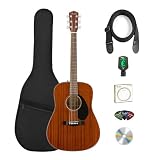
- Top Pick: Fender CD-60S Solid Top Dreadnought Acoustic Guitar – All Mahogany Bundle with Gig Bag, Tuner, Strap, Strings, Picks, and Austin Bazaar Instructional DVD
- Best Value: Fender CC-60S All-Mahogany Concert Acoustic Guitar, Natural | Beginner acoustic guitar, all-mahogany body, warm tone, concert size, easy playability, great for adults, under $200
- Premium Choice: Fender CD-60 Dreadnought Acoustic Guitar – Mahogany | Bundle with Hard Case, Strap, Tuner, Strings, Picks, Online Lessons, and Austin Bazaar Instructional DVD
The best mahogany guitar is the Gibson Les Paul or SG if you want an electric with a thick, warm, sustaining voice, a Martin 15 Series or Gibson J-45 if you want an acoustic, and an Epiphone or PRS SE model if you want the same wood character at a lower tier. Mahogany shows up in both electric and acoustic guitars, so the first decision is which family you actually need.
As an Amazon Associate we earn from qualifying purchases at no extra cost to you.


Quick comparison
| Guitar | Type | Mahogany role | Best for |
|---|---|---|---|
| Gibson Les Paul Standard | Electric | Mahogany body with a maple cap | Rock, blues, sustained leads |
| Epiphone Les Paul Standard | Electric | Mahogany-based body in the same shape | Same style at a lower tier |
| Gibson SG Standard | Electric | Mahogany body and neck | Lighter weight, fast access to upper frets |
| Epiphone SG Standard | Electric | Mahogany-based construction | Beginners who want an SG |
| PRS SE Custom 24 | Electric | Mahogany body with a maple top | Players who want a modern feel and tuning stability |
| Martin 000-15M or D-15M | Acoustic | Mahogany top, back and sides | Fingerstyle, blues, folk |
| Gibson J-45 | Acoustic | Mahogany back and sides, spruce top | Songwriting and strumming |
| Fender CD-60S All-Mahogany | Acoustic | Mahogany throughout | Budget acoustic buyers |
Specifications and finishes change between production years, so read the maker’s own page for the exact version you buy.
What mahogany does to the sound
Mahogany is dense and resonant. In an electric body it is generally associated with a warm, thick low-mid focus and long sustain. A maple cap, as on a Les Paul or PRS, adds brightness and attack on top of that. In an acoustic, mahogany brings a woody, compact tone that sits well beside the voice and is less sparkling than spruce and rosewood. These are general descriptions used by makers and reviewers, and pickups, strings and setup change the result as much as wood does.
Electric mahogany guitars
Gibson Les Paul Standard
The Les Paul is the benchmark for the mahogany-and-maple recipe. Gibson lists humbucker pickups, a set neck and a mahogany body with a maple top. It is a heavier guitar than many others, which suits players who want sustain and do not mind the weight. Weight varies between individual guitars, so try one if you can.
Epiphone Les Paul Standard
Epiphone is Gibson’s sister brand and offers Les Paul models at a lower tier. Reviewers frequently recommend it as a gateway to the Les Paul sound. Differences from the Gibson version include construction details, hardware and pickup choices.
Gibson SG Standard
The SG has a thin, double-cut body, so it weighs less than a Les Paul and offers easy upper-fret reach. It is primarily mahogany and has a classic, raw, powerful voice. Some players find the neck-heavy balance an adjustment.
Epiphone SG Standard
The Epiphone version offers the same silhouette at a more accessible tier, and it is a common choice for beginners and gigging players.
PRS SE Custom 24
PRS lists a mahogany body with a maple top on its SE Custom line, along with a vibrato bridge and a 24-fret neck. The tone leans modern and clear, and the tuning stability is a selling point. It is a good alternative if you want something different from the Gibson lineage.
Acoustic mahogany guitars
Martin 15 Series
The 000-15M and D-15M use solid mahogany for the top, back and sides, finished in satin. The 000 size suits fingerstyle and blues and the dreadnought is more at home with strumming.
Gibson J-45
The J-45 pairs a spruce top with mahogany back and sides. It has long been linked to songwriters thanks to its round, warm voice. Epiphone offers a J-45 style guitar for buyers who want the look and voice at a lower tier.
Fender CD-60S All-Mahogany
A common budget pick for newcomers. It uses mahogany throughout and has a comfortable neck. It will not match solid-wood premium guitars for complexity, though it gives an honest introduction to mahogany tone.
How to choose
- Pick the family: electric for amplified playing, acoustic for unplugged.
- Weight and comfort: Les Pauls are heavy, SGs and PRS SEs are lighter. Hold or strap one on before buying.
- Pickups and electronics: humbuckers give a thick, warm output. Single coils are brighter. Many Gibson and Epiphone models have coil-split or alternate options on some versions.
- Neck profile: thicker vintage-style necks and slim modern necks feel very different. Read the maker’s description.
- Setup: a professional setup often improves a guitar more than a more expensive model would.
Pick X if …
| You are … | Choose |
|---|---|
| A rock or blues lead player who wants sustain | Gibson or Epiphone Les Paul |
| Wanting a lighter electric with attitude | Gibson or Epiphone SG |
| Looking for modern playability at mid tier | PRS SE Custom 24 |
| A fingerstyle or blues acoustic player | Martin 000-15M |
| A strummer or songwriter | Gibson or Epiphone J-45, or Martin D-15M |
| A beginner on an acoustic budget | Fender CD-60S All-Mahogany |
Budget tiers without prices
- Budget: Epiphone electrics, Fender CD-60S and similar. Good starting instruments, with hardware that many players upgrade over time.
- Mid-range: PRS SE, higher Epiphone lines and the more accessible Martin and Eastman ranges.
- Premium: Gibson USA models, Martin 15 Series and above, which add solid woods, upgraded hardware and tighter quality control.
Common mistakes
- Believing the wood alone defines the tone. Pickups, amp and strings matter at least as much.
- Ignoring weight. A heavy guitar can be tiring on a long gig.
- Not checking whether the guitar is genuinely mahogany or a substitute wood such as nato or sapele. Makers list this on the spec page.
- Skipping a setup after purchase.
- Buying a second-hand guitar without checking neck angle, frets and finish cracks.
Care
Keep the guitar away from heat, sun and big humidity swings, since wood movement can cause cracks and fret problems. Wipe strings after playing, and have a technician handle anything involving the truss rod, neck or wiring if you are unsure. Follow the maker’s care guide for finish-specific cleaning.
Frequently Asked Questions
Is mahogany better than maple or alder for electric guitars?
It is not better, only different. Mahogany tends to sound warmer and thicker, maple brighter and alder more balanced. The best choice follows the sound you want.
Why are Les Pauls so heavy?
Dense mahogany bodies with a maple cap add weight, and chambered or weight-relieved models exist from Gibson for those who want less. Try specific instruments, as weight varies from guitar to guitar.
Is an Epiphone as good as a Gibson?
Epiphones offer a similar shape and style at a lower tier, but Gibson models generally use higher-grade materials and hardware. Many players find Epiphones excellent value.
Which mahogany guitar suits beginners?
An Epiphone SG or Les Paul on the electric side, or a Fender CD-60S All-Mahogany on the acoustic side, offers the wood character with a gentler cost. Look for easy action and a setup done by a shop.
Does mahogany guitar tone change over time?
Solid-wood guitars are widely said to open up with playing, though the effect is subtle and difficult to measure. Good care matters more than expectations of change.
Are mahogany guitars suited to metal?
Yes. Many players use mahogany guitars with high-output humbuckers for heavy styles, since the low-mid thickness and sustain carry through distortion well.







Write Your Review
No reviews yet. Be the first to share your experience!