
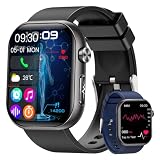
- Top Pick: Advanced Health Smartwatch for Women Men with Real-Time Monitoring of Heart Rate, Blood Oxygen, Body Temperature, Blood Pressure, Sleep Auality and Stress Levels.Always-On Display, for Android & iOS
- Best Value: Garmin vívoactive® 5, Health & Fitness GPS Smartwatch, 42mm, Ivory | 24/7 Health Monitoring, Built-In Sports Apps, Sleep Coach, Body Battery™ Energy Monitoring, Workout Benefit & Recovery Time
- Premium Choice: Smart Watches for Men,1.96"AMOLED Health Smart Watch Fitness Trackers2Bands | with Heart Rate/Blood Oxygen/Body Temperature/Blood Pressure/Sleep/Stress /Answer/Make Calls/for Android & iOS
For iPhone owners, the Apple Watch line is the most complete health smartwatch; for Android phones, the Samsung Galaxy Watch and Google Pixel Watch families are the closest equivalents; and for athletes who want long battery life and training analysis, Garmin’s watches are the usual answer. None of these devices diagnoses disease, so use them as trend trackers and talk to a doctor about any symptom or reading that concerns you.
As an Amazon Associate we earn from qualifying purchases at no extra cost to you.



Health Smartwatches at a Glance
| Family | Best for | Health features the makers list | Limits |
|---|---|---|---|
| Apple Watch (Series and Ultra) | iPhone users | Heart rate, ECG app and irregular rhythm notifications where cleared, sleep tracking, blood oxygen where available, temperature sensing on recent models | Works with iPhone only; daily charging for most models |
| Samsung Galaxy Watch | Android users, especially Samsung phones | Heart rate, ECG and blood pressure features in supported regions, body composition, sleep coaching | Some features need a Samsung phone or regional approval |
| Google Pixel Watch | Android users who like Fitbit-style tracking | Heart rate, ECG, sleep and stress tools through the Fitbit ecosystem | Some advanced insights sit behind a subscription |
| Garmin (Forerunner, Venu, Fenix) | Athletes and long battery life | Heart rate, sleep, body battery, training load, pulse ox on selected models | Less polished smart features and apps |
| Fitbit-style bands and Charge trackers | Simple tracking, low weight | Heart rate, sleep and stress tracking | Smaller screen and fewer smart features |
| Withings hybrid watches | Long battery, analog look | Activity and sleep, some models list ECG | Limited smart functions |
Feature availability differs by country, because regulators clear ECG and similar functions region by region. Read the maker page for your market.
What to Look for in a Health Watch
Sensors that matter
Optical heart rate is standard. ECG, skin temperature, blood oxygen and sleep staging appear on higher-tier models. Independent reviewers often note that wrist sensors are less reliable during hard intervals or with loose bands, so a chest strap is still preferred for precise training.
Platform match
The phone you own decides much of the list. Apple Watch needs an iPhone. Galaxy Watch and Pixel Watch run Wear OS and need Android. Garmin works with both.
Battery life
Overnight sleep tracking needs a watch that lasts through the day and can be charged briefly before bed. Garmin and some hybrid brands offer multi-day or multi-week battery. Apple, Samsung and Google typically need charging every day or two, so confirm the maker figures for the model you consider.
Subscriptions
Some health dashboards place deeper analysis behind a subscription. Read what is free and what is paid before choosing the platform.
Fit and comfort
A watch must sit snug but not tight for accurate heart rate. Check case sizes and band options, particularly if you wear it at night.
Picks by Buyer Type
| Pick this if you | Choose | Why |
|---|---|---|
| Own an iPhone | Apple Watch | Deepest integration with the Health app and widest accessory range |
| Own a Samsung phone | Galaxy Watch | Features tuned to Samsung Health |
| Own another Android phone | Pixel Watch or Garmin | Open to any Android; Garmin for battery |
| Train for races or run often | Garmin Forerunner or Fenix | Training load and recovery tools |
| Want sleep and activity only | Fitbit-style band | Light, cheaper tier, simple use |
| Dislike smart screens | Withings hybrid | Analog look with basic tracking |
Budget, Mid-Range and Premium Tiers
Budget watches and bands cover steps, heart rate and sleep. Mid-range models add GPS, better screens and sometimes ECG. Premium models add titanium cases, larger batteries, dual-frequency GPS, temperature sensors and the full health suite. A premium case does not make the sensors dramatically better, so match the tier to the features you will use.
Gamers and Desk Workers
People who sit for long sessions can use inactivity reminders, stand goals and heart-rate trend tracking to build breaks into the day. These reminders are prompts, not medical advice. If you feel chest pain, dizziness or breathlessness, stop and seek medical help rather than relying on a watch.
Health Safety Notes
- ECG and irregular rhythm features are screening tools, not diagnostic tests, and makers say so in their instructions.
- A normal reading does not rule out a condition, and a worrying one needs a doctor.
- Blood pressure estimates on watches may require calibration against a cuff; follow the maker steps.
- Skin irritation from bands or nickel can occur; stop wearing the band and ask a doctor if it continues.
Common Mistakes
- Buying by brand name without checking phone compatibility.
- Expecting medical-grade accuracy from wrist sensors.
- Ignoring subscription costs for advanced features.
- Wearing the band too loose, which hurts heart-rate readings.
- Assuming a feature seen in an ad is available in your country.
Alternatives
A smart ring such as the Oura or Samsung Galaxy Ring offers sleep and recovery tracking in a smaller package, though without a screen. A chest-strap heart-rate monitor gives better exercise accuracy. A cuff-style home blood pressure monitor is the better tool if blood pressure is your main concern.
Frequently Asked Questions
Which smartwatch is most accurate for heart rate?
Reviewers generally find modern watches from Apple, Garmin, Samsung and Google reasonable at rest and steady exercise, with larger errors in hard intervals. A chest strap remains the reference for training.
Can a smartwatch detect heart problems?
Some models can flag an irregular rhythm or record an ECG where the feature is cleared. They cannot diagnose a condition, so a doctor should review any alert.
Do I need a subscription?
It depends on the platform. Some offer deeper sleep and readiness analysis only with a subscription, while core tracking is free. Read the maker page.
How good is sleep tracking?
Watches estimate sleep stages from movement and heart rate, and the results are approximate. Treat them as trends over several nights.
Is a watch or a ring better for health tracking?
A ring is lighter for sleep, a watch provides a screen, alerts and workout tracking. Many people choose by comfort.
How long should the battery last?
Makers publish battery estimates per model, ranging from about a day to multiple weeks. Real life is shorter with GPS and always-on displays.







Write Your Review
No reviews yet. Be the first to share your experience!