
For most home bakers, a 5-quart tilt-head stand mixer such as the KitchenAid Artisan covers cakes, cookies and the occasional loaf, while a bowl-lift model like the KitchenAid Professional series, a Bosch Universal Plus or an Ankarsrum suits people who knead bread dough often or bake in large batches. A hand mixer is enough if you mainly whip cream and mix batter. The right choice depends on how heavy your doughs are, how much counter and cabinet space you have and whether you value attachments, bowl size or motor power most.
As an Amazon Associate we earn from qualifying purchases at no extra cost to you.
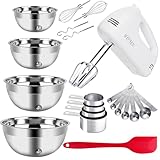

At a glance: mixer styles and examples
| Style | Example models | Best for | Limits |
|---|---|---|---|
| Tilt-head stand mixer | KitchenAid Artisan (5 qt), KitchenAid Classic (4.5 qt), Cuisinart 5.5 qt | Cakes, cookies, light bread doughs | Can walk or strain on stiff dough in large batches |
| Bowl-lift stand mixer | KitchenAid Professional 600 (6 qt), Breville Bakery Chef, Kenwood Titanium Chef Baker | Frequent bread, double batches | Larger and heavier |
| Bread-focused mixer | Bosch Universal Plus, Ankarsrum Original | Heavy doughs, whole grain, big loaves | Different look and bowl design, slower for light whipping in some cases |
| Compact or budget stand mixer | Hamilton Beach and similar makers | Occasional bakers, small kitchens | Lower power, fewer accessories |
| Hand mixer | Braun, KitchenAid, Cuisinart models | Batters, whipped cream, tight storage | Not for bread dough |
The lineups are updated often, so confirm the exact motor power and bowl size on the maker’s page before buying; specifications below describe each category as makers generally state them.
Bowl size and capacity
Makers rate bowls in quarts, and the working capacity for dough is smaller than the nominal number. A 5-quart bowl usually handles a standard bread dough with around 3 to 4 cups of flour comfortably, while bowls of 6 to 7 quarts and bread-specific mixers like the Bosch handle much larger batches. Check the maker’s flour capacity claim for dough rather than relying on bowl size alone.
Motor power and drive
Wattage figures differ between brands and are not always comparable. KitchenAid lists around 250 watts for the Classic and 325 watts for the Artisan, whereas bread-focused models such as the Bosch Universal Plus list much higher ratings, around 800 watts according to the maker. Ankarsrum uses a roller-and-scraper system and a separate motor design built for dough. More useful clues are the gearing type, whether the motor is DC or AC and how the manufacturer describes kneading performance. Reviewers from outlets such as Serious Eats, Wirecutter and Good Housekeeping tend to judge mixers on how well they handle stiff dough without overheating, so check their latest roundups.
Tilt-head or bowl-lift?
A tilt-head mixer lets you lift the head to scrape the bowl and swap attachments easily. It fits under many cabinets with the head down. A bowl-lift mixer locks the bowl in place and keeps the head fixed, giving stability with stiff doughs and larger bowls. Bowl-lift models are taller and need more clearance, and removing the bowl takes more effort.
Attachments and accessories
- Flat beater: for cake batter, cookie dough, mashed potatoes.
- Dough hook: for yeast breads and pizza dough.
- Whisk: for egg whites, meringue and whipped cream.
- Scraper beater: often a separate purchase; it cuts down on manual scraping.
- Power hub: KitchenAid mixers have a front hub for pasta rollers, meat grinders and food processors; Kenwood and Bosch have similar attachment ports.
- Extra bowls: useful when making several recipes in a row.
Check that the whisk and beater are dishwasher safe if that matters to you; coated aluminium parts are typically hand wash, while stainless steel parts are more tolerant. Read the manual.
Pick-by-need decision table
| Pick this if … | Choose | Reason |
|---|---|---|
| You bake cakes and cookies a few times a week | KitchenAid Artisan or similar tilt-head | Good capacity, many attachments |
| You bake bread weekly or double batches | Bowl-lift KitchenAid Professional, Breville Bakery Chef, Kenwood Chef Baker | Stability and bigger bowl |
| Bread is your main use | Bosch Universal Plus or Ankarsrum Original | Designed for heavy dough |
| Your kitchen is small | Compact tilt-head or hand mixer | Smaller footprint |
| You want a lower-cost entry | Hamilton Beach or Cuisinart value models | Basic capability, less power |
| You want pasta or grinder attachments | KitchenAid with power hub | Widest accessory range |
Budget tiers without prices
Budget mixers from Hamilton Beach or similar brands manage cake batter and cookie dough but strain with stiff bread dough and often have plastic parts. Mid-range models such as the KitchenAid Classic and Artisan, Cuisinart and Kenwood’s lower ranges offer metal construction and a large accessory ecosystem. Premium tier machines like the Breville Bakery Chef, Kenwood Titanium Chef Baker and Ankarsrum cost more but add stronger motors, bigger bowls or built-in timers and soft start features.
Space, weight and noise
Metal-bodied stand mixers weigh around 20 pounds or more, so decide whether you will store it on the counter. Measure under-cabinet clearance for tilt-head models with the head raised. Noise levels vary; reviewers sometimes mention that direct-drive bread mixers are quieter than gear-driven designs, but this depends on the model. If you have limited upper-body strength, think about whether you can lift the unit to store it.
Common mistakes
- Buying a small tilt-head and then regularly working at its limit with stiff dough, which can strain the motor.
- Filling the bowl above the maker’s stated flour capacity.
- Skipping bowl-scraping or beater height adjustment, which leaves unmixed flour at the bottom.
- Using high speeds with dough hooks; manuals usually advise low speeds for kneading.
- Ignoring attachments you actually need.
Alternatives
A hand mixer suits anyone who bakes mostly cakes, whipped cream and batters. A food processor kneads small amounts of dough quickly. A bread machine automates loaves but gives less control. Regular no-knead bread needs no mixer at all and works with a bowl, spoon and time. If you only occasionally need a stand mixer, consider a refurbished or older KitchenAid model, which are known for durability, but check the maker’s warranty and parts availability.
Frequently Asked Questions
Is a stand mixer worth it for baking?
If you bake often or knead dough, yes. It frees your hands, gives consistent mixing and accepts attachments. Occasional bakers may be fine with a hand mixer.
What size mixer do I need?
A 4.5 to 5 quart bowl suits most households. Choose 6 quarts or more if you bake large batches, double recipes or make bread weekly.
Can a tilt-head mixer knead bread dough?
Many can, within the maker’s stated limits, but stiff and large batches may strain it. Use low speed and follow the manual’s dough capacity.
How many watts are enough?
Wattage alone is a poor guide because designs differ. Look at the maker’s stated dough capacity and reviewer notes on kneading performance.
Are mixer attachments worth buying?
Only if you will use them. A scraper beater and extra bowl are popular, while pasta and grinder attachments suit people who cook beyond baking.
How do I keep my mixer in good condition?
Wipe the body with a damp cloth, wash bowls and attachments as the manual advises, and avoid overloading the motor. Contact the maker’s support if the unit leaks grease or makes unusual noises.







Write Your Review
No reviews yet. Be the first to share your experience!