
- Top Pick: Seesii Impact Wrench 665 FT-LBS(900N.m) 3300IPM 1/2 Impact Gun High Torque Electric Impact Driver Cordless Impact Wrench with 21V 2×4.0Ah Battery 6 Sockets&Case for Home Car Tire Lug Nut Removal Tool
- Best Value: MAGSEN Cordless Impact Wrench 700 FT-LBS(950N.m) 1/2 Impact Gun High Torque Electric Impact Driver Cordless Impact Wrench with 21V 2×4.0Ah Battery 6 Sockets&Case for Home Car Tire Lug Nut Removal Tool
- Premium Choice: SOARFLY Cordless Impact Wrench 1/2", 900 Ft-Lbs(1200N.m), 2×4.0Ah Batteries | 21V Brushless High Torque Impact Gun, 3-Speed Control, 5 Sockets for Car Tires, Trucks, Stubborn Lug Nuts, Heavy-Duty Repairs
For lug nuts on cars, crossovers and light trucks, a 1/2-inch high-torque 18V or 20V cordless impact wrench such as the DeWalt DCF900 or the Milwaukee M18 FUEL high-torque model is the dependable choice, while a mid-torque 1/2-inch tool is enough for most passenger cars if you want something lighter and cheaper. The deciding factors are breakaway torque, battery capacity, weight and how often you will use it.
As an Amazon Associate we earn from qualifying purchases at no extra cost to you.
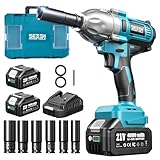


Short Answer by Vehicle and Budget
- Daily-driver cars and small SUVs, occasional tire swaps: mid-torque 1/2-inch tool, budget to mid-range.
- Trucks, SUVs with rusty or over-tightened nuts, frequent use: high-torque 1/2-inch tool, premium tier.
- Homeowner with a few tools already on one battery platform: buy within that platform and pick the strongest 1/2-inch model it offers.
At a Glance
| Model | Class | Drive | Best for | Trade-off |
|---|---|---|---|---|
| DeWalt DCF900 (20V MAX XR) | High torque | 1/2 inch | Stubborn nuts on trucks and SUVs; the maker lists breakaway torque in the 1,000-plus foot-pound class | Larger and heavier than mid-torque tools |
| Milwaukee M18 FUEL 1/2 inch High Torque | High torque | 1/2 inch | Shops and heavy users on the M18 battery system | Premium tier; bare tool and kit options differ |
| DeWalt DCF961 (20V MAX XR) | Mid torque | 1/2 inch | Car owners who want a compact tool with solid fastening torque | May stall on severely seized nuts |
| Milwaukee M18 FUEL Mid-Torque 1/2 inch | Mid torque | 1/2 inch | Tight spots and everyday lug nut work | Less margin than the high-torque version |
| Makita 18V LXT 1/2 inch impact wrench range | Mid to high torque | 1/2 inch | Buyers already invested in LXT batteries | Model-by-model torque differs; read the spec sheet |
| Ryobi 18V ONE+ HP 1/2 inch impact wrench | Mid torque | 1/2 inch | Budget-conscious owners within the ONE+ system | Lower ceiling for stuck nuts |
Torque figures differ between makers because some quote “fastening” torque and others quote “nut-busting” or breakaway torque. Read which number a listing means before comparing, and note that the makers publish their numbers under their own test conditions.
What Matters When Removing Lug Nuts
Breakaway torque versus fastening torque
Vehicle makers typically specify wheel nut tightening torque in the range of roughly 80 to 140 foot-pounds for many cars and more for some trucks; check your owner manual for the exact figure. Garage impact guns and tire shops often over-tighten, so a tool needs headroom above the spec to loosen nuts. That is why reviewers who test tools in this class usually favor a stated breakaway rating well above the vehicle’s specified torque.
Mid-torque or high-torque
Mid-torque 1/2-inch tools are shorter and lighter, and manufacturers list fastening and breakaway figures that cover many cars. High-torque tools add length and weight in exchange for the ability to crack the nuts that mid-torque tools cannot. If you drive a heavy truck or live in a region where rust is common, high-torque is the safer buy.
Battery size
Larger capacity packs, such as the 5.0 Ah and 8.0 Ah class where the maker offers them, tend to hold output under load better and last through more nuts. Compact packs reduce weight but may sag when you do a full set of wheels. Always use packs from the same platform as the tool, as the maker intends.
Anvil and socket compatibility
Most lug nut work uses a 1/2-inch square drive. Anvil retention varies: friction ring or detent pin. A detent pin holds sockets more firmly but takes more effort to swap. Use impact-rated sockets only. Chrome hand-tool sockets can shatter under impact. Many wheels need a thin-wall impact socket so it does not scrape the rim; deep versions help with long studs.
Weight, balance and controls
Lug nuts are often at awkward heights. Check the tool’s stated weight, whether it has a work light, and whether the speed or torque modes are easy to select. Many current models include several drive modes, one of which may reduce the risk of overtightening by limiting output on the final turns, where the maker describes this.
Pick This If Decision Table
| Pick this | If |
|---|---|
| High-torque 1/2-inch (DeWalt DCF900, Milwaukee M18 FUEL high torque) | You own a truck or large SUV, work on rusty hardware or want maximum margin |
| Mid-torque 1/2-inch (DeWalt DCF961, Milwaukee mid-torque) | You service passenger cars and want a smaller tool for tight wheel wells |
| Makita LXT 1/2-inch | You already own LXT batteries and chargers |
| Ryobi ONE+ HP 1/2-inch | You want a budget-tier tool for seasonal tire swaps |
| 3/8-inch compact impact driver wrench | You only need it for small fasteners, not lug nuts |
Safety and Correct Use
- Never rely on the jack alone. Use jack stands on solid, level ground, as your vehicle’s manual describes.
- Loosen nuts before lifting if the tire cannot spin, then remove them with the wheel raised.
- Use impact-rated sockets and wear eye protection.
- Do not overtighten with the impact. Use the tool to snug nuts, then finish with a calibrated torque wrench to the figure in the owner manual, in a star pattern.
- Recheck torque after a short drive, as many manuals advise.
If a nut will not budge, stop and consult a professional rather than forcing a tool beyond its limits, since damaged studs can be a safety issue.
Common Mistakes
- Buying on peak torque alone while ignoring weight and battery capacity.
- Using non-impact sockets.
- Tightening final torque with the impact wrench only.
- Buying a tool from a different battery platform from the rest of your tools and ending up with duplicate chargers.
- Ignoring wheel-specific socket needs, such as long reach for deeply recessed lugs or thin-wall for narrow bores.
Alternatives
- Corded or pneumatic impact wrench: pneumatic tools suit garages with a compressor; corded tools avoid battery limits.
- Breaker bar plus torque wrench: slower, but low-cost and precise for occasional swaps.
- Torque stick extensions: some owners use them with impact tools to limit tightening torque; use them only within their stated ratings.
Frequently Asked Questions
How much torque do I need to remove lug nuts?
Most cars specify tightening torque under 150 foot-pounds, but shops often overtighten. Choosing a tool with a stated breakaway torque well above the spec gives you headroom. Check your owner manual for the vehicle’s actual figure.
Is a 3/8-inch impact wrench enough for lug nuts?
Compact 3/8-inch tools can remove some lug nuts on small cars, but most reviewers treat 1/2-inch drive as the standard for wheel work. A 3/8-inch tool is better kept for smaller fasteners.
Should I use an impact wrench to tighten lug nuts?
Many manuals advise against final tightening with an impact tool because it is difficult to control torque. Snug the nuts, then finish with a torque wrench to the manual’s specification in a star pattern.
Do I need a high-torque tool for a regular car?
Not necessarily. A mid-torque 1/2-inch tool is enough for most passenger cars, provided the nuts are not rusted or seized. High-torque tools help on trucks and in rust-prone areas.
Can I use regular sockets with an impact wrench?
No. Use sockets rated for impact use, usually made from softer, tougher steel and marked as impact sockets. Standard chrome sockets can crack and send fragments flying.
Which battery platform should I choose?
Choose the platform that matches the tools you own or plan to buy, whether DeWalt, Milwaukee, Makita or Ryobi. Sharing batteries lowers long-term cost, and each platform has a mid-torque and high-torque option for 1/2-inch drive.



Write Your Review
No reviews yet. Be the first to share your experience!