
- Top Pick: Klein Tools NCVT1P Voltage Tester, NCVT Pen, 50 to 1000V AC | Non-Contact Low Voltage Tester Pen with Audible and Flashing LED Alarms, Pocket Clip
- Best Value: Klein Tools 80025 Outlet Tester Kit, 2-Piece | GFCI Tester and Non-Contact Voltage Tester Pen, Perfect for Home Inspection
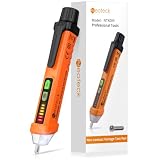
- Premium Choice: Neoteck Non Contact Voltage Detector 12-1000V AC Voltage Tester | Identifies Live and Null Wires with Audible Beeps and LED Alerts ,Flashlight for Outlets,Switches,and Circuit Breakers-Orange
The best electric tester for most homeowners is a non-contact voltage tester paired with a basic digital multimeter, while a plug-in receptacle tester covers outlet wiring checks. Which one is right depends on whether you only need to know if a wire is live or you need to measure voltage, continuity and resistance. Electrical work carries a shock and fire risk, so any wiring repair beyond simple checks belongs with a licensed electrician.
As an Amazon Associate we earn from qualifying purchases at no extra cost to you.



Types of Electric Testers
Non-contact voltage testers
These pen-style devices beep or light up near a live conductor without touching bare metal. Examples include the Klein Tools NCVT series and the Fluke 1AC and 2AC VoltAlert models. They are quick for checking outlets, cords and cables before work. Makers note that they can miss a live wire in some conditions, such as shielded cable, so they are a first check, not proof that a circuit is dead.
Digital multimeters
A multimeter measures AC and DC voltage, resistance, continuity and often current. Models such as the Klein MM400 and MM600 and the Fluke 101, 115 and 117 are common household and electrician choices. Look for the safety category (CAT) rating the maker lists that matches your work.
Receptacle and GFCI testers
Plug-in testers such as the Klein RT250 or the Ideal SureTest line show whether an outlet is wired correctly, with indicator lights for open ground, reversed polarity and similar faults. Many also include a GFCI test button.
Circuit tracers and breaker finders
These identify which breaker feeds an outlet. They suit renovation work and panel labeling.
Automotive and low-voltage testers
Test lights and low-voltage probes serve vehicles and small electronics, but are not meant for household mains.
At a Glance
| Tool | Best for | Key points | Limits |
|---|---|---|---|
| Klein NCVT-series | Fast live-or-not checks | Pen form, audible and visual alert, usually a battery-powered unit | Not a measuring tool; can miss some live wires |
| Fluke VoltAlert 1AC and 2AC | Same use, with a recognized brand | Voltage range listed by the maker; self-test feature | Same limits as other non-contact testers |
| Klein MM400 and MM600 multimeters | Homeowners and apprentices | Measures AC and DC voltage, resistance and continuity | Know the CAT rating before testing a panel |
| Fluke 115 and 117 | Working electricians and serious DIY | True RMS, CAT-rated, non-contact voltage on some models | Premium tier |
| Klein RT250 and Ideal receptacle testers | Checking outlet wiring | Indicator lights for common wiring faults, GFCI button | Does not diagnose every wiring fault |
| Fluke T6-1000 and T5 series | Voltage and current without opening the circuit | Fork design, listed voltage range | Professional tools with a higher cost tier |
Model lines are updated regularly. Read the maker’s product page and manual for voltage range, CAT rating, battery type and accuracy.
How to Choose
Safety category rating
CAT ratings describe where on an electrical system a meter is rated to be used. Household outlets are generally covered by lower categories, while service panels and utility connections need higher ones. The maker states both the CAT level and the voltage. Pick a tool rated at or above the environment you work in, and look for certification marks such as UL or equivalent listed by the maker.
Accuracy and features
True RMS measurement matters on circuits with electronic loads. Auto-ranging simplifies use. A backlight, low-battery indicator and a hold function are practical extras. Pen testers should have a self-test or clear indicator that the battery is working.
Test leads and build quality
Use leads that match the meter’s rating and replace any with cracked insulation. Finger guards and shrouded probe tips reduce accidental contact.
Your skill level
A non-contact tester and receptacle tester are suited to beginners doing simple checks. Multimeter use needs training: measuring current incorrectly or using the wrong setting can damage the meter or cause injury.
Budget Tiers
| Tier | What you get |
|---|---|
| Budget | Pen-style non-contact testers and plug-in receptacle testers for basic checks |
| Mid-range | Auto-ranging multimeters from known tool brands with CAT ratings listed on the body |
| Premium | True RMS CAT III or CAT IV rated meters and clamp or fork testers for professionals |
Unbranded testers sometimes lack the safety certifications that protect you in a fault, so check the marks and CAT rating the maker lists.
Pick X If You Need This
| Pick | If you |
|---|---|
| Non-contact tester (Klein NCVT or Fluke VoltAlert) | want a quick warning that a wire or outlet may be energized |
| Receptacle tester (Klein RT250 or similar) | need to check outlet wiring before plugging in sensitive gear |
| Basic multimeter (Klein MM400) | want to measure voltage and continuity on appliances and cords |
| Fluke 115 or 117 | work around electrical systems regularly and need higher ratings |
| Fork or clamp tester | need current or voltage readings without opening a circuit |
Common Mistakes
- Trusting a non-contact tester as proof a circuit is dead. Follow lockout and verification steps in the manual and call an electrician when unsure.
- Using a low-rated meter on a service panel. Match the CAT rating to the location.
- Ignoring battery health in a pen tester, which can lead to false negatives.
- Reusing damaged leads. Cracked insulation is a hazard.
- Assuming a receptacle tester shows every fault. Some wiring problems need an electrician.
Alternatives
Clamp meters
They measure current by clamping around a conductor, good for HVAC and appliance checks without cutting wires.
Circuit analyzers and breaker finders
They help identify circuits during renovations, as listed by the maker for each unit.
Hiring an electrician
For panel work, new circuits or any recurring fault such as tripping breakers or burning smells, a licensed electrician is the correct option.
Frequently Asked Questions
Is a non-contact voltage tester reliable?
It is a useful first check, but makers state it can miss live conductors in some situations, such as shielded cable or when the tester is not close enough. Treat a quiet tester as a prompt for further checks, not as proof of safety.
Do I need a multimeter at home?
If you only change bulbs or check outlets, a non-contact and receptacle tester may be enough. A multimeter helps with measuring batteries, appliance cords and low-voltage circuits.
What does a CAT rating mean?
It indicates the type of electrical environment a meter is designed to handle, with higher categories meant for locations closer to the power source. Use a meter whose rating covers the work you do.
Can a receptacle tester find all wiring problems?
No. It signals common faults through its lights, but some issues can go undetected. If the tester shows a fault or the outlet feels warm, stop using it and call an electrician.
Which brand should I buy?
Klein Tools, Fluke and Ideal are widely used in the trade and list their ratings and certifications clearly. Choose the model whose specs match your work.
How often should I replace test leads?
Replace them when insulation is cracked, tips are damaged or the meter manual advises it. Use leads with the same rating as the meter.





Write Your Review
No reviews yet. Be the first to share your experience!