
- Top Pick: VEVOR Pottery Wheel for Adults 14in/35cm 450W Professional Pottery Kit | DIY Art Clay Potter's Wheel for Kids Adults Beginners at Home Pottery, 0-6in Lift-Table, Foot Pedal, Detachable Basin, White
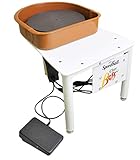
- Best Value: Speedball Clay Boss Pottery Wheel with 0.5 hp Motor, 14-Inch Wheel Head, 100 lb Capacity
- Premium Choice: National Geographic Hobby Pottery Wheel for Adults and Teen Beginners | 8-Inch Variable Speed Wheel, Innovative Arm Tool, 3 Lbs. Air-Dry Clay, Art Supplies, Beginner Pottery, Creative Hobby
The best clay for a pottery wheel is a smooth to lightly grogged mid-range stoneware, fired at cone 5 or 6, because it throws forgivingly, tolerates mistakes and suits the electric kilns most studios and hobbyists use. Beginners generally do best with a buff or white stoneware body with fine grog, such as Laguna B-Mix, Laguna Soldate 60 or comparable bodies from Amaco Brent and Standard Ceramic. Porcelain and low-fire earthenware are worth knowing about, but they are not usually where a first wheel session should begin.
- Match the clay to your kiln first
- Why mid-range stoneware suits most wheel beginners
- Understanding grog and smoothness
- Clay bodies worth looking at
- Beginners: why porcelain can wait
- How to choose: a short checklist
- Pick this if you are this potter
- Buying and storage notes
- Alternatives
- Common mistakes
- Frequently Asked Questions
As an Amazon Associate we earn from qualifying purchases at no extra cost to you.



Match the clay to your kiln first
A clay is chosen by its firing range before it is chosen by its feel. The maker prints a cone range on the box, and your kiln or community studio sets what is possible. Throwing a beautiful pot in a clay that your kiln cannot mature wastes the effort, because underfired clay stays weak and absorbent while overfired clay can slump or melt.
| Clay type | Typical firing range | Throws well for | Main trade-off |
|---|---|---|---|
| Low-fire earthenware (terracotta, red) | Around cone 06 to 04 | Plant pots, decorative ware | Stays porous and softer; limited glaze choices |
| Mid-range stoneware | Cone 5 to 6 | Mugs, bowls, dinnerware, most hobby work | Needs a kiln that reaches the target cone |
| High-fire stoneware | Cone 9 to 10 | Durable functional ware, reduction firing | Fewer hobby kilns reach this range |
| Porcelain | Cone 5 to 10 depending on body | Fine, thin ware | Less forgiving; collapses and warps more easily |
Cone ranges are printed on each maker’s label or technical data sheet, so confirm the exact range for any body you buy.
Why mid-range stoneware suits most wheel beginners
Studio potters and ceramics educators commonly point to cone 5 or 6 stoneware as the practical default. It is strong enough for daily use once glazed, it fires in common electric kilns, and glaze suppliers offer wide cone 5 or 6 ranges. Many community studios restrict their shelves to a single mid-range clay, so a beginner often does not have to choose at all.
Understanding grog and smoothness
Grog is fired, crushed clay added to a body to add tooth and reduce shrinkage and warping. A body with fine grog, often noted by a mesh size on the data sheet, gives structure to taller pieces and withstands wobbly centering. A completely smooth body feels pleasant against the hands and suits delicate rims and detailed surfaces, but it can slump more under water and pressure. Coarse grog gives a rustic look but can be abrasive on wet hands.
- Smooth bodies: comfortable on the hands and refined in appearance, but less forgiving of heavy water use.
- Fine grog bodies: a balanced choice for learners and the most common recommendation for beginners.
- Heavily grogged bodies: better for large sculptural work or hand-building than for fine wheel work.
Clay bodies worth looking at
Laguna B-Mix
B-Mix is a widely used smooth white-to-pale stoneware with a small amount of fine grog. The maker offers a mid-range version and a high-fire version, so read the label to pick the one that fits your kiln. Potters often choose it because it centres easily, takes glaze colour cleanly and works for both functional and decorative pieces.
Laguna Soldate 60
Soldate 60 is a Laguna stoneware that includes grog for extra strength. Reviewers and studio potters often describe it as a good option for larger forms because the added structure helps reduce collapse. The maker lists a mid-range to high-fire range, so match the cone to your firing schedule.
Amaco Brent clays
Amaco offers a range of Brent clay bodies, including mid-range stoneware options, designed for the wheel. The maker’s data sheets list firing ranges and shrinkage, so compare those against your kiln. These clays are widely stocked by ceramics suppliers, which helps buyers who want a familiar, easy-to-find brand.
Standard Ceramic bodies
Standard Ceramic Supply makes a large catalogue of stoneware and porcelain bodies used in schools and studios. Their lineup includes several buff and speckled stoneware bodies suited to throwing. Because numbering and availability can differ by region, use the supplier’s own descriptions to choose the right cone range and colour.
Beginners: why porcelain can wait
Porcelain is prized for translucency and bright white colour, but it has less plasticity than stoneware and loses shape quickly if overworked or over-watered. It rewards skilled hands. Starting on stoneware builds the centering and wall-pulling habits that make porcelain manageable later.
How to choose: a short checklist
- Confirm the cone range your kiln or studio fires to.
- Decide whether you want functional ware, in which case choose a stoneware that matures to a vitrified, low-absorption state.
- Pick a colour that matches your glazes. White bodies show glaze colour clearly, while brown or speckled bodies mute or warm it.
- Choose fine grog if you are new to throwing or plan taller forms.
- Buy a small quantity of two bodies and compare before committing to a full box.
- Read the maker’s data sheet for shrinkage and absorption.
Pick this if you are this potter
| If you are | Consider | Reason |
|---|---|---|
| A first-time wheel user with an electric kiln | Cone 5 or 6 smooth or fine-grog stoneware such as B-Mix | Forgiving and widely compatible |
| Making large bowls or tall vases | A grogged body such as Soldate 60 | Extra strength during throwing |
| Wanting bright glaze colour | A white or pale stoneware | Neutral base lets glaze colour show |
| Making garden planters | Low-fire red earthenware | Suits decorative and outdoor-style pieces if the maker allows |
| Chasing fine thin ware | A porcelain body after you have practised on stoneware | Less forgiving but refined |
Buying and storage notes
Clay is sold in sealed bags, commonly in boxes of two bags. Keep bags closed and store them away from direct heat so the clay stays workable. If clay dries out, it can be reclaimed by soaking and wedging, but fully reclaimed clay may behave differently from fresh clay. Wedge every ball before throwing to remove air pockets and even out moisture.
Food-safe use depends on the glaze, not just the clay. Check the glaze maker’s labelling for food-contact suitability and follow firing instructions. Wear a mask when sanding dry clay or mixing dry glaze, since fine silica dust is a health concern. Ventilate the studio and wet-clean surfaces rather than sweeping.
Alternatives
Air-dry and polymer clays are not suitable for wheel-throwing and kiln-firing in the same way, and they do not become waterproof like fired ceramic. If you do not have access to a kiln, many studios offer firing services, and some local suppliers sell clay with a firing fee included. Paper clay and specialty sculpting bodies also exist for hand-building but are less common on the wheel.
Common mistakes
- Buying clay that does not match the kiln’s firing range.
- Using too much water, which weakens walls and leads to collapse.
- Skipping wedging, resulting in air bubbles that can cause cracks or explosions in the kiln.
- Mixing clay bodies in the same firing without checking compatibility, since shrinkage differences cause cracks.
- Using a glaze rated for a different cone than the clay.
Frequently Asked Questions
What is the best clay for a beginner on the pottery wheel?
A cone 5 or 6 stoneware with fine grog or a smooth body is the most common starting point. It is forgiving, strong when fired and supported by many glazes. Check that your kiln or studio can fire to the printed cone.
Can I use air-dry clay on a pottery wheel?
Air-dry clay is not designed for wheel throwing and does not become waterproof or durable like fired clay. It lacks the plasticity and strength for thrown forms. For functional pieces, use a kiln-fired ceramic body.
What is the difference between earthenware and stoneware?
Earthenware fires at lower temperatures and stays more porous, while stoneware fires hotter and becomes dense and durable. Stoneware is generally preferred for mugs and dinnerware. Earthenware suits decorative and planter work.
Do I need grog in my clay?
Not always, but fine grog improves strength and reduces warping, which helps learners and larger pieces. Smooth clays feel nicer but can be less forgiving. Choose according to the size and type of piece you plan.
How much clay do I need to start?
A single box of two bags is plenty for a few weeks of practice, especially since early attempts are often reclaimed. Buy a small amount first, test it, then purchase more once you like the feel. Store opened bags tightly sealed.
Is thrown pottery food safe?
Safety depends on the glaze and firing. Use glazes labelled for food contact, fire them as instructed and avoid decorative glazes not rated for dishes. If you are unsure, use the piece for decoration only.







Write Your Review
No reviews yet. Be the first to share your experience!