
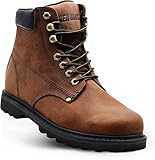
- Top Pick: EVER BOOTS Tank Men's Soft Toe Oil Full Grain Leather Work Boots Construction Rubber Sole (10.5 D(M), Darkbrown)
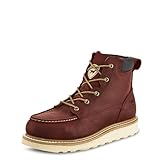
- Best Value: Irish Setter Ashby 6" Mens Soft Toe Work Boot, Brown, 9 M | Water Resistant, Uninsulated, D (Medium)
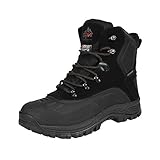
- Premium Choice: Timberland PRO Men's Direct Attach 6 Inch Soft Toe Insulated Waterproof Industrial Work Boot, Brown-2024 NEW, 9.5 M
For warm shops, summer sites and mild-weather work, a non-insulated boot is the better pick because it breathes and stays lighter; look at the Wolverine Floorhand, Thorogood American Heritage, Keen Utility Pittsburgh or Cincinnati, Timberland PRO Pit Boss and Ariat WorkHog families, then choose by toe type, outsole and fit. Skip insulation unless you work in cold storage or stand on frozen ground, because extra lining traps sweat and makes feet colder once damp.
As an Amazon Associate we earn from qualifying purchases at no extra cost to you.

Why choose non-insulated
Insulation adds a lining, usually a synthetic fill measured in grams. That helps in freezing temperatures but raises foot temperature indoors and in summer. A non-insulated boot lets heat and moisture escape, and you can still add thicker socks when it gets cold. Many people who work in warehouses, workshops, construction in mild climates and on indoor sites choose non-insulated boots for comfort and the lower weight.
At a glance
| Boot family | Best for | Key traits as the maker describes them | Watch for |
|---|---|---|---|
| Wolverine Floorhand | Concrete floors, long standing hours | Cushioned work boot lineup with safety-toe and soft-toe options | Check each model for electrical hazard and slip-resistance ratings |
| Thorogood American Heritage 6 inch | Trades and heavy daily use | Leather, welted construction made in the USA, resoleable | Needs a break-in period and offers little cushioning at first |
| Keen Utility Pittsburgh | Heavy-duty site work | Wide toe box, safety toe options, available in several heights | Fit differs from narrower boots; heavier than a hiker |
| Timberland PRO Pit Boss | General trades, light to mid-duty | Leather boot with composite or steel toe options, in insulated and non-insulated variants | Make sure you select the non-insulated variant |
| Ariat WorkHog | Farm, ranch and outdoor work | Western-inspired pull-on and lace-up work styles | Pull-on styles offer less ankle lock-down than lace-ups |
How to choose
Toe type
Steel toes are durable and thin but conduct temperature. Composite toes are lighter, do not trigger metal detectors and conduct less heat or cold. Alloy toes sit in between. Soft-toe boots are lightest but have no impact protection. Choose the toe type your workplace requires, and look for the ASTM F2413 rating on the boot’s label if your employer demands safety footwear.
Outsole
Oil- and slip-resistant rubber is common on work boots. Heel design matters too: a defined heel can help on ladders, while a wedge outsole is more comfortable on concrete and flat floors. Many makers list slip resistance on the product page, but ratings vary by model.
Waterproofing
Some non-insulated boots include a waterproof membrane. That keeps rain out but reduces breathability. If you work in wet conditions, choose waterproof; if you work in heat, a non-waterproof leather boot can feel cooler.
Height and support
Six-inch boots are the common standard and give ankle support without restricting movement. Eight-inch boots give more protection on rough ground. Pull-on boots are fast to remove but need a good heel lock.
Electrical hazard ratings
Some boots carry an electrical hazard rating, which means the sole is designed to resist certain electrical hazards under specific conditions. This is not a guarantee of safety. Follow your employer’s safety rules and do not treat a boot rating as a substitute for proper lockout procedures.
Pick this if…
| You need… | Pick | Reason |
|---|---|---|
| All-day comfort on concrete | Wolverine Floorhand | Cushioned design for standing |
| A boot that lasts and can be resoled | Thorogood American Heritage | Welted construction |
| Room for wide feet | Keen Utility Pittsburgh | Roomier toe box |
| A versatile everyday site boot | Timberland PRO Pit Boss | Multiple toe options |
| Farm or ranch work | Ariat WorkHog | Pull-on and lace-up options |
Budget tiers
- Budget: glued or cemented soles, synthetic or lightly treated leather. Fine for light duty but often not designed for resoling.
- Mid-range: better leather, stitch-down or cemented soles with cushioned midsoles. Where most mainstream work boots sit.
- Premium: welted leather boots with resoleable construction and replaceable footbeds. Higher cost but lower cost per year of use.
Fit and break-in
Try boots in the afternoon when feet are slightly swollen and wear the socks you will actually work in. You should have a thumb’s width of space in front of your longest toe and a heel that does not lift more than slightly. Welted leather boots such as Thorogood can need days or weeks of break-in, while cushioned models feel comfortable sooner. Rotate between two pairs if you can, because leather boots last longer when they dry fully between shifts.
Socks and insoles
Sock choice changes how a non-insulated boot feels more than most buyers expect. Merino or synthetic blends wick sweat and cushion pressure points, while cotton holds moisture and can cause blisters. If the factory insole feels flat, an aftermarket insole with arch support can reduce fatigue on hard floors, but make sure it does not crowd the toe box or interfere with a safety toe. Replace insoles when they flatten, usually before the outsole shows wear.
Care
Brush off dirt, condition leather to prevent cracking and replace insoles when they compress. Never dry boots on a radiator or heater, which can crack leather and weaken glue. Replace boots when the sole is worn through, the steel or composite toe is exposed, or the midsole has collapsed.
Common mistakes
- Buying insulated boots for indoor work and wondering why feet overheat.
- Choosing the wrong toe rating for the site’s safety rules.
- Ignoring width. Many brands offer wide sizes, and pinched toes cause blisters.
- Skipping the heel design. A wedge heel can feel unsteady on ladders.
- Waiting until boots are falling apart. Worn soles lose slip resistance.
Alternatives
Red Wing, Danner and Carhartt all make non-insulated work boots in several price tiers. Hiking-style work shoes in lightweight materials suit light-duty indoor jobs. If you need warmth in winter, buy a separate insulated pair rather than compromising your summer boot.
Frequently Asked Questions
Are non-insulated boots too cold for winter?
They can be fine with thick wool socks if you are moving, but they do not offer the same warmth as insulated boots when standing still on frozen ground. For regular cold-weather use, an insulated pair is the safer choice.
Do I need steel toes?
Only if your job or site rules require them. Composite and alloy toes offer similar impact protection in a lighter package, and soft-toe boots suit work with no impact hazard.
Are non-insulated boots more breathable?
Generally yes, because there is no lining to trap heat. Waterproof membranes reduce breathability regardless of insulation, so choose waterproof only when you need it.
How long should work boots last?
Lifespan depends on use, conditions and construction. Welted boots can be resoled, extending life, while glued-sole boots are usually replaced once the outsole wears out.
What does ASTM F2413 mean?
It is a standard for protective footwear in North America, covering things like impact and compression resistance. Look for the label inside the boot tongue or on the maker’s page.
Can I wear these boots for hiking?
You can for short trips, but work boots are usually heavier and stiffer than hiking boots. For long trails, a dedicated hiking boot is more comfortable.





Write Your Review
No reviews yet. Be the first to share your experience!